A Gear Post

I’ve mentioned before in a prior post, one of the main reasons I chose to use a tablet for a second monitor was for its ease in travel. In this post, I want to cover the gear I’m using in more detail, largely inspired by the gear series of posts by Tynan.

Quick Update

Before I get into the gear, I wanted to share my recent thoughts on using a second screen. I’ve gotten far more in the habit of putting things on the other monitor and have been seeing more benefits from it.

I’ve had some uses outside of work, including some personal projects and the joyous task of annual taxes. For my projects I’ve been able to put reference materials on the second monitor while using the laptop screen for the actual work.

With a few days of travel under my belt, getting set up was easy enough,succeeding in the goal of using the tablet as a screen.

The Big Tech

The Laptop

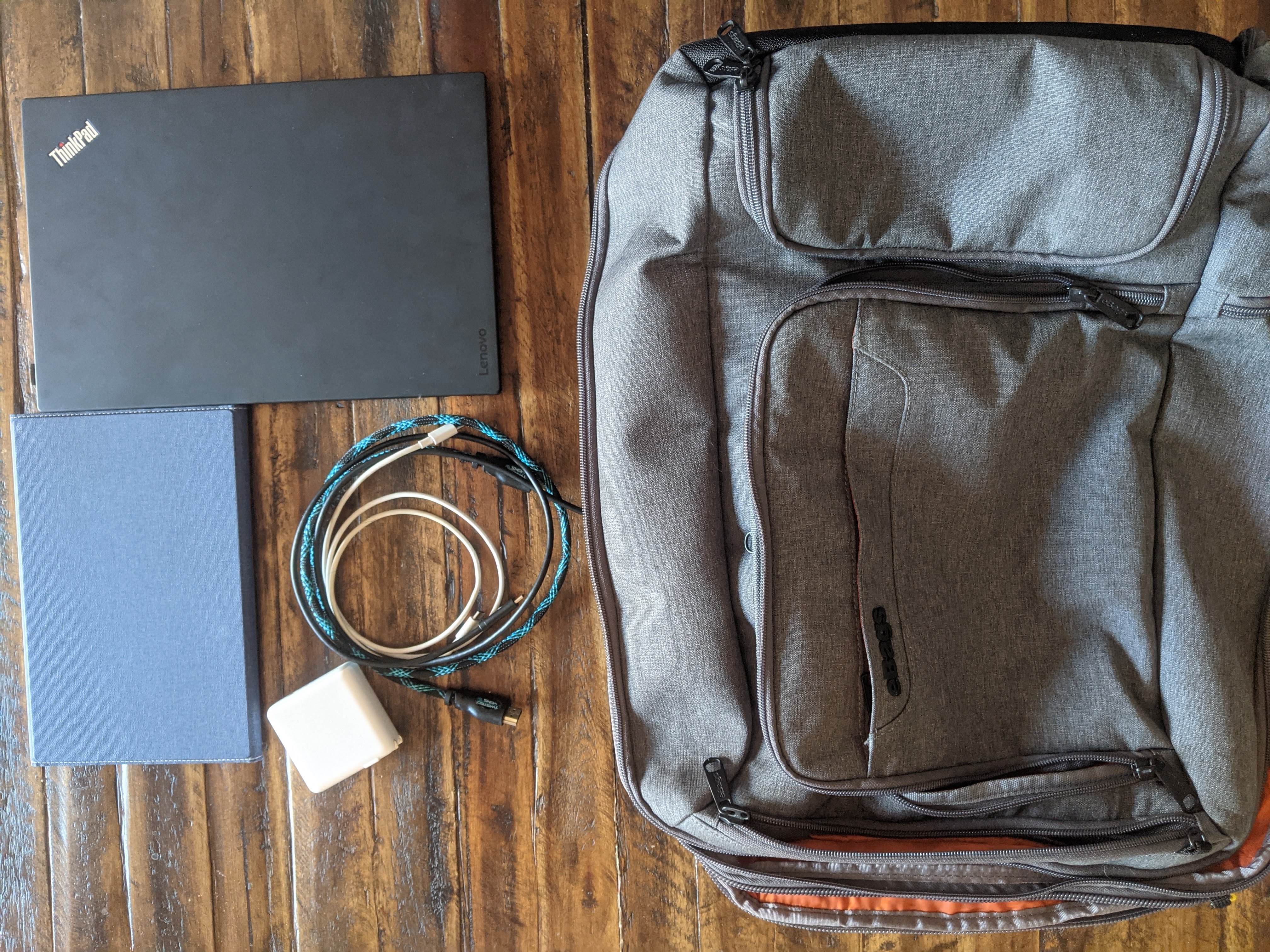
My laptop of choice became the Lenovo X1 Carbon. Inspired by the aforementioned posts by Tynan, the laptop is lightweight while having a large enough screen to work for my needs. The technical specs aren’t anything that will run the latest video games, but I can work on writing and programs with ease.

The Tablet
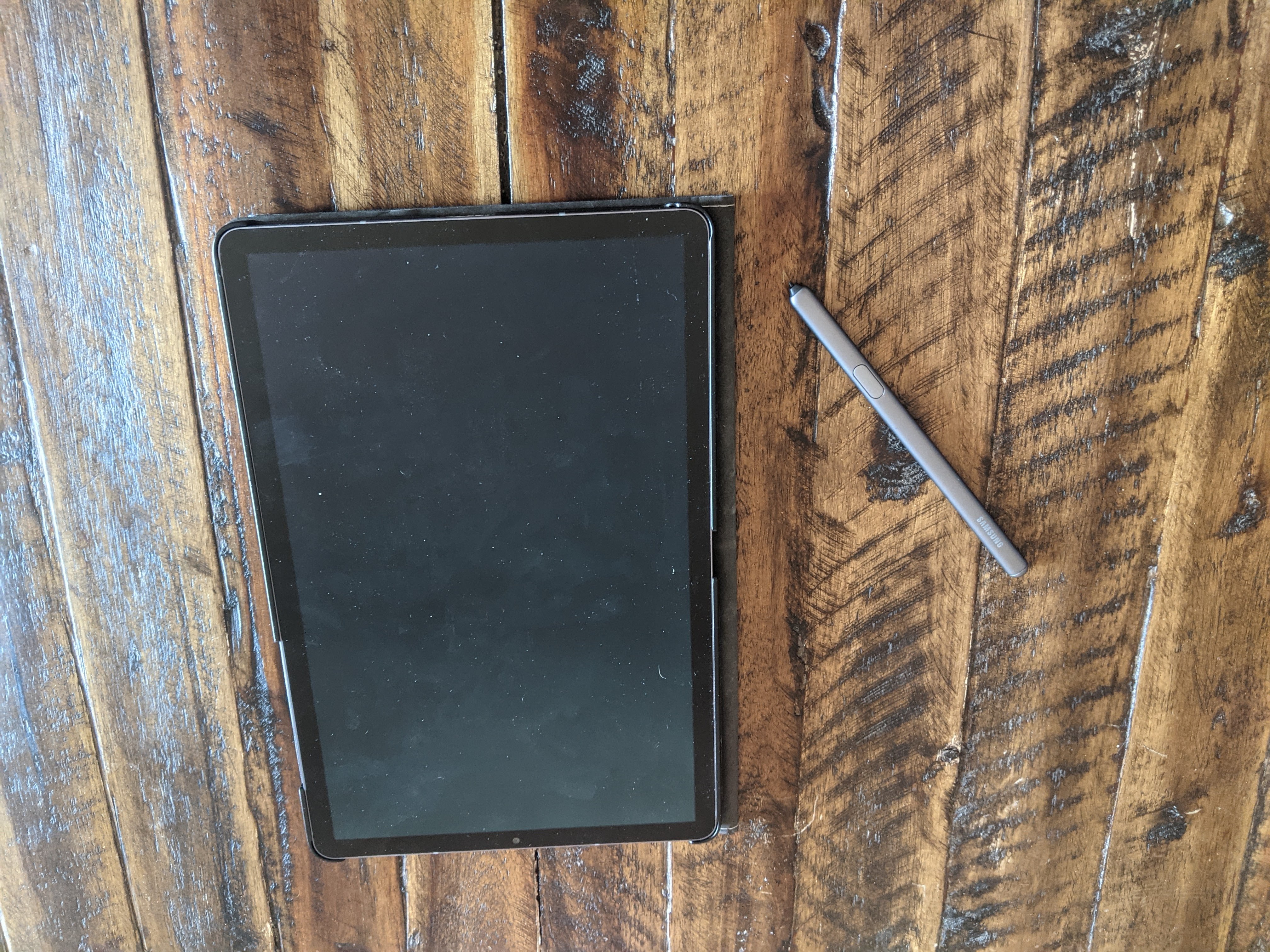
The tablet I ended up choosing was the Samsung Galaxy Tab S6. I liked the idea of having a tablet with a built in stylus, and the Galaxy Tab had good specs for the price.

One of the catalysts for buying the tablet was to replace an old laptop I bought a few years ago primarily as a streaming device. With the tablet, I was able to combine this function with an e-reader, gaming device, and notebook.

Supporting Tech

Apps and Programs

As previously mentioned, the app I’m using for turning my tablet into a second screen is called TwoMon. While it has hiccups from time to time, it definitely gets the job done. It cost me a mere $7, so I’m happy to get the use out of it that I can. With it being a one-time purchase app, I could even use it on my phone if I found myself that desperate!

For writing blog posts, I use Google Docs. It makes it easy to write and share with my editor. With the comments functionality, she can leave plenty of helpful notes for all my mistakes!

Regarding my day job, there’s some software I use to connect to all the tools I need to get my job done. For the sake of security, I’m going to leave this one vague.

There are a handful more apps I regularly use, but I may dive deeper another time, as the above are those I primarily use for work and projects like the blog.

Cords and Power
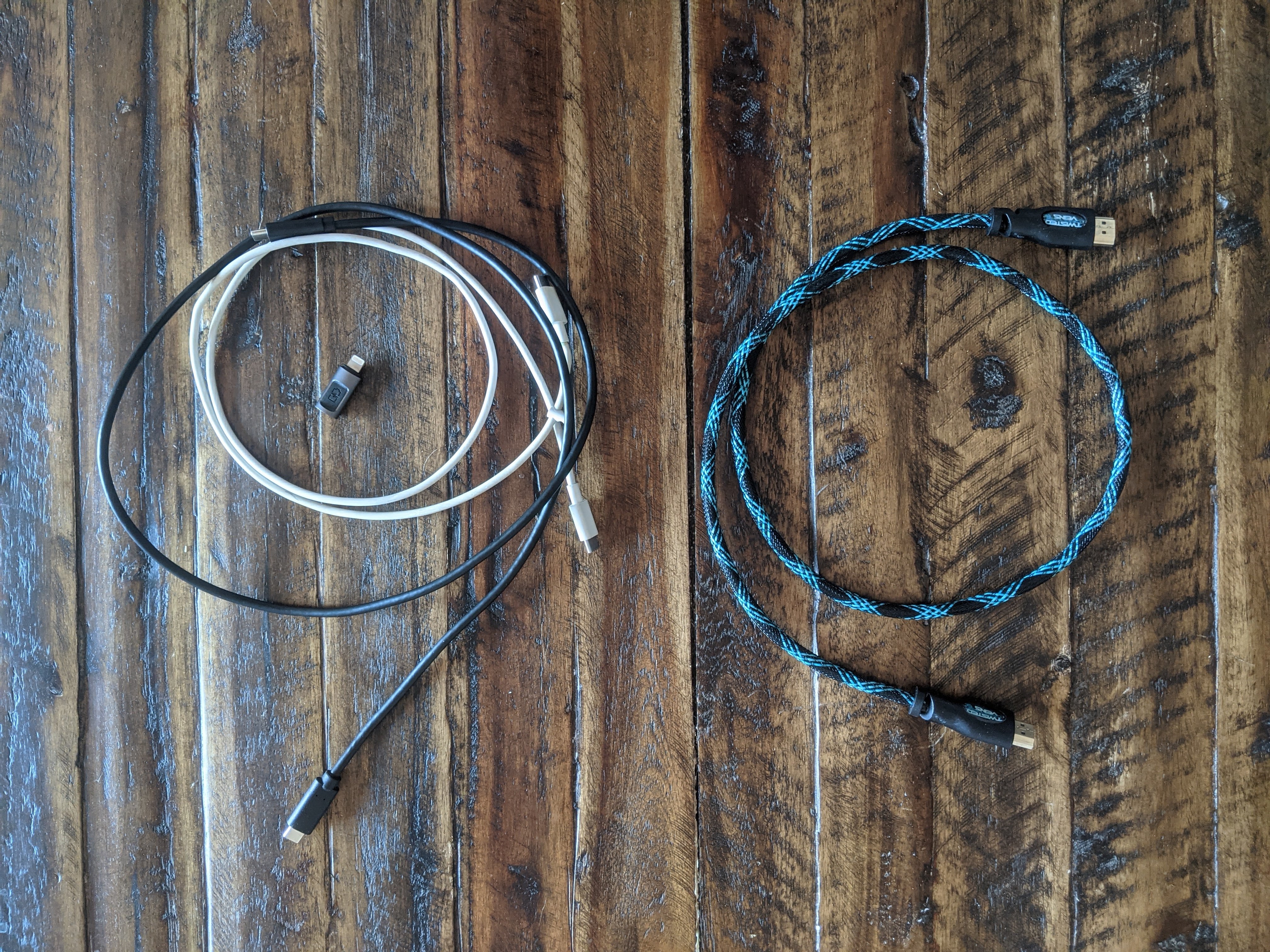
In order to simplify what kinds of cords I need, I’ve made an effort to get technology that uses USB Type-C. This has allowed me to carry only two cords for charging all of my devices. My phone, tablet, and laptop all charge by USB Type-C.

Unfortunately, my work phone is an iPhone, breaking this simplify. On the bright side, a simple Type C to lightning adapter solves this dilemma.

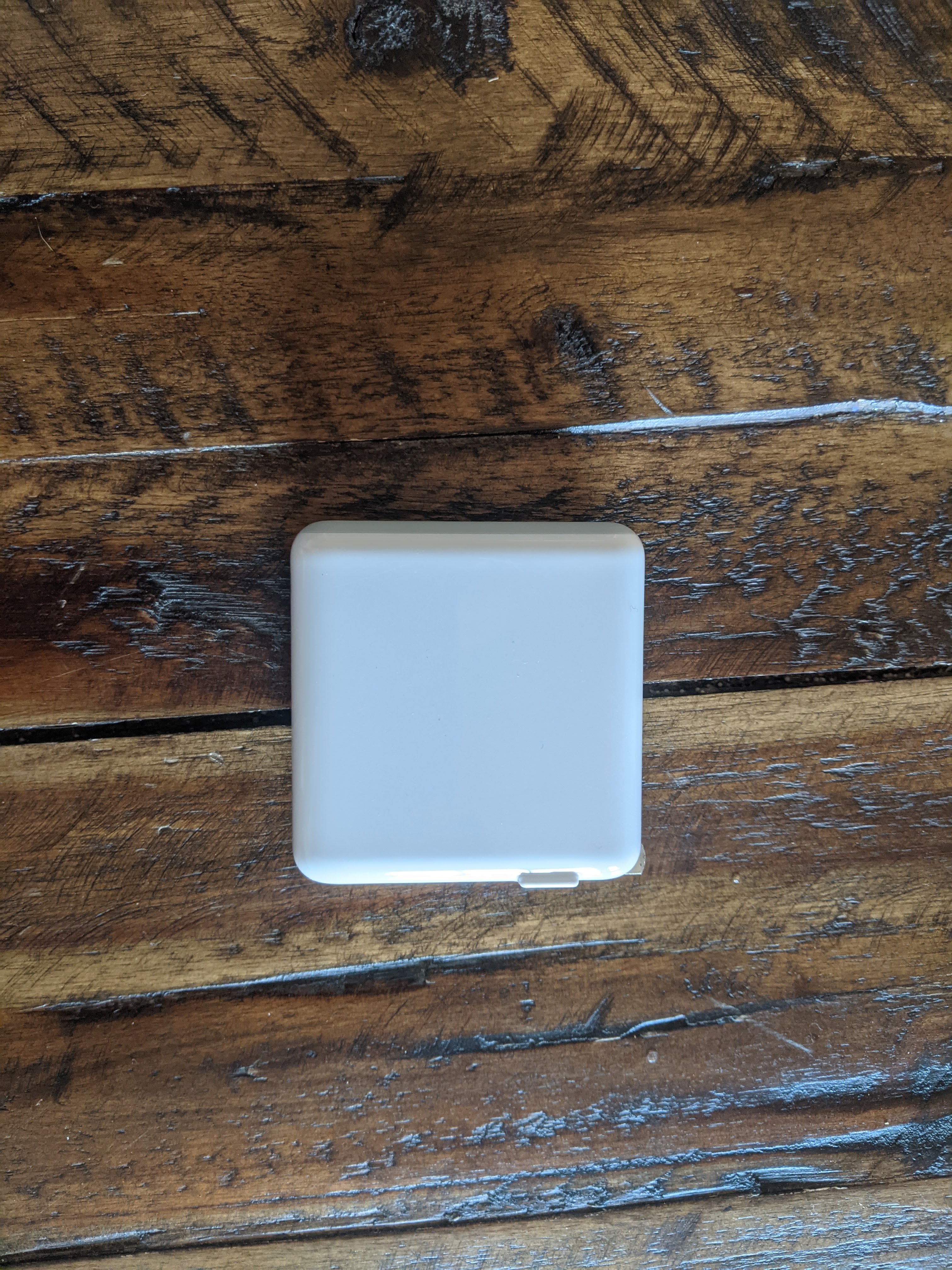
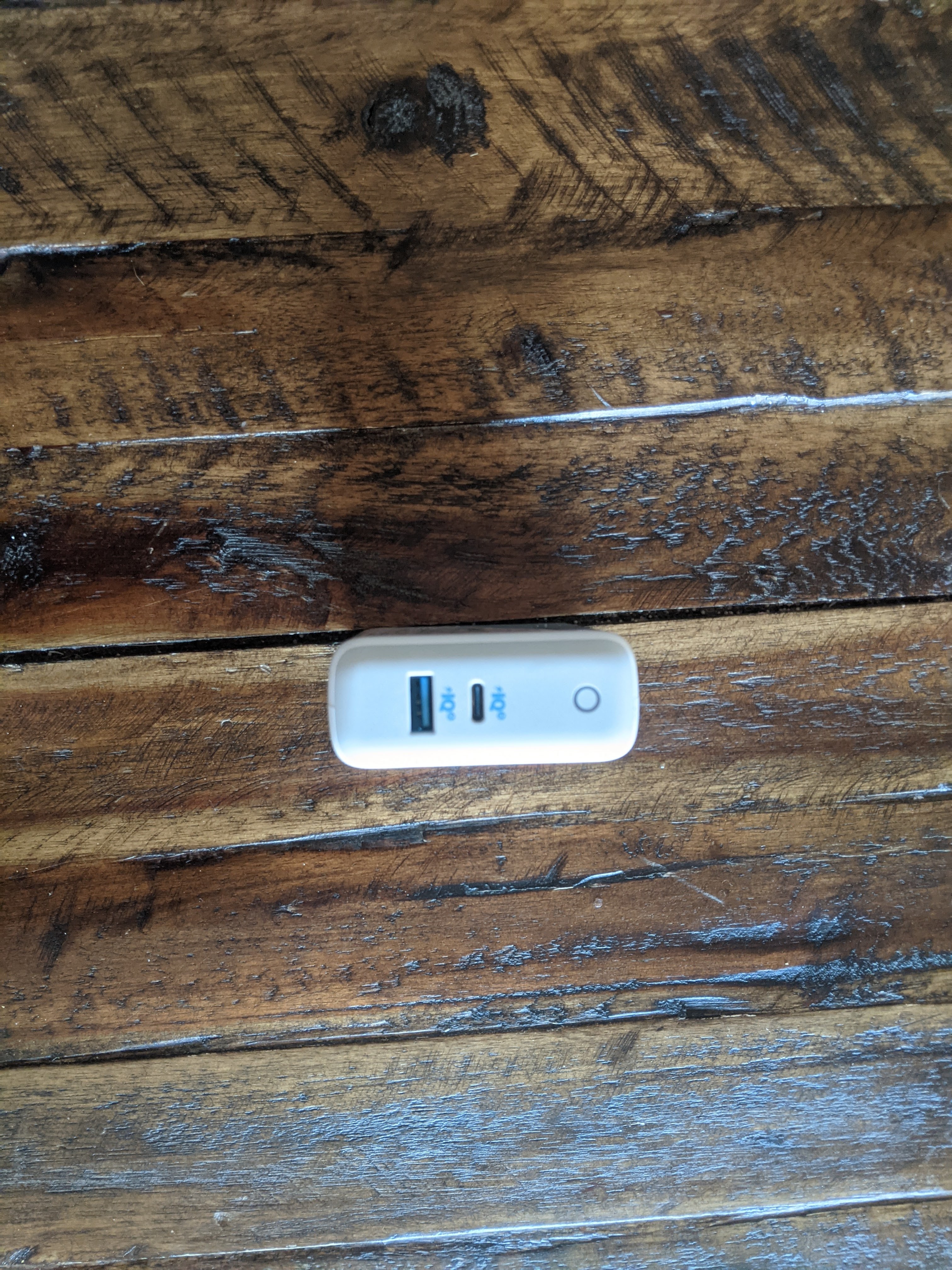
The power source for all these devices is a single brick, the Anker Power Port Atom III. This device allows for all my devices thanks to its power output. It does have an unneeded USB Type A port, but this was the best I was able to find a couple years ago, and it’s gotten the job done since. If I could reduce the size by removing the extra port, I would gladly do so.

A handy extra cord to keep around is a small HDMI. Most places have a TV that offers an easy hookup for my laptop or when I have it, my Nintendo Switch. It doesn’t take up much room, to the point where I actually forget it’s in my bag most of the time. I would like to eventually exchange this one for a longer but thinner cord.
Entertainment

The Nintendo Switch has been a solid console for the past few years. It’s hard to believe it came out four years ago now. With a number of great games to play both alone and with others, it’s an easy carry on just about any trip.

From time to time, I even bring the whole dock, allowing me to hook up the handheld console to a TV for group games. The past couple of trips, I’ve been on have been visiting family or friends and brought the Switch along for some fun. Right now, I only have Super Smash Bros Ultimate but am thinking I should expand my options for party games with what appears to be more flexibility in travel around the corner.

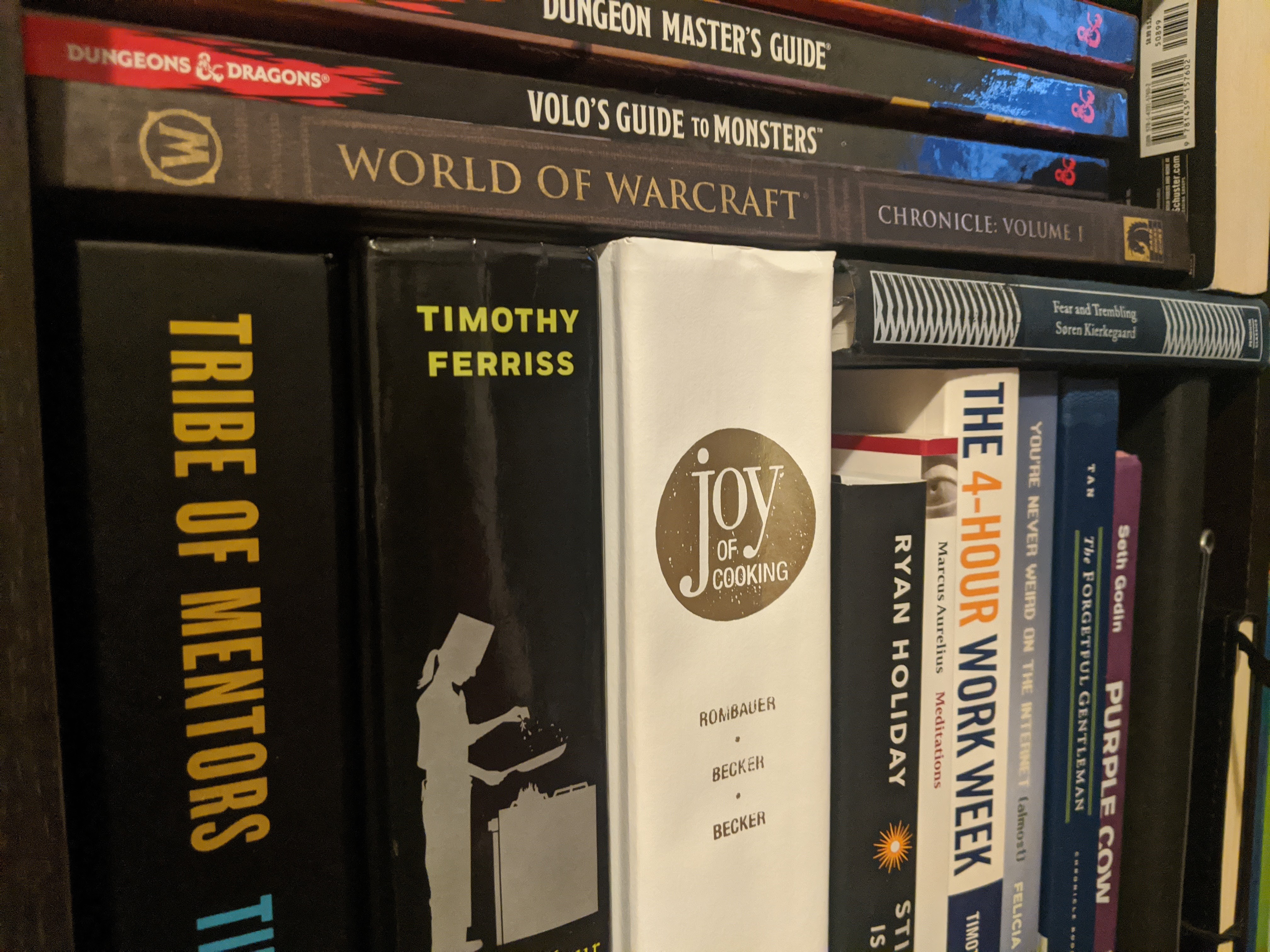
On a more productive note, I try to make sure I have at least a few books available to read at a given time. This lets me get reading done even if I’m not feeling a particular book at a given time. The tablet offers a multitude of books through apps like Kindle and Libby, but I do like to carry a physical book with me when traveling. The satisfaction of turning paper pages is one that can’t be replicated on a screen.

Backpack

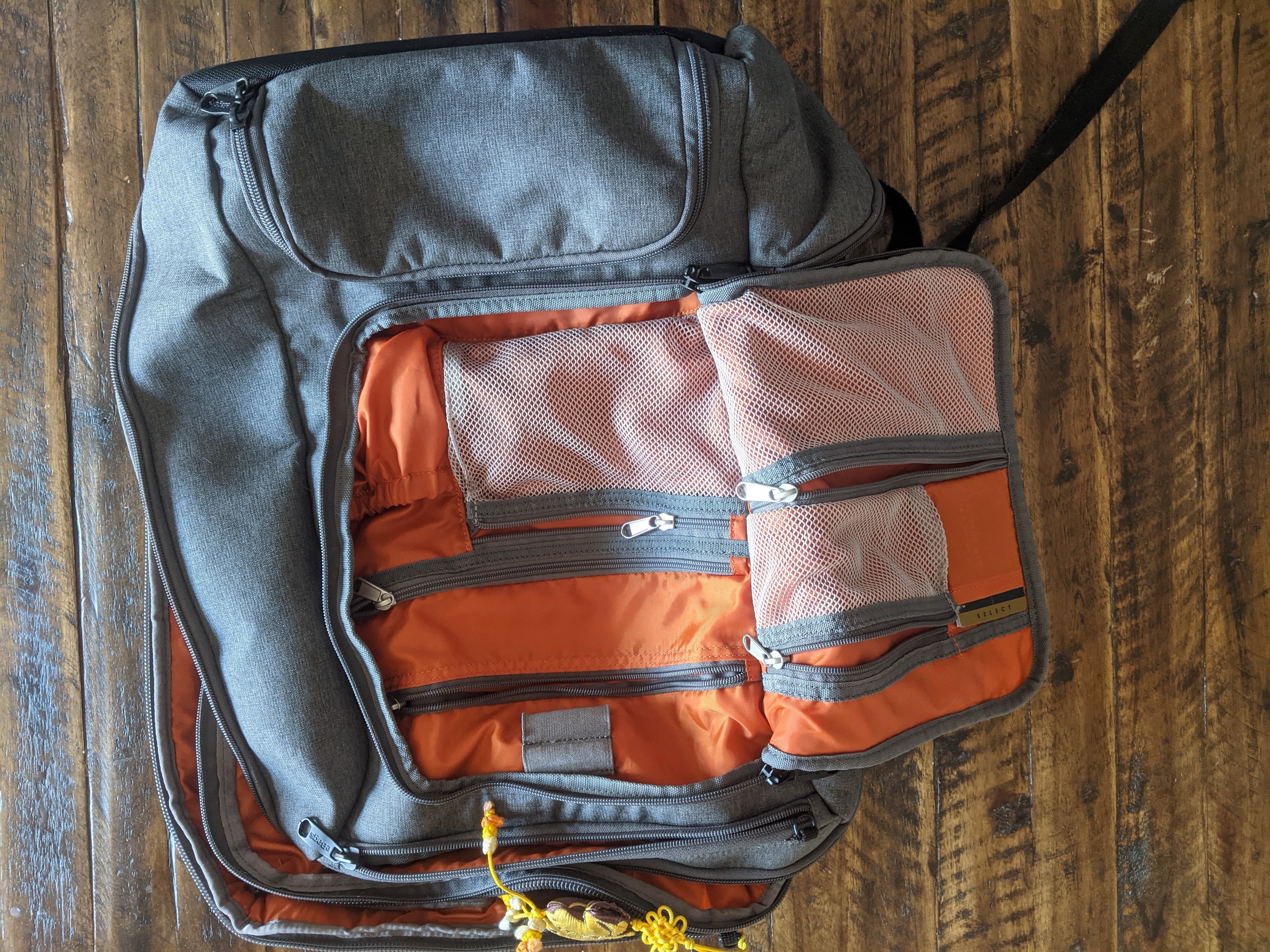
Last but not least, the bag that carries all of these things is the eBags Pro Slim Weekender. This bag has a lot going on, but once a certain section is figured out, it can be easy to organize. I like that just about anything is in easy access. I don’t feel I leave anything buried in this bag. This is largely because the main pockets can be opened flat, the primary reason I chose this bag over others.

Traveling with one bag not only saves me on airfare, but in general helps me from over packing. I do go overboard at times, but it’s still confined to the limits of the bag on my back. The current trip I’m on might not have been as feasible if I also brought a full suitcase for the drive down.

If this post was interesting, let me know. I can write a follow-up with more details on some of the other things I take along with me including clothes, workout gear, toiletries, etc. Until then, you can check out Tynan’s series I mentioned before or look for minimalist travel communities on sites like Reddit.
The Pros and Cons of PC Work

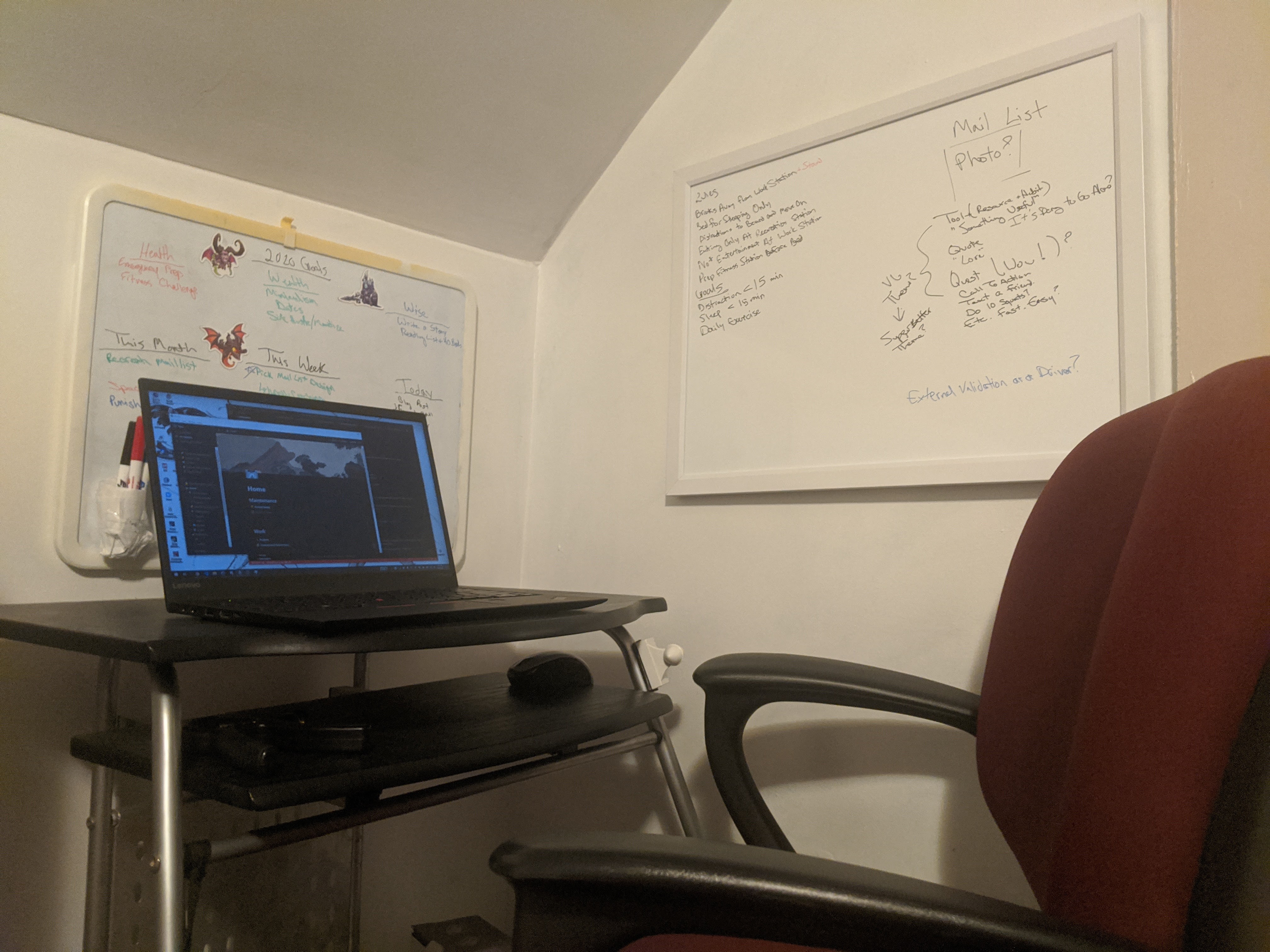
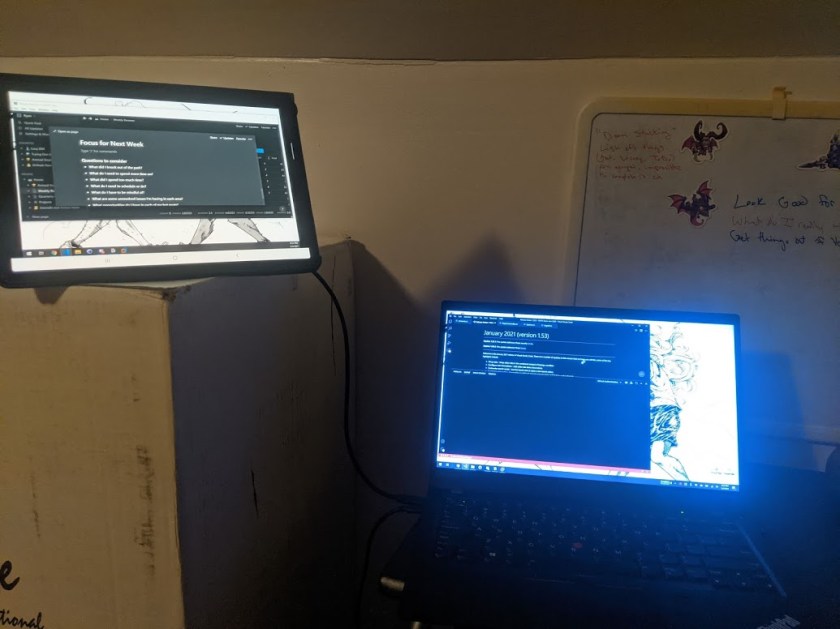
The “office.”

At this point, I don’t have much to say about my use of a second monitor. In spite of that, I’ll share some thoughts on computer based work.

The Good

I’m going to start out this list with what I think is the best part of my working conditions, being able to work from anywhere with an internet connection.  While I work from home a majority of the time, I have many options open. With this freedom, I’ve been able to take a few trips to see family across the country without having to spend any time off.

Thanks to mobile hotspots, that opens me up to so many places. I once briefly worked from a rest stop in the midst of a long drive. The reason for my logging on during this drive seeps a bit into “the bad” territory, so I’ll save that for the next section.

With the freedom of working almost anywhere, it also offers flexibility of when to work. This doesn’t mean that I can just skip work whenever I want, but I do have loose working hours in a given day. Starting the day can range from 8 to 9 AM, and that’s without prior notice. With a request to managers, I’ve been able to work a 6 AM to 2 PM day in order to get on the road for a camping trip as soon as possible.

This flexibility doesn’t apply to just starting and stopping the work day. There are times when I don’t feel like I can put in a real effort into work. I might have slept poorly or am just distracted in general. I can step away for a bit and come back to my work later with a better mind to tackle the task ahead.

Regarding the actual work done, the resulting creation is one of my favorite elements. Computers allow us to create something from nothing. By pressing a bunch of keys over and over, eventually the computer can make what the creator wanted, or a close approximation at least. While this isn’t as evident in my day job, a lot of my hobbies really scratch this itch, especially game development.

I am an amateur through and through, but even I am amazed that a bunch of words I put on a screen result in various results by a player’s input.

The Bad

While all the above are great, computer based jobs do have their downsides.

Freedom and flexibility can be nice, but they also open a door to always be able to work. Sometimes it can be hard to just put something down for the day and get to other responsibilities like health and relationships.

This is where that rest stop work comes in. I was on a drive to a camping trip and I wanted to check a few things a few hours after work. There have been other times I’ve put off other things for a chance to check in on work.

Some positions, mine included, involve “on call” work, which means that I am on deck to assist if something comes up and receive a call. Admittedly, I’ve been very lucky in this department as I’ve had only a handful of issues come up in my time working. Admittedly, the biggest annoyance here is getting spam calls on my work phone, as I feel obligated to answer in case it’s some issue popping up.

The other challenge I regularly face is the habits this work develops. For the most part, I’m stationary and staring at a screen for several hours straight. If I’m feeling tired or sore on a given day, I might find myself sitting for most of those hours too.

Addressing the Bad

Luckily, these negative elements are pretty easy to mitigate.

For the timing and responsibility, having scheduled events shortly after work has helped a lot. A group of friends started running shortly after work hours, so joining them has been a good way to unplug when needed.

The runs after work are also a nice way to get some movement in. Also with the weather getting nicer, getting outside has become less of a hassle. I’m trying to get lunchtime walks back into my daily routine. They are a nice way to move around and take a break from screens for at least a few minutes per day.

Just by looking at the word count of the sections above, it’s easy to tell I overall enjoy the opportunities I have working the way I do, even if there are some possible downsides.

Double the Screens

Not my actual work.

My focus for the early part of this year is to improve my productivity. Because my job has me working on a computer, an easy tool I can use is a second monitor. I’ve actually had the setup available for some time but haven’t had the push to get it working on a daily basis.

The Purpose

Every office job I’ve worked has relied on at least two monitors per person. When I went into the office regularly, I became used to the setup and found my monitors full of windows. For a little over a year, my primary work device has been a single 13 inch laptop. While it’s more than enough to get my work done, it’s quite a step away from two 22 inch monitors.

While utilizing only one screen I’ve developed two habits. One, I rarely maximize windows. Having free space around a window makes it feel less overwhelming and easier to move between windows. Two, I rely heavily on keyboard shortcuts, especially Alt+Tab. Shortcuts help to reduce the time in finding the windows I need.

Even though I’ve had the resources and ability to use a second monitor for a while, I’ve rarely used it for work. The only time I’ve regularly used it is while streaming games on Twitch. It’s nice to have the game I’m playing on one screen and the Twitch dashboard, with chat and replay, up on the other.

Building the practice back into my regular work day is something I see offering potential to help. Working as a programmer, I often have a variety of reference materials, documents, and emails open at one time. I’ve long flipped back and forth between documentation and the actual workspace. With a second screen, I can instead use the second smaller monitor for anything I need momentarily. This keeps my main screen focused on the actual work.

Tools I’m Using

The setup I’m using is a simple app called TwoMon. The app allows full control over a tablet’s screen, including the touch functionality, by connecting a USB cable. It was cheap compared to buying a whole second monitor, as the tablet is something I already own.

The tablet is a Samsung Galaxy Tab S6. I use it for a variety of other things, so adding it in as a second screen just enhances its functionality.

The reason I really like this setup is that it allows me to use a second screen not only while at home but also if I’m traveling. The tablet is something I already bring regularly for e-books and other entertainment, so it doesn’t require me carrying around extra gear.

Thoughts So Far

The experience has, so far, been a mix of pros and cons. There are times I can shove some windows that don’t need to be at the forefront to the other screen and have my important screens right in front of me.

There have been a few times that something will pop up in my peripheral vision and start pulling me down an email rabbithole or other distraction.

I did find a cool feature of my tablet that allows for multiple apps to show on screen. This allowed me to have a notes app open alongside my second screen. The tablet in use has a stylus with it, giving me an easy spot to quickly jot down notes. At home, I have two whiteboards at my desk, but I can see the functionality being helpful when traveling. This feature also helps shrink down the size of my second work screen to reduce my chance of distraction.

Energy Measured, Now What?

Now with more charts.

The last few weeks didn’t offer any groundbreaking ideas, but I feel as though I now have some evidence on prior assumptions. Tracking my energy levels throughout the day showed me my biological prime time. There were a few more takeaways than just the time of day I’m at my best, particularly around the impact of caffeine and movement.

My BPT

The results of my tracking weren’t anything surprising. I’d be shocked to learn the energy fluctuations I go through were anything but common for those working a standard day job.

For a long time I’ve not been a great morning person, but I was glad to see that not all mornings are terrible. Days in which I got into bed at a standard time, around 11:30 PM, and was able to wake up naturally, I was feeling great. Unfortunately, those days became more and more rare as I began to make bad evening decisions as the trial went on.

At around 2 PM I hit my first peak, which makes some sense as it is after my typical lunch break. The afternoon decline hit pretty hard until about 5 PM. I may have been a bit early on declaring my post-work crash a thing of the past in my first post.

After 5 PM, I steadily climb back up until 7 PM, take an energy dip after dinner, and hit one last peak at 9 PM. Finally, I slowly decline until it’s time for bed.

Caffeine’s Back on the Menu

With a few weeks worth of data on my energy without any caffeine, I wanted to see what caffeine did over the last few days of the trial.

The first day back on coffee was wild. That Monday felt like it was Friday evening the whole time. I was riding an all time energy high, even more than the previous time I had coffee early in the trial.

While not experiencing a harsh crash, I did suffer from an inability to sleep. At midnight, I jotted down a 9/10 for my energy.

This is something I want to explore more with caffeine and alcohol back in regular consumption. What do my energy levels look like throughout the day when not restricting myself?

Better Alternative

Something I knew intuitively, but tracking provided me a more confident stance, is the impact movement has on energy.

Going for a walk or run can have huge returns on energy. It may seem counter intuitive. Shouldn’t exercise make you tired?

I really noticed it this week when I got back in my morning stretch routine again, as it took a bit of a hit when I no longer had my coffee brewing as a linked habit to do it. Right around 9 AM I recorded a 3/10 for my energy. I started my coffee and did my stretches. Before taking a sip of my fresh cup, I felt like I was already at a 6.

The same can be said for running, typically done after work. Some friends and I started running together a few times a week. Having others to pull me into getting out the door right around 5 has me feeling far better the entire evening.

What’s Next

The inspiration for this trial was Chris Bailey’s book The Productivity Project. The book has been the catalyst for my efforts to be more effective this year.

When I worked in an office, I had two monitors to work on. With working from home for some time, I’ve only worked from a single laptop screen. I’m curious to see what adding a second monitor does for my work habits. Will I begin to fall down traps of false “multitasking?” Will I find the windows I need faster? Stay tuned to find out!

Energy Expense

I wonder if the creation of these sculptures is a energy intensive or recovering activity.

Last week, I explored the idea of time as a resource, but the true goal of this trial is the best way to manage energy. Over the past few weeks, continuous questions arise in my head, such as how to spend it? When to spend it? How to get it back? With the observations I’ve made thus far, I feel a bit more familiar with energy as a concept.

Spending Energy

Just about every task we perform will cost energy in some way.

From constructing a building to walking to the fridge, actions take energy to complete. The full scope of the biological process by which our bodies generate and consume energy is well beyond the scope of this post. Ultimately, we spend energy on everything we do.

It may seem that only physical tasks like pushing or pulling things around need energy, but it’s far from the case. Chess players are reported to burn thousands of calories, upwards of 6,000, during a tournament. The high stress of the event causes various physiological symptoms from breath rate, heart rate, and muscle contractions that add up throughout the competition.

While many of us aren’t battling master strategists on the daily, I would guess that many have felt exhausted after a day of office or administration work, even if most or all of it was spent relatively calm and stationary.

Even leisure activities can be energy drains. As someone who probably plays too much Destiny 2, I’ve spent nights in group activities called “raids” that have left me exhausted. The raids consist of a number of challenging encounters, many of which have multiple elements to keep track of and manage throughout. All the while playing the first person shooter and keeping yourself from dying.

Getting It Back

If we’re burning energy all day, even on leisure activities, how do we get it back? Without any repercussions of course.

In measuring my energy throughout the day, I’ve found three things to provide me with energy: food, sleep, and disconnecting.

Food and sleep are somewhat straight forward; they are needed in the biological processes that keep our bodies functioning. Food, specifically, is the basis of energy creation.

These two are foundational to having energy throughout the day. To have a good amount of energy throughout the day, regardless of the tasks ahead, a good diet and sleep schedule are critical.

Caffeine, while effective in providing that kick of energy, isn’t always the best solution. The brief explanation is that caffeine works by mimicking a chemical our brain uses to convey tiredness, adenosine, and blocking the receptor for that chemical. This feels great because our brain no longer thinks it’s tired, but that adenosine is still there. Once the caffeine wears off, all that adenosine is ready to remind us how tired we really are.

The source of this trial, The Productivity Project, discusses using caffeine strategically. By getting to know your body’s tolerance and rate of metabolizing, how long it’s in the body, a cup of coffee can be the “pick me up” at the right time while also causing a crash as close to bedtime as possible.

Disconnecting for Recovery

Disconnecting is the thing I knew intuitively but didn’t really recognize until tracking my energy. My definition for disconnecting is partaking in an activity that you can detach yourself from almost entirely. This can be watching TV, listening to music, going for a walk, meditating, or so much more.

This can be hard to do in our modern environments. With devices that allow us to do practically anything at any time at arms reach, it’s hard to step away. You can reach out to a friend or family member, catch up on the news, start that new show everyone is talking about, learn a new skill, read any written work throughout history, and the list goes on.

“Shower thoughts,” are a popular concept because it’s one of the few places we are somewhat forced out of the usual scramble of distractions. In the shower, the mind can disconnect and relax. This does make showering a critical habit, not just for hygiene, but for energy management as well.

For years now, I’ve referred to Family Guy as my favorite show to watch at a hotel. It’s almost always on one of the available channels and doesn’t require much thinking or attention to find mild entertainment. After a long day of traveling, it’s nice to wind down with some mindless indulgence.

In the end, the goal is to give the body and mind a break from stress in it’s different forms.

Time Neverlasting

The tower of time stands over the town.

For a few years now, I’ve tried to avoid using the phrase “find the time” because it implies that the desired time will come passively. “Make the time,” is the saying I find more accurate. If we want to get something done, we have to actively set the time to do it.

Time is a Resource

You may have heard a quote that goes something along the lines of “You and Bill Gates have the same 24 hours in a day.” Feel free to replace Bill Gates with any individual that seems admirable. Time is the one resource that is truly finite. Once it’s gone, we can never get it back.

Every day, we all spend our time resource, whether we decide to or not. It can be spent optimally or poorly, just as any other resource. This optimization is mostly subjective, with some arguments for objectively bad time wasters.

For example, a common demon of the productivity world is TV or other media. I don’t think this is necessarily the case. A relaxing hour watching a show you enjoy can be the right way to wind down after a challenging day. The trouble, of course, comes in when that one hour becomes three, and has eaten into time allocated for other activities..

Following this idea, I think that time spent on “productive tasks” can also be spent non-optimally. Slamming into a problem over and over can lead to a variety of negative emotions around the task. If exhausted or stuck, the best thing at that time might be to step back and look to something else.

Due to its preciousness, time should be spent the best it can be. In order to do so, I believe it’s best to understand oneself.

Why Find Prime Time

As a person with a lot of ambition to complete a variety of projects, it’s critical that I can work on challenging tasks when I’m at my best.

I often find myself arbitrarily scheduling things or putting them off until the last minute when I have to push through a tiresome slog to get anything done. When trying this, it becomes much easier to look at my to-do list for an easier task to mark off for the day in order to get some feeling of accomplishment.

With a biological prime time (BPT) known, I can better plan my days to tackle the tough work at my best and save the easier stuff for when I’m dwindling. On top of that, I can plan breaks more effectively to come back recharged for whatever lies ahead in the day.

Trial Takeaways

So far, I’m finding that I’m pretty consistent most days in how I feel hour to hour. My morning has a steady rise with a plateau from about 11 AM to 1 PM. Unfortunately, I spoke too soon last week about my 5 PM crash, as I consistently have dwindling energy from 2 PM, after lunch, until around 6 PM.

With the previous benefits of going caffeine free debunked, last Sunday, I experimented with a cup of coffee in the morning. It was a nice treat after several days without one. I was surprised at the results. My energy levels were the best I’ve tracked thus far and I didn’t experience a caffeine crash at all. As of now, I’m unsure if the effect was the caffeine or the result of a long restful weekend. Due to this, I’m excluding that day from my final tracking of my BPT.

Finding Prime Time

Blooming at the wrong time…

A major contributor to the lessons of my last trial was the book The Productivity Project; it offered a number of helpful practices to increase productivity. An early idea in the book is a process of tracking energy levels throughout the day. Through this, one can determine a “biological prime time,” the time of day with the most energy.

Time and Energy

A major idea of the book is that there are three resources used in every task throughout the day: time, energy, and focus. We don’t have real control over those resources, but we can determine the best ways to use them.

Through understanding what times throughout the day I have the most energy, I can plan to work on bigger, more challenging tasks that need me at my best. Chris Bailey calls this the biological prime time. Understanding the prime time is just half of the benefit. It also provides the times I’m at my lowest energy and should schedule simpler tasks.

The way to understand this is by tracking my energy levels every hour over the course of a few weeks; from a large sample size of days, a clearer picture is created. One caveat with this practice is the elimination of energy manipulating sources like caffeine and alcohol.

Challenges

I’ve done trials to give up alcohol and caffeine in the past but not for this reason. Previously, my goal was to determine if I was able to give up the substances. This trial, however, is focused on their impact on energy. Both of these have a cost on energy in the future for some short term benefits. By not indulging in them, I can better track my prime time.

In just these first few days, the sacrifices were easier than I expected. I’ve been considering giving myself a cheat day in which I can have a cup of coffee on Sunday mornings as a small treat, as I do enjoy a warm drink on these cold days. I’m still debating as the days pass. Cutting this out, however, has already shown one positive result – no more 5 PM crash that had become a regular experience during the week.

The toughest part I’ve experienced in implementation, so far, is the habit of checking in every hour to jot down my energy. As time passes, I expect this should become easier to do with regularity.

A Month of Life Lessons

Every day offers the opportunity to learn something.

This year began with an attempt to take things slowly. After a year of extreme time dilation, I find it tough to plan far ahead. At first, I wanted to take on this daily lesson idea as a goal for the entire year but decided to start with just the month ahead. While I don’t know that I’ll be able to find a lesson every day, I want to keep adding to the list I’ve started.

What I Would Do Different

First, I’d like to address some aspects where I find I can improve this habit.

While starting out, it was easy to jot down several ideas from a given day – be it from a book, podcast, or some idea that popped in my head. After a couple weeks, some of those days felt that there were “too many” lessons. Days where I read, take a course, or watch a documentary, might lead to five good ideas to jot down. Instead, I like the idea of honing in on just one key lesson from the day.

For the trial, the pressure to come up with an idea helped to keep me thinking about my day. The daily element feels like a burden looking down the calendar ahead, but I fear that without having to put something down every day, I’ll start to let myself slip – starting the possible chain of misses that breaks the habit. In the end, I think just one idea from the whole day should be possible, but I’m willing to mess with the specifics as the year continues.

Favorite Lessons

While every day I had to write down at least one idea, there were a number of which really stood out to me.

When starting something ask the question: “What question am I trying to answer?”

A recurring idea throughout the lessons was asking myself questions. This is the meta-question that I think gets to the bottom of the reasoning behind something. With all of the trials I do, I find there are some that I have this question in mind. Others are just something to write a few posts on. I plan to keep this question in mind for all my trials going forward.

Life is learning; you have to create the lesson plan.

I wrote an entire post as an expansion of this idea, but the short of it is that learning with a plan can be much easier than without one. A lesson plan, even a rough outline, can help direct me through a subject I’m interested in. Whether we like it or not, we are learning things every day. If we want, we can choose the subjects we are focusing on.

Informational content doesn’t necesitate productivity. Believing that consuming news or educational content is justified may just be an excuse for indulgence or entertainment.

My biggest guilty pleasure is “productivity porn.” Books, podcasts, videos, and more all about how to better improve yourself. I rarely implement the ideas that I consume, but often give myself a pat on the back for “learning,” even though it’s often the same ideas repeated over and over.

This has increasingly applied to news. After a wild ride of a year, I began to get deep into news shows, especially political ones. Sometimes there were good updates to follow, like what I needed to do for COVID-19 mandates or political candidates’ policies and goals when it was time to vote. Most often, it was getting upset with one individual or group for doing something dumb across the country and the political spectrum.

In the end, I can’t remember even close to everything that happened in 2020, but I know I spent days of my life following news that ultimately didn’t matter.

Grand gestures seem great, but often it’s the accumulation of the little things that really create positive (or negative) results.

While watching Awesome Games Done Quick (AGDQ), an interview segment discussed a number of stats for the speedrunning charity event. One of which was that a large majority of the money raised came in the form of donations of less than $100. Throughout the event, donations are read to the audience, some of which are for several thousand dollars. Yet, the vast majority are just a few bucks. It goes to show that the coming together of a lot of small contributions can outweigh a single grand gesture.

While this is certainly applicable to charity events, the same goes for day-to-day life. From small habits that can improve a morning or a minor annoyance felt day after day. These things can build over time for better or worse.

Learning More and Going Forward

This trial is another one that didn’t have a direct impact on my life or productivity, but it led to a variety of improvements in the way I think about life. I find myself looking deeper into things than I had before, and this is speaking as someone who already tried to experience media on a deeper level.

Starting off with a simple idea will hopefully keep the momentum going throughout the rest of the year.

With the first trial of 2021 in the books, it’s time for the next one. For the next few weeks I’ll be tracking my time and energy throughout the day in order to find my “Biological Prime Time.” This is an idea from The Productivity Project, a book that made several appearances in my lessons list. In the process of tracking, I’ll be cutting out caffeine and alcohol, as well as doing my best to wake up naturally. The idea is to find when I’m operating at my best throughout the day.

Back to Class, Kinda

The clock tower of my alma mater looks down as I make my plans.

In reviewing my lessons thus far, I came across one that really stood out to me. “Life is learning; you have to create the lesson plan.” On the surface, it seems to line up with the overall thesis of this blog, but there’s a piece I often leave off the table, the plan.

There’s Something About Freedom

Many of my trials come to me just a few days before starting, if not while I’m writing the very post announcing it. There have been some I’ve had planned prior, but for the most part I pursue what interests me at a given time.

This degree of freedom has been nice at times but stressful more often than not. There have been a number of final posts for a trial which have led to me pacing about trying to determine what I should do next.

This tendency leaks into a number of areas in my life, including my intellectual pursuits. I tend to find a new idea through a podcast, book, or video, and am ready to dive in. I research various resources for a bit, but with no requirements to follow through on anything, I tend to learn a couple things and then move on.

Lesson Planning

I, like many, have probably only had a clear education during my years of school. It’s difficult to get students in a class without an idea of what is going to be taught. This goes for classrooms in schools everywhere to online courses.

Currently, my interests bounce from topic to topic in a moment’s notice. My whiteboards are covered top to bottom with notes and ideas from just a couple of days. A consistent problem I have is poor follow through on those ideas. Even in projects where I get to some level of competence, I often don’t have a plan for developing further.

While perhaps not a trial in itself, I want to create quarterly “courses” that I’m going to take, almost like a semester in school. With that, I can focus on these ideas and develop them further. Each would have an associated syllabus, an outline of what would be required to be completed in the time.

Creating these courses would get the idea out of the “maybe I should do this” part of my mind and provide me a jumping off point for when I find the time is right to do so. In other words, I stop feeling guilty for not making the time for it.

Something I’ve added for myself with these is to have a list of the minimal requirements of what the course will teach me and the purpose, the why. If I can’t list these elements down, the course is removed. It ties to a lesson from the very day which inspired this one, “When deciding to do something, the critical point is WHY.”

This post might not have been directly related to this specific trial, but it was through this documentation of ideas that the idea came to me. I do hope to share the results of this process later in the year, be it success or failure.

Looking for Lessons

Words of wisdom found throughout.

In my efforts to record the bits of wisdom I find in the day, I find myself more on the lookout for them. Looking for these lessons has led me to be more aware of what I’m doing in a given moment. I’m more attentive in taking in the things around me, be them a book, a TV show, or just the world around me.

Influences All Around

There hasn’t been another time in history when access to content was greater than it is now. With a few taps on a keyboard, platforms full of articles, books, movies, and videos are found. These platforms have a near infinite amount of content to consume, and, at times, we can be pressured to follow it all.

I’ve long been an avid consumer of many different types of content and some of it influenced me greatly, while others have been lost to my memory. 

A few years ago, I remember seeing this post on social media that was headlined something like, “50 things my economics professor taught me.” It was this list of various things that this professor did, and one sticks with me for some reason. I’m paraphrasing, but it was something to the effect of “unpack your suitcase if you are staying at a place for two or more nights.” It was such a specific piece of advice that it stuck with me, and I actually do unpack my things in a hotel if I’ll be there a few days.

I read a lot of non-fiction, especially self-help and self-improvement books, and often I find there are some interesting ideas. Usually, I find one or two big ideas to pull from a given title.

Paying Closer Attention

While I’m reading a book or watching a video, part of my mind is focused on what I can take from this. What perspective or idea I can use from this piece of media to enhance my life. I think all experiences, lived or simulated in media, have lessons to offer, whether they be direct instructions for improving performance in a given area or a perspective to approach certain situations in.

Specific types of media offer somewhat straightforward lessons to be drawn, but not all are as clear cut. It’s easy to draw wisdom from a book on meditation or a documentary on philosophy, but fiction can still offer amazing insights.

My favorite example of this in my personal life was playing through the game Final Fantasy IX last year after a rough patch. The games themes around life, death, and purpose really shook me out of a depressive state.

I think nearly all media has something that we can gain from it, even if it’s what not to do.

Media can be a source of wisdom, but so can our lived experience. We don’t need a book to tell us not to touch a hot stove. Some conclusions we are able to come to on our own. Sometimes an outside source may influence the conclusion we come to, but that conclusion is something we draw on our own.

Time to Reflect

With all these lessons coming to mind, recording and reviewing them is the next step.

Walks have long been a wind down ritual of mine. Ending the day with an opportunity to let my mind wander to the places it wants to go helps me to settle down before trying to sleep. I’ve begun using nightly walks as a chance to look back on the day in more detail, trying to find anything I might have missed in the day or if there’s something I need to think deeper on.

One thing I think I need to make time for more often is reviewing the list itself. A friend of mine recently asked me what my lesson from the prior day was, and I blanked. I couldn’t think of what I had written down just one day ago. Of course, when I got home and checked, “duh, it was X.” I’m still doing weekly reviews every Sunday. That would be a good time to look back on the week and digest everything I’ve taken in.

Even this reflection can act as an opportunity to learn!