This week I changed up my approach using a background set that is hopefully a bit more interesting, as well as wrote out a script. If the thumbnail didn’t give it away, I was pretty self-conscious about how I was mostly reading off it, but after a few hours of filming, I went with the takes I had.
I’m definitely learning a lot while working on these videos. They are extremely short, but take a ton of effort. I am excited that I feel I’m getting better. There are a few areas I know I need to improve, but I’m confident I’ll continue to get better with practice.
A quote I’ve been pondering a lot lately has been, “Take it slow. Train with humility.”
After three years, I finally ventured into the world of making videos. As a long YouTube watcher, I thought it would be somewhat easy to get started, but little did I realize the challenges in getting just a simple video put together.
Be sure to check out the video. Don’t forget to like, comment, subscribe, and all that fun YouTube stuff.
Time tracked is the accurate reflection of how I spent it.
In tracking my time, I’ve gained a lot of insight into how I’m spending my life. Where I’m using my time, and in what ways I can shift that time to the things I want to work on. I’ve long been a serial planner, but executing those plans hasn’t always been consistent. This is definitely a habit I want to continue.
Planning Is Only Half the Battle
Over the last couple years, I’ve become a person who makes plans of what to do for each day, week, and month. Having these plans has helped me to focus on what I set out to…some of the time. Often, I end up rescheduling or rearranging my plans because I get caught up in some distraction. Be it a new idea, a good book, or one more turn.
Having a plan is great, but executing the plan is the important part. Tracking my time has shown me how poorly I tend to stick to my plans. Being able to compare my plan to tracked time directly is huge. It is an easy way to see the disconnect.
With this in mind, I will continue time tracking. It’s a tool I don’t know how I lived without before. It’s made weekly reviews much easier.
Stopping Strategies
In better understanding this tendency for distraction, I created systems for sticking to those plans.
One strategy that has promise is to envision what my goal self would be doing at a given time. For example, if I have a goal physique, when I’m feeling too lazy to workout, I think of what the ideal version of myself will be doing and start. Even if it’s a few pushups and pullups, it makes me glad I to do something.
When self control failed, I needed a more concrete solution. To stop playing games too late I scheduled my PC to shutdown at a certain time. Since putting this in place, I haven’t once run out this shutdown timer. Simply having the pressure to stop has helped me to control the impulse to keep going.
With this success, I want to find ways to add this type of pressure to more areas of my life. There are services like BeeMinder and Stickk that fit the mold. A brief explanation is they add a financial incentive to completing goals. While I’m hesitant to put my money on the line, it may well be the thing to get me to better execute. Starting somewhere small but with a big impact is best. I plan on reviewing my time tracking, plans, and goals to find a good crossing where I can find the best place to start.
Video Killed the Write-io Star
While I’ve learned a lot in writing this blog for 3 YEARS now, I want to shake the format up for the next trial. Moving from the written word to a recording. That’s right, I’m dropping the B for a V and trying out video.
Over the years of writing, I’ve become a much better writer. I find reading my early posts pretty painful. Shifting this logic to the speaking, I’d like to see how much I can grow as a speaker. There are also other skills and technology to learn. From filming to video editing to lighting and set design, there is a lot of growth potential in changing the format.
I’ll still have a post each week with an overview and outline, but will primarily cover my thoughts in the video itself. So feel free to continue checking here for new updates.
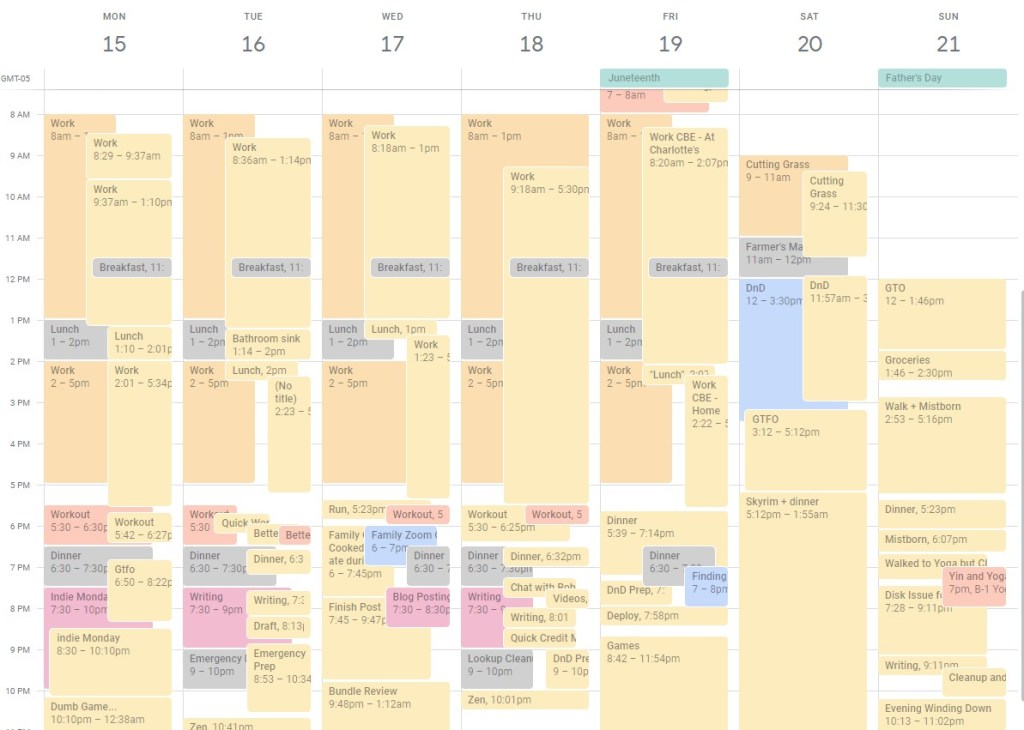
The light yellow boxes are times recorded from the tracker, all others were planned the week before.
Before starting the time tracking trial, I began a practice to schedule out my week ahead. It might be as simple as blocking out a time for writing or working out, but the act of setting the time in my calendar helps to remind me what I should be doing. Combine this with a time tracker, and we can see how that plan holds up.
The Best Laid Plans
While I long intended planned schedules to be a trial itself, it naturally made its way into my life. A few months ago, I found the days passing by in a blur. Putting what I wanted to accomplish in my calendar gave me a sense of direction for the week.
My calendar gives me a vision of what needs to be done for a given week. Having time set aside makes choice of action simple. Something scheduled now? Get started. In a world of endless options, it can be a relief to have made the decision days ago.
Overtime, some days have seen a general theme arise. Mondays have been streaming days. Tuesday and Thursday writing. Wednesday a weekly family call and finishing my blog post. The weekends have generally been gaming and relaxing, with some project work shuffled in.
Laying out my plans in advance also gives me an idea of what I can fit in otherwise. I may have to re-schedule or put off one thing or another should opportunities arise. Other times, I can spend time in leisure guilt free if there’s nothing scheduled for a given time. Vast areas of unplanned space are there for a reason, to recharge when needed.
The desire to see if I really was following the calendar was the inspiration for this trial.
Often Go Awry
As you can see from my calendar above, not everything went according to plan. I woke up late multiple days, got overly invested in numerous tasks, and even played Skyrim for 9 hours straight.
My planning process isn’t intended to be an absolute rigid structure, but an outline of my expectations for the week. Though looking it over, I do want to tighten it up more going forward now that I can see the comparison. A few minutes here or there is one thing, but there’s some spots that are just entirely overrun with a different task than planned.
There are times when I will likely go off plan, but without some spontaneity, what’s the point of life? Also, keeping some blocks unscheduled is important as well for leaving time to unwind when needed.
I’m only a little bit ashamed of how many hours I played this game over the weekend. – Photo from Steam store page.
This week was another in which I feel I’ve been able to look back with more awareness as to how I am spending my time. In particular, it’s my difficulty in switching tasks. I found this through reflecting on a problem often seen in video games, the one more turn syndrome.
Just One More Turn
There’s a phenomena in video games that’s referred to as One More Turn Syndrome. It gained popularity through the Sid Meier’s Civilization series. Essentially, it’s the practice of continuing to play for an extended period of time, after consecutive expectations to stop in just one more turn.
For context, in the game you run a world civilization and develop it through scientific advancements, political decisions, colonial expansion, and of course, conquest. A given turn can have a number of events. You maybe have a new scientific advancement, a new city is built, or even a country declares war on you, among significant other possibilities. One more turn is all that’s needed to sort out the current situation, then you can pick the game up again at a good point.
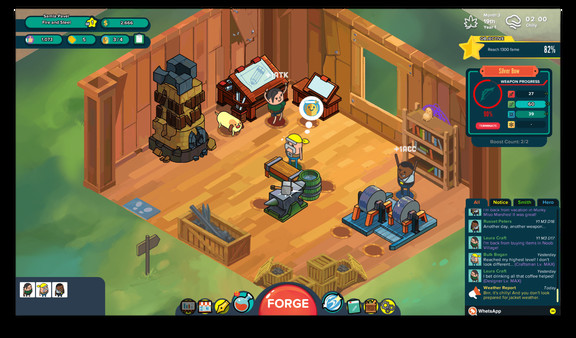
I found myself in this one turn cycle earlier this week while playing the game, Holy Potatoes! A Weapon Shop. I streamed the game as part of my Indie Monday series on Twitch, and felt the need to keep playing after closing it out completely. There are far from the possibilities than Civilization, but there are a ton of progress bars and options to work on all at once. Each of these acting as a carrot on a stick to just keep going for a little bit longer.
Beyond Games
Reflecting on this habit, I see it in a variety of areas in my life. There are times I stay online at work after the day ends to wrap up one last problem, then an email comes in I can tackle really quick, and so forth. As well as many other areas that are far less responsible.
Streaming services have designed their platforms to take advantage of this. When was the last time you were about to close up Netflix when the next episode count down began, prompting the thought, “I can watch another.”
This isn’t always a bad thing, but when other responsibilities or expectations arise, it’s important to be able to shift from one task to another.
Solution
If one more turn syndrome was easy to avoid, it wouldn’t have the reputation. There’s something about chasing that carrot that keeps you from recognizing just how much time has passed.
As of now, I’ve tried and failed to implement the simplest of remedies, a timer to stop. After it went off, I still told myself, just let me do this one thing and that’s it. Another hour or so passed, and I realized that method just did not work.
There are some alternatives, one I’m curious to explore is scheduling the computer to turn off at a given time. Using a timer as a warning that it’ll occur soon. While not built in for gaming consoles, a timer plug can do the trick.
I wish I could say I was able to stop and start when I set out to, but willpower is tricky thing. The best way to have strong willpower, is to not have to use it.
This trial has been a long time coming. There were too many days and weeks throughout this year alone which seemed to pass by in a blur. While far from perfect, keeping track of what I’m doing throughout a day has given me some insight into where exactly that time is going. Tying in a rough calendar of my planned day, I can see where the disconnect is.
Expectations
My goal for this trial is to get a better grasp on my time. What am I doing with it.
Time is our most precious resource. Once it’s spent, that’s it. There’s no getting back lost time. Having a feeling that it’s slipping by without notice started to get me depressed and frustrated. Too many times I looked back and thought, “what did I even do in all that time?”
Keeping track of that time will give me a record of where that time was, in fact, spent. However, even more importantly, it can tell me when I’m spending time in a way I don’t want to. Realizing this, I can work on systems to push myself to work on what I have planned at a given moment.
My Tool of Choice
After researching a few options, I came across an app called Clockify. It’s about 90% of what I’m looking for, but has some issues that dock it that 10%.
In general, the app is pretty simple. Press start timer, and it begins. There are features for “clients” and “projects” which I use to somewhat organize categories. It’s really designed for contractors to manage how their spending their time while working, hence the language.
The real feature that drew me to the app, that I can’t seem to find anywhere else, is that through another app called Zapier, an automation tool. Timers can be exported to Google Calendar. I do all of my planning there, so I found this to be perfect. Unfortunately, there seems to be some issue with Zapier finding any of my timers past May 28th, a bug that is hopefully fixed. I really like the idea of seeing my timers and plan next to each other in the same place. Until then, I’ll just have to piece together what I can. The in app reports aren’t really useful, as they focus on how much time is spent overall, not when a timer when running.
I did enter a support ticket while thinking about this, maybe someone can help me out and we can tackle that last 10% to what I’m looking for.
Current Takeaways
What have I learned already? What am I doing with that knowledge?
In the short time I’ve been time tracking, I’m surprised by one thing, I spend my time pretty naturally. With starting, I was expecting to adapt to keeping track of time, thus paying more attention to my actions in a given moment. Similar to how I approached food when meal tracking and fasting.
Having this natural habit still gives me better insights into what I can do. For example, I have a bad habit of sticking on a given task or project too long. Not let me finish this thought long, but uh-oh, it’s 2 AM long. This is particularly true with video games, who saw that coming?
Setting some time aside to decompress is nice, and games are a great way to do that. However, recently, I’ve found myself spending far too much time playing. I have some ideas from simple to extreme to curb this. The simple starts with an alarm to remind me when it’s time to stop. The extreme consists of plugging my computer into an automated timer plug and having it power down at a given time.
Perhaps next time, I’ll touch a bit more on systems and what I do for planning. But would you look at the time.
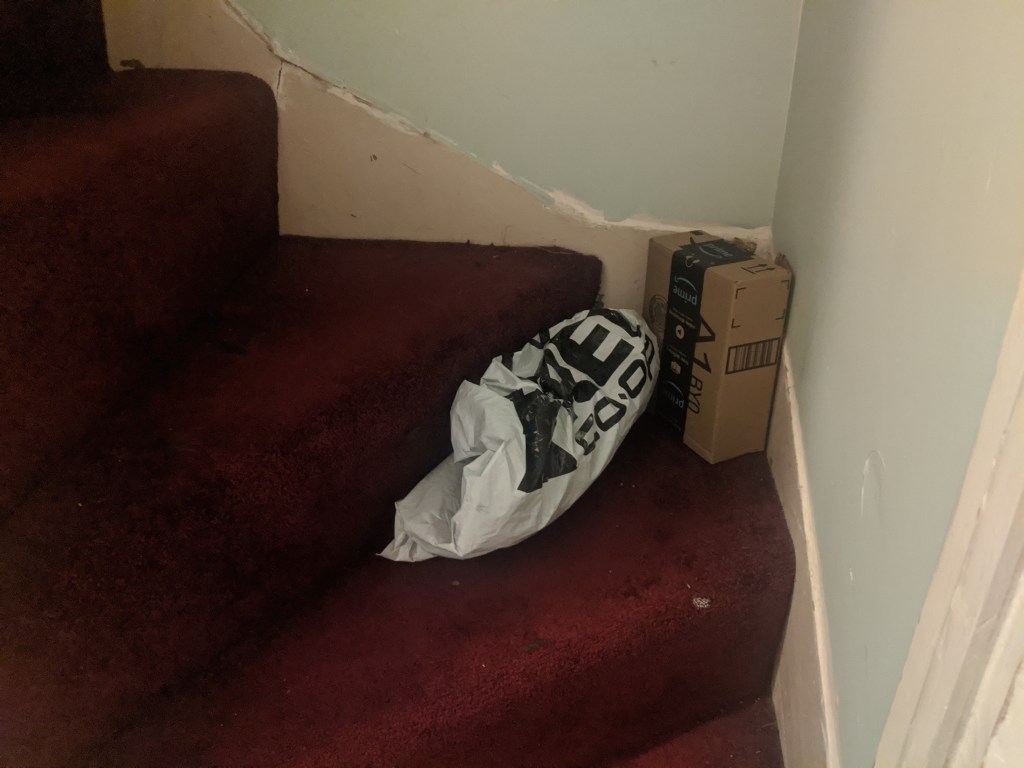
Online shopping is a double edged sword of convenience.
As this trial comes to an end, I most importantly need a long term plan for any spending. While buying things, both necessities and luxuries, is a given, it all comes back to purchases that will actually improve my life .
Still Spending
Yesterday, I ended up making another big purchase, a tablet to replace an old laptop. I’ve long been considering it for a number of reasons, and looking at my accounts, the money was there. I spent about an hour going through a list of why I wanted it and needed to buy it that day. Funny enough, I almost put off the order by another few days just to be sure, but I saw the price dropped nearly $100, so I figured I’d bite the bullet.
This tablet is a tool that offers a number of benefits. For one, I plan to use it for reading e-books, something I’ve been doing more and more. While able to read on my phone, the text is small and holding my phone for a long time gets tiresome. I’ll also be using the tablet as a second monitor when needed, thanks to some software I was able to find. The model I bought also has a pen attached for drawing and writing , something I want to do more beyond a mouse and keyboard.
There will always be things I am looking to replace or upgrade, but waiting for the right time is what will be important in the long run.
Planning Ahead
Just before making my purchase yesterday, I put together an updated budget with what I believe to be my regular purchases. The template I use, one made by Thomas Frank, has a section specifically for investments. The first thing I did was put in what I wanted to there, and then needed to sort out the rest of my spending from that remaining amount. “Pay yourself first,” as the old adage goes.
Far from a perfect representation of my spending, the budget gives me a clearer idea of where my money will likely go month to month. Using it, I can better steer the course of continuing to save and invest, while finding the right times to spend.
Speaking of the future, the next trial I’ll be doing is time tracking. I’ve had on and off success in the past few weeks of keeping up with it, so hopefully a trial will get me in gear. Throughout this year, I’ve had days or weeks pass by in a blur with no recollection of having done anything. In an attempt to see where I’m spending this time, I’m going to track it and compare the results to my planned schedule. If you’re interested in following along, this is the free tool I’m using, but there are plenty of others out there.
Have you ever found yourself going from not even knowing a product existed to clicking purchase mere moments after a friend mentioned it off hand? I was in that boat this past week. While I certainly “saved” some money taking advantage of a holiday sale, I still spent a more than I would have not making a purchase.
Sales Don’t Always Save Money
Not saving money buying something on sale sounds counter intuitive. I mean clearly that’s just wrong, right? While sometimes there are certainly sales that outright save money. However, I often find that sales tend to tip the scales for me to make a purchase that likely wouldn’t have otherwise.
I retroactively justify purchases telling myself, “I was going to buy a new one anyway.” Just this past weekend, this moment came in the form of a purchases from the outdoor store REI during their Memorial Day sale.
Making this purchase led me to finally pick up a few items I was considering off of Amazon for some time. These weren’t necessarily things I needed, but have long put off buying. One item, a pack of dry erase markers, I’ve had on a shopping list since January.
Going through the checkout process on Amazon, I noticed even more ways that companies encourage spending, even just a few more dollars. Nearing my order completion, I received the prompt to add about ten dollars more for free shipping. I honestly started looking for something else to buy, I mean it’s FREE. After some brief browsing, and not finding anything I felt I needed, I decided to just eat the shipping cost. Luckily, I was able to sign up for a Prime trial, even though I was previously a Prime member for over a year. It was a win-win for me there, no shipping fee and no unneeded items.
When buying something on sale, at the end of checkout, money has been spent. It may be less than the standard price tag, but it’s still coming out of your pocket.
The Power of Friendship
After heading down the online shopping spiral, I wondered how I got there. I wasn’t even aware of the sale until I heard some friends talking about it. Before I knew it, I was perusing the selections and found what I convinced myself I needed.
Word of mouth is an often under appreciated method of marketing. While advertising screams in our faces and jams it’s way into our feeds, the positive word of a friend can sway a purchase with little resistance.
It doesn’t always even need to be intended social influence either. The pressure of standing out in a situation can lead to buying the way back into normalcy. There have been a number of times I found myself going out to a bar with no intention to drink, but eventually I caved and bought myself one…or more.
The point I’m trying to make isn’t to cut off all relationships or never buy something on sale, but to bring back awareness when buying something. This is for myself more than anyone. The question that needs to be asked before every purchase, “why am I really buying this?”
While I’ve been a little loose with my purse strings this past week, I want to focus on the strategy element of investing in this post. I don’t quite know how to account the large investment I made this weekend after my first post-loan paycheck.
Rising Tides
After spending the last few months pushing down my student loan, I’ve expanded my disposable income. I didn’t realize how much it would be until I had the cash sitting in my bank account on payday. The fact that my problem is having “too much” in this challenging time is certainly a blessing.
A majority of my spending this past week was in the form of gifted subscriptions on the streaming platform Twitch. Subscriptions are paid support to a streamer, and on a couple occasions, I was inspired to pay for other viewers’ subscriptions. For better or worse, I accompanied this spending with a saving strategy of skipping groceries this week, so the scale is slightly balanced. Fear not though, I certainly have enough food to make it another week.
While my spending slightly increased, my saving was an exponential rise. Because of my frugal lifestyle, I was able to make a significant deposit to Robinhood, my broker for buying stocks. In terms of this trial, my deposit put me significantly ahead of any spending to this point. I am curious to see how it impacts my spending for the rest of the month.
Will my matching buffer encourage me to spend more, or will the habit of saving settle in? Only time will tell. What I think was far more important this week, was the strategic work I finished, my investment thesis.
The Thesis
An investment thesis is an argument for why an investment is a good option. While financial analysts and investing firms need a rock solid thesis, making one for personal use allows a lot of room for personal preferences.
My thesis was inspired by this post by entrepreneur, marketing expert, and taco-obsessive, Noah Kagan, in which he walked through step by step of his thesis. If there is any interest of hearing the details of mine, drop a comment below.
Here are some of the high level points. I’ve separated my current investments into three categories, self-managed, automated, and unique. My self-managed portfolio is handled via Robinhood, where I plan to have 40% of my total equity in the Vanguard Total Stock Index fund. An additional 35% of my total equity is spread out evenly across 10-15 companies. The criteria for those companies are ones which are both successful and that I use. From an automated standpoint, I started most of my portfolio with Wealthfront, and I really enjoy their service. I plan to keep 20% of my equity in my account. The final category and final 5% currently belongs to Lending Club, a service I started investing with a few years ago. The idea is crowd funded loans. I like the service offered, and the returns are decent, so I plan to keep my account going.
Ultimately, what I think is important is to have a thesis, any idea of where you are putting your money and why you believe that is the right decision for you. Considerations can be risk tolerance, return expectations, income, opportunities, and more. No two people’s circumstances are the same, and thus it’s not likely every investment option is right for two people. Hopefully this helps you come up with a plan for your own portfolio.
This is the type of trial that seems to go unnoticed at first. I am paying closer attention to my finances than I normally, but overall not much change. In the end, I think saving every dollar I spend will help with my goal out of this trial, preventing lifestyle creep.
What’s Measured is Managed
There is a trend of tracking lately, and it’s been some time since I took a close look at my spending. Keeping track of purchases has been simple enough. I’m keeping a spreadsheet with the list. At this point, with a well stocked grocery run, a few meals out, and a few treats, I’ve invested around $270. My plan is to apply the savings about once a week or so, rather than after each purchase.
I haven’t had much for purchases yet, though I did treat myself to a new pair of sunglasses I’ve wanted. Admittedly, I’m also looking to buy a new watch, but for better or worse, it’s sold out currently. There are some other items I’ve considered, but am holding off for now.
I’m excited to see what the final spending turns out to be. While I expect there to be some irregular purchases, the results should give me a new baseline of expectations for monthly expenses.
What is Lifestyle Creep?
For the most part, I maintain a pretty frugal standard of living. There are a few luxuries from time to time, but for the most part, I don’t spend much. Now having opened a large amount of disposable income, I don’t want that influx to crash into my current standard.
Lifestyle creep is that influx. It starts small, the creep element. With more disposable income, more options open up to spend it. If left unchecked, there’s a new standard of living that must be met. It might be expectations for housing, clothes, food, and wherever else your paycheck goes regularly.
Spending more isn’t necessarily bad. The misstep lies in letting that extra money flow somewhere that doesn’t matter.


 Trying Out Before Buying In