A Spring Cleaning

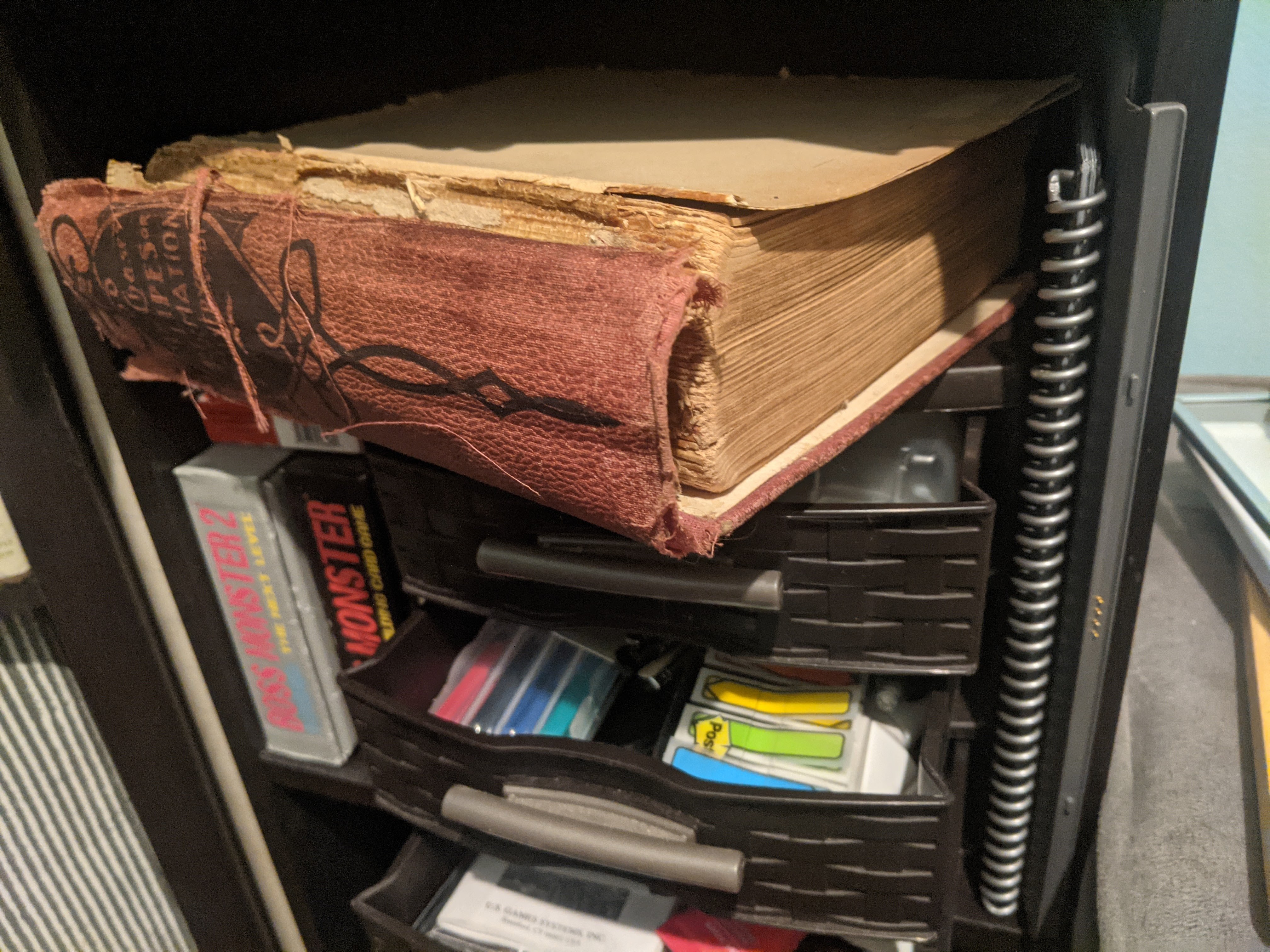
A broken book and drawers full of clutter, a great place to start tidying up.

With spring upon the Midwest, it’s time to clean out everything that’s been piling up over the last year. Winter clothes are put away and piles of dust are wiped clean. While the practice is often done in our physical spaces, I want to share that time with my digital spaces and my routines. As mentioned in the last post, adding things to a clustered schedule is always more difficult than finding what to remove.

Physical space

After a year of my current living arrangement, I’ve finally decided to take steps of getting more settled. When I first moved in with my friend, I didn’t have a plan for what was next. In the midst of the pandemic, I didn’t know if I wanted to stay in the Chicago area or head out of state somewhere. With proximity to family, friends, and a lot of great activities, I plan on staying for the foreseeable future.

With that in mind, I started to unpack a bit more as well as take in bigger items that would make moving more difficult, such as a bed and desk. Because of these additions, I’ve had to completely rearrange the room. So far, it’s been pretty successful setup, but I want to explore changes that might improve things even more.

There are also a lot of items I’ve been holding for far too long. I have some items intended for small projects, like an old book found for free at the library, though its cover is completely torn and broken. I wanted to take time restoring it, but never got around to it. This is one of a handful of these items and I need to either plan a specific time to execute these plans or move on.

While there are items in this limbo stage, I also have a slew of items from various homes before that haven’t been needed with roommates but make sense to hold on to, kitchenware, furniture, and more.

In the past, I gave a shot at the “minimalist’s challenge” to get rid of an item every day with an additional items each subsequent day. It helped me part with a lot of things I no longer needed or used. While I don’t plan on following a specific challenge, I’ve already donated some clothes and some other things I no longer use.

Beyond the Physical

Many of us know how important it is to keep our physical spaces clean and organized, but when opening our devices we have cluttered work spaces and files all over the place. Along with cleaning, unpacking, and organizing my room, I want to clean up my devices and apps.

I’m pretty happy with how I’ve set up my files and how I use things like Google Drive and Notion, the primary place I store notes, ideas, and information. However, I think there is room for optimizing some things. Coming up with clearer organization and workflows for getting information in can offer a better experience. I recently bought a whole Notion system from a productivity creator that I’m excited to break into more.

Thomas Frank’s Ultimate Brain series of templates takes the “second brain” concept and productivity workflows and makes them work incredibly well in Notion. I’ve been using the system since it launched and I know there’s a lot of ground that I still need to cover. As of now, I’ve done some work with projects, including these blog posts, but haven’t really worked into the task processing end of things. I’m excited to see if it improves how much I get done.

I also want to better organize how I set up my days. As mentioned in last post and others in the past, I have a hard time adding things to my life. Trials where I’m adding a new habit or practice can become more and more challenging as I settle into routine. I want to take a look at the ways I’m spending my time, remove what isn’t adding value, and encourage what is.
Whose Blues

My harmonica is back in its box for now, but only for one more day.

Another trial complete, and I’m hoping to break a bad habit with this one. Rather than the usual taking a break at the end, I’m going to do my best to keep the momentum going and continue regular harmonica practice. All in all, I enjoyed the experience, but it’s a category of trial I’ve had a hard time keeping up with, adding new hobbies to an already busy day.

Slow and Steady

Even with some knowledge of music, I’ve had a tough time feeling great about what I played during practice. Whether I was just playing tabs for a song or just improvising a tune, I doubt it sounded any good.

This is somewhat expected, as I sometimes forget just how short four weeks actually is. Switching to the video lessons after the first week was a major improvement to the overall experience. I appreciated the design of the course as it focused on mastering a specific element before moving on. Whether it was a simple warmup or a specific song. That little bit of tangible progression was satisfying.

There are a few times that something clicked or just felt right that feels so incredibly rewarding. I’m looking forward to developing more and more, being able to play something more impressive. I’ve long believed that music is an important part of culture.

One of the major things I had to keep reminding myself of is that slow and steady progress is not only okay, but expected. I’m not looking to become an overnight sensation, just have some fun learning something new along the way.

Eyes Forward

I’ve had a lot of fun learning the harmonica and revisiting music after many years away. On the surface it seems like a simple instrument, but there is an extreme depth to be found when sought out.

As mentioned, a long habit I’ve had after trials is to take a brief break after immersing in them for so many weeks. This of course leads to ceasing to continue the habit or practice of a given trial. While I don’t plan to continue a daily practice, keeping practice on my calendar a few times a week should help practice while not over booking myself.

A reason for this bad habit stems from the challenge of adding things to a daily routine that already feels cumbersome at times. With this ease of removal in mind, I’m avoiding some other trials on my radar at this time. For the next few weeks I’ll be revisiting a previous trial, minimalism. Though this time with a focus on organization, schedules, and habits.

Learning to Wing It

It’s time to unleash the inner bard.

This has been another week of minor improvements. Following along the video series has definitely helped me keep a better pace, and in general I work better with video learning. The latest lesson was certainly the most challenging yet, introducing improvisation to playing. As I become more confident in playing, I believe it will be easier to riff something off the cuff, but right now I really struggle in what to play.

Video Killed the Radio Star

When it comes to media I consume. videos are definitely my poison. From memes a few seconds long to several hour video essays, I spend a lot of time watching videos.

Most if not all of my online learning has consisted of video content in some form. Whether it’s a simple YouTube video or a more structured course website, I find videos to be the most effective at delivering information electronically. It is extremely helpful being able to see specific actions or results and to hear what something should sound like, in the case of learning an instrument.

If all that is available for a given subject is other forms of learning, they are certainly useful, as the book I started with was a fair introduction. However, a video can deliver much more in a shorter amount of time.

When it comes to learning overall, an interactive course where an instructor can provide direct feedback is the best. However, the option is not always viable, and with this I see videos as the next best thing.

For the harmonica lessons in particular, I find the order, structure, and pacing to be much better than the book. I briefly mention the order in the last post, but starting with how to hold the instrument felt much smarter as it’s the actual first thing to be done. The structure thus far has been the introduction of a general concept along with a specific action with the concept to be able to execute. Once done, the instructor advises moving on to the next lesson.

Having that objective for each lesson provides a good pace for when to know I’m ready to move on.

Improv is Hard

The latest lesson, however, is a bit more tricky. Bringing in improvisation using the skills taught so far is a hurdle for me to overcome.

Improv in general isn’t a major weakness, as I get a lot of practice with regularly playing Dungeons and Dragons with ideas and changes to plans hitting me depending on what players choose to do or the result of a dice roll. Applying this skill to music is something I need to develop further.

Luckily I have a skill that helps challenge this hurdle, being willing to sound terrible. The first few practices with improvisation I am sure I sounded pretty rough. I sort of just played random notes along the small instrument. It’s difficult to say for certain how well I’m developing, but word from my housemate is that I have in fact improved.

I have started listening to some improv harmonica songs I can find on YouTube and it gives me something to get a sense for. I’ll certainly not be able to replicate the exact sounds of the musicians in question, but perhaps at least the rhythm can be a place to start.

Harmonica Blues

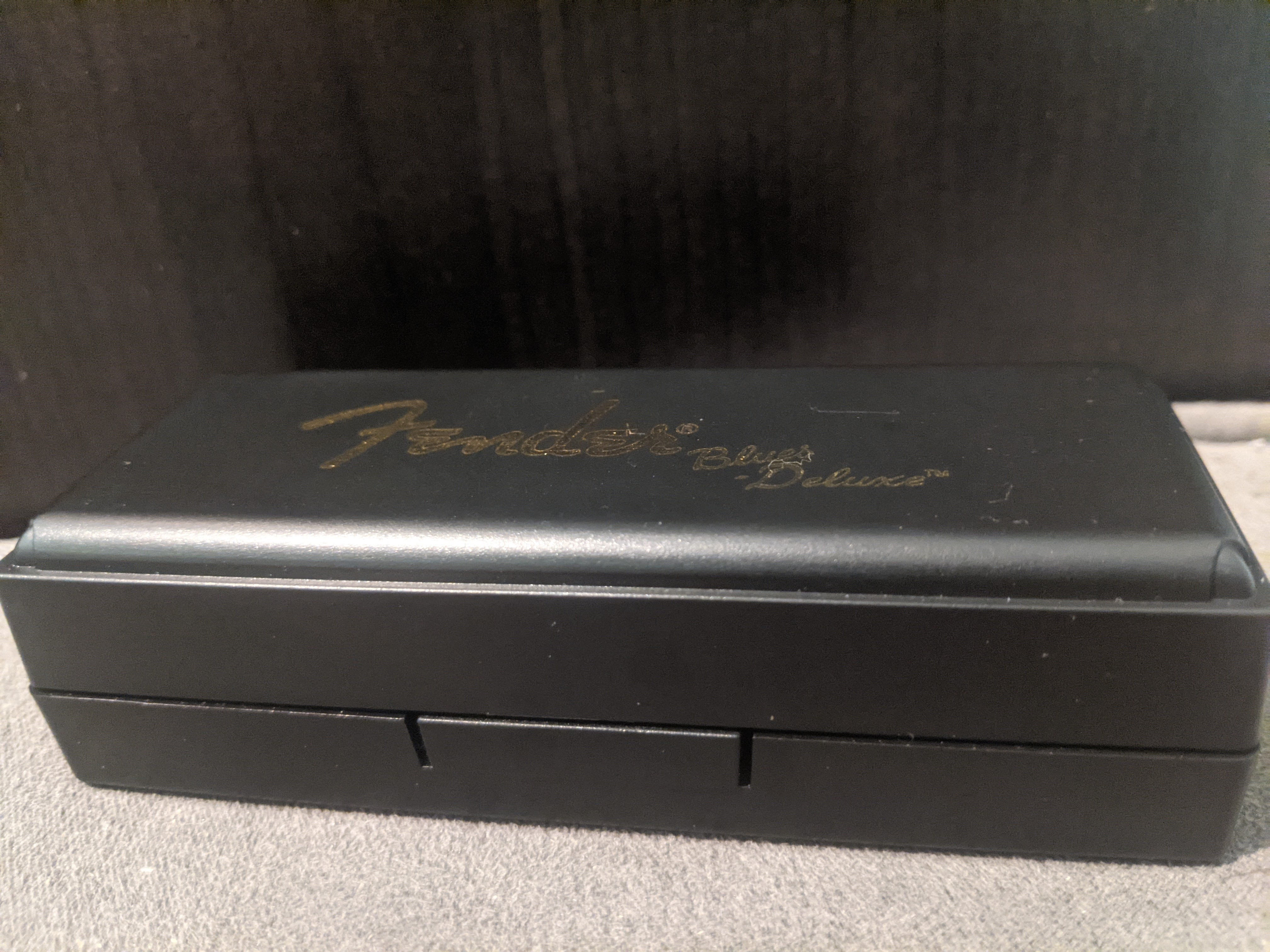
Putting the Blues Deluxe to work.

My primary goal for this week was to learn a few songs from the book I was working through, and I was about 75% of the way through a third song when I just couldn’t figure out the rhythm in my head. After reading through the rest of the book I had, I found it was time to move on to a video series, as I tend to learn better from audio visual media. However, the lessons themselves are not the biggest challenge I faced this week, as I struggled to make time for consistent, quality practice.

Learning Challenges

The notes were similar to guitar tabs in the sense that they expressed the note to play, but not at what timing. Mary Had a Little Lamb was simple enough to get since the rhythm is burned into my mind for some reason. When trying to move on to the slightly more complex, When the Saints Come Marching In, an old favorite from my saxophone days, I couldn’t really get the rhythm down.

It was here that I felt I needed to move on to a different learning direction. I’ve since started a short YouTube series covering some of the basics. I was very happy to see that the first lesson covered sections that confused me as to why they were so late in the book I read, one of which being “How to Hold the Harmonica.” When hitting this section towards the back end of the book, I immediately thought, “I didn’t even think about if I was holding it right, that seems pretty important.”

Something else that occurred to me as I progressed in the book was how naïve I was in the simplicity of the instrument. There is a lot more to this little device than meets the eye. There are a variety of practices for changing the sounds beyond breathing in and out. The usual suspects of musical instruments are here, such as chords, octaves, and scales, but also bending and vibrato – a practice of tone shifts sustained throughout a note.

I’ve had to keep reminding myself that I need to start small, accept being a beginner, and celebrate the early wins to keep up momentum. Otherwise this could become another lost interest on the pile of trials behind me.

Habit Challenges

Consistency is one of the bigger challenges I faced this week, even as something I emphasized in the last post. I’ve been struggling to make the necessary time to just get started. My plan was to use the space after work, but by then I’d often been mentally exhausted and used the time to do basically nothing day after day. Making better use of this time will not only benefit me in harmonica practice, but also in a variety of other areas.

This comes back to an early retrospective from a couple years ago in which I’d found trials centered around removing things from my life were significantly easier than those that added. In the end, remembering to not do something is pretty easy as seeing the thing reminds me not to do it. While making the conscious effort to make time and energy to focus on a given task has a variety of steps just to get started.

To combat this, I plan to set a concrete time for practicing every day 4:30 PM. It’s in my calendar with a reminder just like any other meeting or appointment. I’m hoping this reminder will help me to get a consistent habit for practicing. I may also revisit ideas from books like Atomic Habits to help me think of better ways to help the habit stick like developing proper cues and rewards to reinforce practicing.

Maybe Making Music

It’s been a long time since I’ve really sat down with a musical instrument. I was actually in band in middle school and played the saxophone. While I enjoyed the experience, I moved on to other things. In adult hood, I’ve been trying to find something to scratch a different creative itch, music. Thus, I’ve begun to take the first steps into a new instrument, the harmonica.

Why the Harmonica?

I remember many years ago getting a harmonica while in Boy Scouts. Being a child with no comprehension of musical taste, the instrument was an obnoxious noise maker at best.

Over the years, I’ve heard people make this simple instrument play incredible melodies. I can’t count the times the bridge from Blues Traveler’s Run Around got my body moving. It’s versatility in sound in astounding for such a small, simple instrument.

On that note, its size is another factor. As someone who spends a lot of time outdoors, I’ve liked the idea of whipping up a quick song around a campfire after a long day of hiking. Being able to tuck a harmonica in a pocket or a backpack makes me far more confident in bringing it along. Plus, the simple design makes them quite durable and able to face the challenges of the outdoors.

The final reason is just that very simplicity. The instrument is just a bar with holes and a couple of reeds inside. It doesn’t have valves, strings, or switches to worry about. The goal is to blow or suck air and move the bar to the right spot for the right note. In total, it’s 20 notes to remember and as far as I’ve learned so far, one small gimmick.

Talking About Practice

The week started off really well, I found a book at the library that has been extremely helpful. I’ve learned a few warm ups, the notes, and even some interesting history about the harmonica.

As the week went on, I made less and less time to practice. My original goal was to use time after work to get into practicing, but other things have crept into my shcedule throughout the week, my time became less and less focused here. The practice I have done has mostly been going through the warm ups. Even keeping practice short, my lips have been kind of sore.

For next week, I really want to build that daily habit of practicing and get through some of the simple songs shared in the book. I want to play at least three of them by next post.

Structured Strategy, Tensile Tactics

One of the many murals seen in Denver

Vacation comes to a close, and it was good change up from the daily routine. Day after day our group went on exciting adventures from feeding giraffes at the zoo to a murder mystery night. One of the best parts of this trip is the casual nature of how planning was handled. This got me thinking about the importance of flexibility when it comes to pursuing anything. There needs to be some wiggle room for exploration and variation, but it’s also important to provide some loose structure or path to give some degree of guidance.

The Open Road

Among our group, we had some people fly into Colorado, but I chose to stick it out with those driving all the way there. This was a great time, as we were able to pass through the little city of Dubuque where I used to live and meet up with a lot of friends.

Road trips are a good example of what I mean by a high level structure with some options within it. Knowing the route that needs to be driven provides the destination, thus is important to follow the proper roads. However, along that route, there will inevitably be stops at unexpected times. From gas fill-ups to meal time and bathroom breaks, there are a lot of interruptions along the way, not to mention road closures, accidents, and much more. Trying to plan out every step along the way would be a headache and not likely to bear any benefits.

The trip itself had this overall philosophy as well. We had a select handful of items we wanted to do, and came up with a rough plan of when we would do them. For example, a big plan for the tirp was to go skiing. Once we had a day picked, a majority of the planning was open ended. For a lot of us, it was the first time skiing, and we were unsure of how long we expected to go. The night before, we came up with a loose plan of when to arrive at the mountain and when we expected to leave.

Another example of this that worked extremely well, was a day trip for disc golf and a hike. Past experience led to the expectation that we could just show up at the course and play. However, we actually needed a reservation since it was a private course. Instead, we got a slot for later that day, hiked first, and then returned to throw some discs. In hindsight, it worked out better that we hiked first, as we were all pretty tired after 18 holes.

The Structure of Trials

Last year, I experimented with stopping the trial format upon which this blog began. The process of trying something out for a few weeks with the frequent result of dropping the habit or practice after the time period.

This repetition led me to move away from trials as a way to think about how I want to come up with posts going forward. The result was that I took a several month long hiatus without any intention.

Returning to this format has given me the direction and pressure to continue writing once again. At the beginning of this year, I wanted to start writing again and knew beginning trials again would be the quickest way to get back in the habit. However, I knew I needed something guiding what I decided to try, which ultimately brought me to the yearly theme.

As I was writing this post, I realized the yearly theme fits this ideology in a way. It provides a direction to follow while leaving some of the specifics up to interpretation and what a given scenario calls for.

With this brief departure over, trials continue with an old format, learning a new skill over the course of a few weeks. In this case, I will attempt to learn the harmonica, at least the basics. I don’t quite know what’s in store, but I’m hoping by the end I can play some simple songs.

Revisiting Diets

A plate for one.

With a short break, I wanted to take a look back at some trials of the past. A popular choice of mine were challenges surrounding diet. From eating a vegetarian diet to calorie counting, there are a few that belong to this loose category. Looking through the archives, I wanted to see which I still followed to this day, and explore why the others fell to the wayside.

Still Practiced, Kind of

There are only two trials that I still follow, and even those have an asterisk. The two trials are calorie counting and intermittent fasting. I’ll start with calorie counting as I have more to say on it.

After months of not practicing the habit, I decided to make the effort when I wanted to start losing weight recently. After only about a month of restricted calories, I lost nearly ten pounds. Throughout the month, I rarely felt that I was under eating or putting myself through a particular challenge.

Once I was around a weight I was happy with, I stopped counting daily and just kind of ate whatever. I was floating around that weight for a bit, but I think vacation mode has led to that number getting away from me. That’s something that I think is really important when calorie restricting and counting, having a return to normal. It can easily become an unhealthy habit if the number going down becomes the goal, not a particular target.

This comes to the second of the practices I’ve maintained, kind of, intermittent fasting. The way I look at fasting is that I simply don’t let the clock tell me when to eat. I eat when I’m hungry in the morning and then the same the next day. I don’t notice much difference between what I’m practicing now and the stricter time based fasting I did in the past.

All in all, I’ve had a much better time with following my stomach than the clock.

Discontinued, Kind of

Now for those that didn’t last. Some are on my mind more than others, and some I even practice without meaning to!

A trial that I think back on often was meal prep. Every month or so I think about picking it back up again, but then days go by and I never end up rebuilding the habit.

The next group of trials I’m going to just refer to as vice abstinence. In this case coffee, alcohol, and sugar. I don’t plan on quitting coffee again anytime soon. It’s an integral part of my day, and is a nice ritual to get the morning started. I have gotten much better at only drinking in the morning and stopping at two cups max, though the occasional three cup day does arise.

Sugar and alcohol on the other hand aren’t as intertwined into my day. I’m not reliant on either substance, so I’m not worried about my current use. Perhaps some sort of conscious consumption of cravings in the coming weeks would be good to check in on how I really feel about them.

Another trial related to abstinence was going vegetarian and giving up meat. I’ve definitely had recent days pass by that were vegetarian or vegan by accident. This was simply based on the meals I ended up making for the day. The typical meal that breaks this practice is dinner, as my breakfast and lunch are unintentionally vegan. Though, depending on your definition, the bit of dark chocolate I have for breakfast “may” contain milk, but I’ll leave the labels in your court.

Reflecting on these trials has me thinking a lot about diet again Perhaps I’ll need to lock something in for later this year. After all, I feel diet easily fits the theme of foundation.

Automated and Dangerous

Like the terminator but less threatening.. (Source: Pavel Danilyuk on Pexels.com)

While my original vision with this trial was to create far more automated processes, I think it’s served better as a reflection on what systems are working and which are not. Getting some automation in place is definitely a plus, but the higher level thinking is where I’m seeing benefits.

The Step Before Automating

The first road I went down was getting my email better managed. For a couple of weeks, I was deleting so much crap I wasn’t even opening, aI started to let it out of hand. While I eventually took the time to set up rules and a simple script to keep my inbox clear, the place I really started was by unsubscribing from a bunch of newsletters I hardly ever read. I even blocked some emails that I couldn’t unsunscribe from.

Nearly all of the rules I created were set up to just delete emails from senders I couldn’t really do so, like my banks and credit cards. I still wanted some emails from them, just not every reminder for automatic payments or statement notifications. I manage nearly all my finances through apps anyway, so the emails are just extra clicks to delete.

While I’ve only applied this to email throughout this trial, I think it’s important to not waste time setting up automations for tasks that are better of being eliminated.

Tying to the Theme Foundation

For this final post of this trial, I wanted to reflect on how this connects to the yearly theme of foundation. When getting this started, I didn’t exactly have foundation in mind, but I think it fits well.

For one, I set up the base of home automation with getting Home Assistant installed and running. Setting up some smart home tech has been a desire of mine for a long time.

Through this practice of looking for optimizations, I’ve made a better effort to create templates and systems for getting things done. For example, these posts have long been blank pages in Google Docs that slowly filled up as I wrote. Now, I’ve set up a template with a focus on outlining and building out the text from there. It even includes some space for thinking about the photo to use, something that tends to be a last minute scroll through my available pictures.

The DnD planning template is one I started expanding on, and have some big ideas for changes in the long run. Changes were even made to my most frequently used template, the weekly review. Adding a simple checklist for other actions I started with, like tidying up my desk and getting any loose notes written permanently into Notion, my notes app of choice.

Overall, I’ve really expanded on what I want to get out of Notion, to use it more as just a place to keep notes and some templates. I’ve been reading and watching a lot about this whole “second brain” idea, and even managed to catch a brief “live webinar” just this week. I found it fit really well with the overall improvement to systems that I was looking for in this trial.

Where Do I Go From Here?

A major takeaway from the last few weeks is that if something feels tedious, it’s probably prime for some method of improvement or removal. Regularly checking in on the tasks I do for candidates is something I hope to do for the rest of my life.

Home automation is also something I’m looking forward to expanding. With more lights, sensors, and programming I can create some interesting processes throughout the house, or at least my room. The technology isn’t limited to lights of course, but without messing around with my friend’s house, I don’t expect major changes until I find a place of my own.

With this trial at a close, I’ll actually be taking a brief break. For the next couple of weeks, I’ll be on a trip and to avoid practicing some weird habit while out with friends, I’ll instead be sharing a few non-trial posts for a couple weeks.

Smarter Not Harder

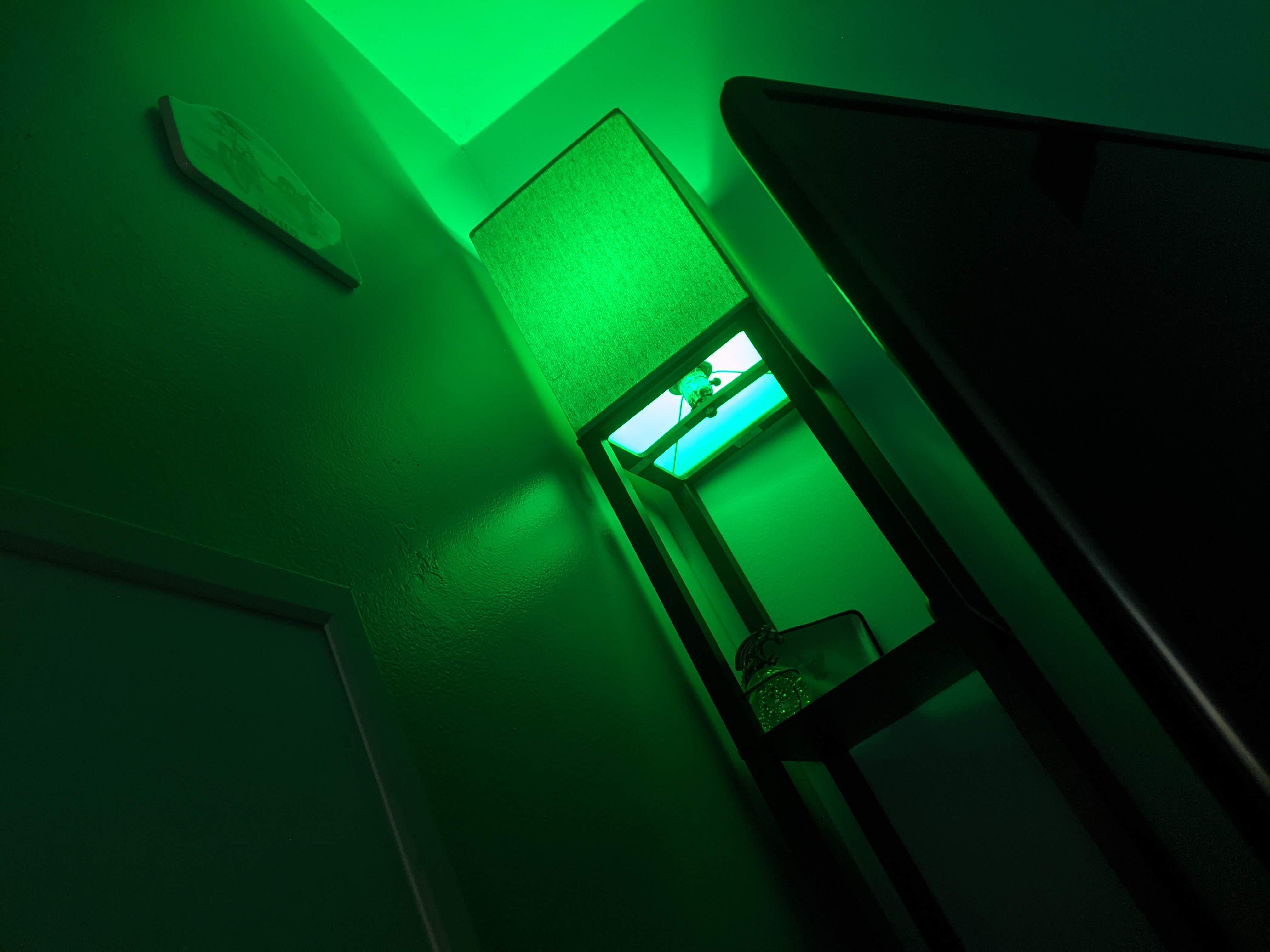
Green means go!

After a few Amazon orders, I was able to lay the foundation for a home automation setup by installing a hub. Otherwise, I made progress on my DnD template to reduce the time taken for set up and took a crack at some programming.

Home Assistant Up and Running

Let’s start with the concrete progress from the week.

I gained ground when it comes to home automation. I dug out an old Raspberry Pi  to use as an automation hub. The hub serves as a control center for automation systems. I’ve gone with Home Assistant, because it’s a local system and is extremely flexible. With that piece of techin place, I can slowly build up automation options over time. As of now, the place I’ve started with is lighting

The consensus for lighting favors the use of smart light switches, but since I’m renting, rewiring light switches isn’t something I’m prioritizing now. I kept my initial goal simple. to remotely switch a lamp on and off. Once that system was set up, I added some minor automation based on the sunset and even a bedtime alert if I’m up too late. Currently, the alert just flashes the lights at 11:00 PM if the lamp is still on, which is all the nudge I need to start getting ready for bed. As with all things in smart home tech, I also have a grand vision for an improved system in mind.

With my primary goal complete, I have a few more lighting based ideas for the short term. One is to put a light strip under my bed for a dim light at night for when the even the dim lamp is too much. In a totally different part of the house, there is a set of shelves that lead to the basement. Due to their positioning, they are often poorly lit. With just a light strip with a built-in motion sensor, it could perfectly light up the shelf, as well as be an improved lead to the basement.

The major barrier at this point is cost, as I don’t want to sink a whole bunch of money into these options all at once. A benefit of home automation is it can be built over time, and every addition can lead to exponential options for tying different tech together.

One of the takeaways I’ve had in the project this week is to have a long term plan, but to start specific. The long term planning is largely creating the foundation for future additions, much like the base of any structure. However, it can be easy to get carried away with the plan and not get anything done. Having specific goals in mind to get started can help get the ball rolling.

Something Software this Way Comes

The major focus this week was on getting Home Assistant up and running, but I was able to spend some time in other areas.

The only progress I’ve made on my improvements to DnD planning was to add some existing tools I use directly to my existing template. Goblinist was the biggest one, as this will allow me to quickly generate a few options for random encounters, even on the fly mid session without much hassle. This certainly does save me a few clicks, but I still see plenty of room for improvement. My vision is being able to click on a few buttons directly within the template and it spits out similar options as Goblinist, but also includes the actual monster info directly into Notion.

An area that saw a questionable level of progress was setting up automated payments in Venmo. I looked at some other payment platform options that offered built in scheduling, but I wanted to avoid having my roommate sign up for new things. I was able to utilize an existing project to get the code almost working, however after 2 hours I was still dealing with some errors. I’m hoping after jumping through some verification hoops with Venmo, I might get this wrapped up. While I am spending far more time than I ever will clicking the few buttons needed to send a payment, I find three major benefits to automating this.

First, I don’t need to take the time to think about sending what I owe each month, something I’ve forgotten several days into the month at times. Second, I can always adjust the process for anyone or anything willing to accept Venmo for payments. Finally, it’s been a great learning experience. While I’m largely borrowing from existing code, working through the changes I need to get my process to work is forcing me to learn a lot about the technical structure of the service.

With just about a week left in this focus on automation, I’m going to focus on systems to speed up the writing of these posts. I’ll be going on a trip soon and want to have posts up and ready without much interruption.

Applying Automation

Now if I can just get my lights to turn on like these…

This past week has set me up with some easy solutions for taking care of my email and a calendar entry for cash back categories. When I began to move on to more technological solutions, things got complicated fast.

Progress and Obstacles

There isn’t much to say about what I’ve gotten through so far. I’ve taken care of the easy things so far, email and a simple calendar. 

Finally tackling the mound of email I let build up over a few weeks is always a relief. Using that pile to create rules to delete or archive emails automatically will make the process near instant in the future. There are still items I want to read, review, and reply to, but most emails that I get are things I don’t need or can find on demand otherwise.

The simplest, but not necessarily easiest, process to pursue for email was to unsubscribe from those I no longer need. There are a number of newsletters I’ve signed up for over time, only a few of which I regularly check. This I believe is the biggest takeaway so far, elimination can beat automation.

After accomplishing the simple items on my list, I wanted to shift to some home automation options. In looking for a smart plug to remotely toggle a lamp in my room, The options quickly became a lot to learn. I found myself perusing reviews and subreddits trying to find something simple but also isn’t total junk. When I thought I came to an answer, I found myself down a discussion that saw security flaws in the plugs. While there are options to secure them, it sounded like just as much work to begin a more complex process. For the time being, I don’t expect much for technological automation over the next few weeks.

Next Steps

I plan to continue researching options for getting that lamp automated, but it’s taking a backseat to some other options for now.

One area where many things are already automated are my finances. I have most everything on autopay, direct deposit, etc. However, there are a few areas I still pay manually, and I am looking for an option to automate a monthly payment. I think I have a solution in the service Zelle, already offered through my back, but I just haven’t taken the time to confirm it will do what I want. This will definitely be a focus for next week.

When I prepare games for DnD, I use a template from SlyFlourish for the lazy dungeon master system. This template in itself saves me a lot of time being able to plan just a few key elements built from a simple template. However, I’ve been thinking about introducing additional methods for handling random encounters and rewards, some of the less interesting parts of planning in my opinion. There are some manual random tables I use to minimize the thought process, but I feel there are still opportunities to smooth the overall planning process out.

A place I’d like to explore more is using code to speed the process up. Recently, I got my first glance at Google Scripts, JavaScript platform that allows the development and execution of scripts. So far, all I’ve used the platform for is automatically archiving emails, something not possible through filters. What I like about focusing on programs over hardware, is that it’s a lot easier for me to understand what lines of code will do as compared to the wide variety of automation products out there.

I’m happy to continue eliminating or iterating on the numerous tasks in my day. Finding systems, technology, and programs to minimize mental effort can forever be a benefit.