Vacation and Relaxation

This [redacted] butterfly would not leave our wet shoes in peace to dry in the sun.

After a hectic week that bled directly into a camping trip, I’m getting this post out a few days late. With a stressful plan to try and muster something up for the weekend, I ended up leaning into one of the four pillars of The Four Pillar Plan, relaxation. Allowing myself to take a couple of days to not worry about everything on the other side of the trip made the experience significantly better.

Work Weak – Why Sleep is Critical

I was excited for the week I had on paper. Scheduled time off on top of the holiday meant I was looking at a quick three day week. What I received was technically that.

After unexpected issues arose, I ended up working a long, frantic night to leave on time for a camping trip the next day. In doing so, I demolished my sleep schedule.

Failing to get everything done over night, the next day was a struggle. The solutions I was putting together were getting me nowhere. After a long day, I was luckily able to hand off my progress to a co-worker and begin the drive to camp.

Outdoor Recovery

With a hectic work week behind me, it was time for some rest and relaxation. What better way to get away from working IT than to head out to the wilderness. In an attempt to stay on top of projects like this blog, I packed a notebook to jot down thoughts and drafts. However, lacking sleep and feeling overwhelmed, I made the decision to forget everything going on outside the trip.

In the Four Pillar Plan, relaxation seemed to be more directed to meditation, the closed eyes and breath work kind. While this is certainly a method to do so, sometimes it’s through a different form of work and focus that we can find relaxation. The challenges of camping is something I found relaxation in.

I’ve been getting into rock climbing lately and this trip was an opportunity to ascend actual stone walls. Our climbing endeavors were cut short by a nasty rain storm, but in the short time I was on the walls, it was all I could think about. Running through the woods back to the car in the heavy rain was another moment where all I could think about was every step I was taking.

Despite the challenges, there were plenty of fun, unexpected moments. In one extremely memorable instance, we found a praying mantis near our car while waiting out the storm. My friends took tons of pictures as we passed him around.

Taking the time to just enjoy the moment, even when roughing it, made me appreciate the experience more, especially my friends. There is something to be said about shared misery I suppose.

Giving myself these extra few days to get my head straight has been critical for not only getting this blog post published, but also benefitted bigger picture thinking.

Placing Pillars

Ever since declaring foundation my yearly theme, I knew I’d eventually have a trial involving getting my sleep in order. Sleep is one of the most critical tasks we do, but often it’s easy to put it aside. After reigning in my todo list in the last trial, I decided it was a good time to set my sights on sleep. Coincidentally, I came across the ideas of The Four Pillar Plan a couple of weeks ago, and felt it would make a good framing device for a trial. Now, I’m not only getting my sleep in order, but adding small habits for relaxation, eating, and movement as well.

The Four Pillars

While the book, contains some opinions about modern medicine I don’t totally fall in line with, I do agree that the four areas laid out are a good start to what many would consider a healthy lifestyle. The titular four pillars are relaxation, diet, movement, and sleep.

Relaxation is something I was surprised to see, but it makes sense. Taking time to really decompress helps reduce the stress hormone cortisol. I was glad to see, at least in the summary I read, that no wild practices were recommended, but instead a simple meditation practice of counting breaths for a few minutes.

The next two pillars many will be more familiar with as common areas of monitoring health. Diet and exercise are what most people probably consider when thinking about their health.

In regards to diet, the advice was pretty simple: reduce sugar consumption and try eating meals in a 12 hour period. These are both practices I’ve tried in the past and saw positive gains. While my sugar intake has certainly normalized in the last year and change, I still loosely practice intermittent fasting.

I really enjoyed the recommendations for exercise, or movement as the author puts it. The word exercise conjures the image of a jogger or weightlifter, but here it’s recommended as simply to incorporate movement into daily life. This can be accomplished with walking when able or light calisthenics like squats or pushups a few times a day. The point isn’t to work out, but to allow our bodies to work in ways it is built for.

Finally, the pillar I see as the most important, though largely neglected, sleep. When we sleep, our bodies engage in a variety of important functions from waste cleaning to muscle repair and even managing hormones such as cortisol, ghrelin, and leptin. The latter two are involved in managing hunger.

Focus on Sleep

In the past week, I’ve been attempting with limited success to dial back my bedtime. I started with a target. To be in bed and trying to sleep by 11 PM. I eventually would like to fall closer to 10:30.

Last weekend, a friend made a comment to the effect of allowing himself to sleep in simply led to staying up later. It got me thinking about how a lot of my late night activity is looking at my habit list and trying to tackle anything I haven’t done yet. I thought back to when I tried waking up at 5 AM for a month, and remembered how satisfying it was to tackle a few items for the day first thing. While I have no plans to get up that early, making some time for myself before work to read or write can put an end to the late night habit rush.

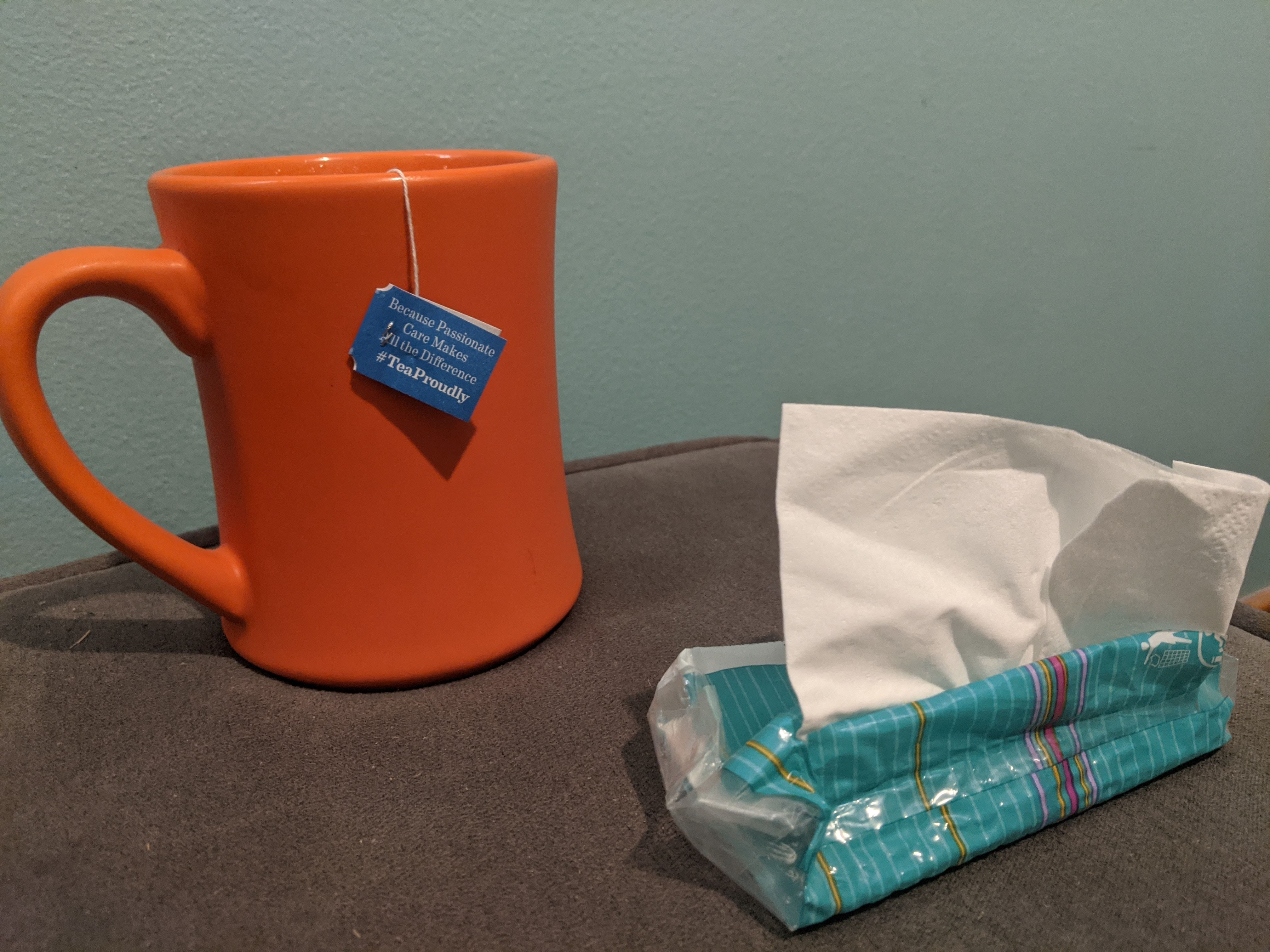
My main focus as been working on a winddown routine starting by 10 PM. I avoid screen use, make a cup of tea, and read. The book recommends 90 minutes away from screens, but with how much I rely on technology for hobbies and interests, I’m hoping 60 will suffice. Admittedly, I did read an ebook for a portion of the week, but have shifted to a nice paperback for the time being. Finally, I brush my teeth and put on a YouTube video I’ve used for years to fall asleep. The hope is that performing these activities time and time again will help to prime my brain and body that it’s time to fall asleep.

The weekends may prove to be a problem area for me. This weekend alone started with a late night of staying on the computer followed by a long night out for a friends birthday. The latter of which resulted in sleeping after sunrise. Making the decision to prioritize sleep is something that is easier said than done.

On the opposite side of the day, I’ve gotten back to using an alarm app called Sleep Cycle. Instead of blaring an alarm at a given time, it attempts to determine the sleep stage you are in and wake you up during the lightest sleep of a 30 minute window. Not every morning has been perfect, but I feel like I’m less groggy in the mornings. Whether it’s the app, the nightly routine, a combination or neither, I’m hoping to continue chipping away at my bad sleep habits.

The Other Pillars

Sleep has been my focus, but the other pillars haven’t gone unnoticed.

I’ve had an odd relationship with relaxing for some time. Many days I’ve logged off of work and laid in bed looking for a YouTube video to winddown for a bit. Minutes later I find I’ve been scrolling through the home page just as mentally exhausted.

I’ve been trying to tackle two birds with one stone and shift this sedentary activity with a quick walk in the neighborhood. I’ve been taking regular walks during my lunch break, but adding them to the end of the day has helped shake some of that late afternoon fog.

Nutrition is the least of my concerns of all the areas, but I’ll continue to ponder ways I can utilize good habits or eliminate bad ones surrounding my diet. I’m sure there’s plenty I can work on, but it hasn’t been an area of concern like sleep or relaxation has for me.

Got Things Done

The past few months has really opened up a new level of productivity thanks to systems like Ultimate Brain and Getting Things Done. Using these tools, I’ve been able to develop better approaches for tackling tasks and projects. Effort is still needed, but I feel I spend less time thinking about what I should be working on. Instead, I determine that tasks ahead and work through them piece by piece.

Managing Momentum

My focus as of late has been on developing the systems for the future while testing the waters with smaller projects. Working with the seond brain, PARA, and GTD systems has been an ongoing effort of learning and optimizing the resources I have.

While the systems themselves have been a project, in order to really test them, I’ve been working through a DnD adventure to publish online. A goal of this blog is to implement systems to help me complete projects. I’ve tried to use the weekly posts to hold myself accountable, but that has only been effective working in the trial format.

In utilizing these systems, I feel I’m getting a lot more done. I don’t know if that’s because I’m noticing progress through project and task entries, or if I’m actually increasing my productive output. Either way, the mental boost I’ve been feeling in productivity has certainly been beneficial.

I’ve laid out plans for actually completing a variety of projects. The key now is to keep the momentum from this trial. As it comes to an end, I am curious to see how well I stick to utilizing this system.

Templates Simplify

One significant boon to my progress in these areas is Thomas Frank’s Ultimate Brain system. I merely mentioned the template in prior posts, but it really is what has been the catalyst for my use of PARA and GTD.

He made major efforts to create a Notion template that pushed these two systems to their limits and exceeded them both. I’ve been following Thomas for several years now and have followed his productivity recommendations from time to time. It was only in the release of this template that I really felt like I was taking part in something novel.

Figuring out how to take the template he made as is and work it into my day to day has been a cornerstone of the last two months. Just this week, I’ve been working on a way to combine the ease of use of the to-do app I use, TickTick, with the depth of Ultimate Brain/GTD, but haven’t quite been able to get the seamless feel I was hoping for. We can add that to the project list.

Finding Ideas

Something I’ve been thinking a lot this week is where ideas for systems like these come, and I’m lucky to have accumulated a series of quality resources. One more than any other helps me get a quick understand of the most important ideas of books, that is Blinkist.

The service offers summaries of a large lbrary of nonfition books. I’ve been waiting on an actual copy of Getting Things Done from the library for weeks now, but after listening to the “blinks” I don’t know if I’ll actuall read the whole book. The coverage of ideas gets right to the meat of the text.

I’m reading through Tiago Forte’s brand new book on the Second Brain and while I’m enjoying it, there is a lot of text for marginal gains. A lot of what is in the book, I’ve already covered through posts and videos. There are certainly a new ideas, but I’m spending a lot more time reading through already tredded ground.

This brings me to what I’ll be doing next, as alas this is the last post for the GTD trial. In utilizing Blinkist, I came across the book, The Four Pillar Plan by AUTHOR. The ideas in the book weren’t anything new or groundbreaking, but I enjoyed the framing of the four critical areas:relaxation, diet, movement, and sleep. The lattermost of those has long been on my list of trials to “correct” and in coming across this lens, I’ll be spending time over the next month in touching up each of these areas, starting of course with sleep.

Operating on Objectives

Who needs a god from the machine when I have Getting Things Done?

One of my biggest problems is gravitating to too many projects. I have far too many ideas that I save and ponder from time to time but fail to take direct action on. Whether it’s one of the many I’ve started as part of this blog or something new that caught my interest, I struggle to sit down with a just one idea at a time. What the Getting Things Done approach has helped with recently is offering a system that keeps projects in an objective orbit of the actual tasks to work on at a given time while also saving ideas of interest for a later date.

Back on Track

A couple of months ago, my automation project was off to a good start, but I knew there were improvements to be made. I long had a vague list of ideas to complete. It was only this week that I had the push to order the items to implement these improvements. Adding a sensor and some smart plugs to the mix has opened more options for technical automation.

The upgrades were tied to already automated items. Specifically, I’ve set up a more sophisticated light automation based the multi-sensor. The light turns on when the sensor detects low light, less that 5% luminescence, and motion after 7 AM. No need to trigger lights while I’m sleeping. Then, after 8 minutes of no motion or at 11:30 PM, the light turns off. I have methods for manually switching the light on and off when needed. The plugs were more of a minor improvement, upgrading my candle warmer from an old fashioned timer switch.

I still have an unused plug and a variety of options on the sensor that I’ve yet to tap into.

Moving away from hardware, an area I’m still improving is the knowledge capture system. A solid system to capture and organize items of interest is one of the main elements of the PARA system and second brain. As of now, most of what I interact with requires a lot of manual entry.

I have ways to save links, posts, and books, but not so much my highlights, notes, and takeaways. I have some ideas to explore. So for now, I’ll be placing this task into GTD and coming back when the time is right.

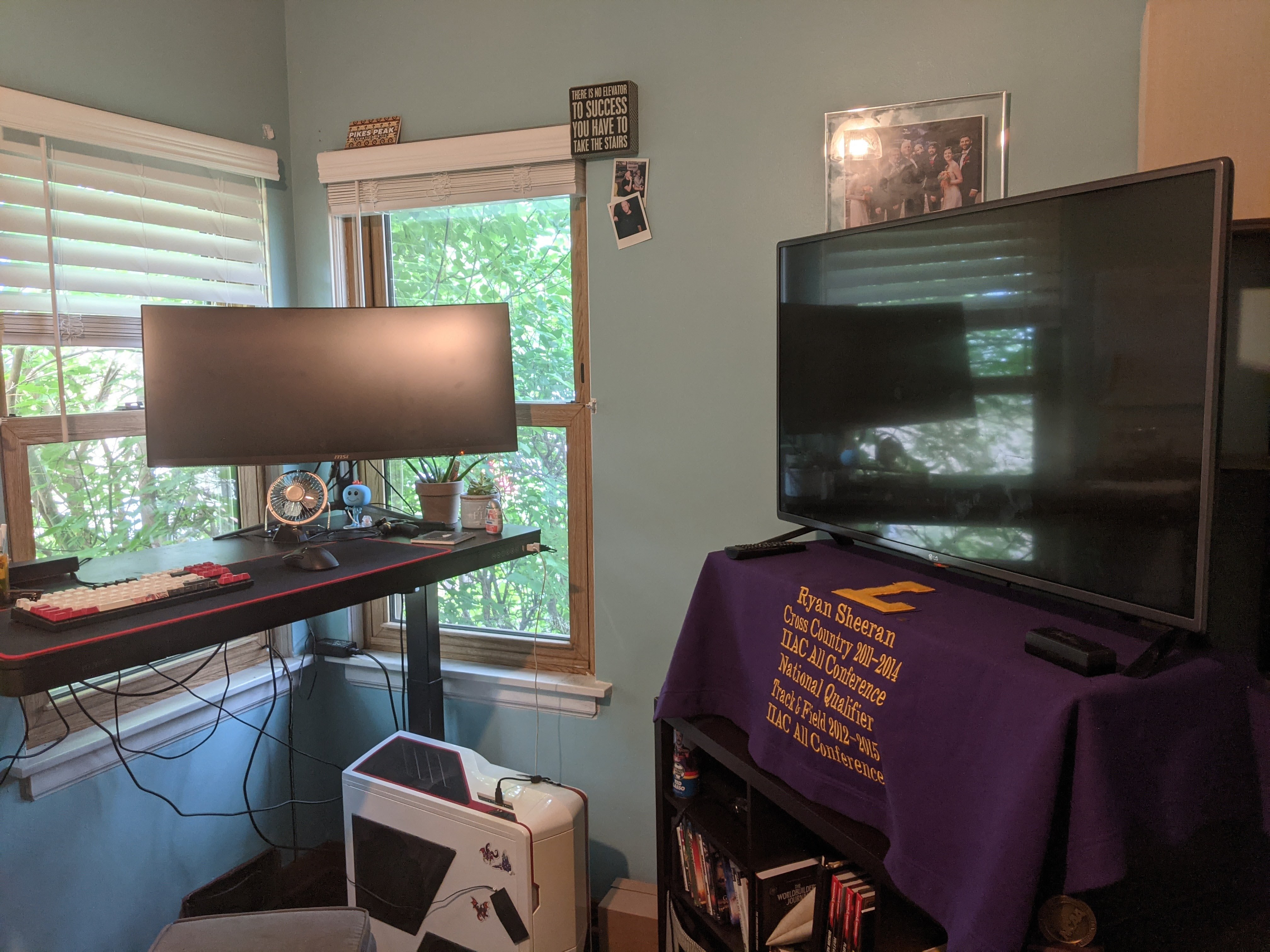
Another area of organization that’s long been causing me grief is the cable management of my desk. As a place I spend significant time, it’s unpleasant to have to look at a sprawling mess of cords and wires. In the process of ordering items for automation, I’ve also purchased a lot of desk organization accessories.

Now, my cables are tucked away neatly under the desk. This is after adding even more to the mix including a set of speakers and another monitor.

Ideas in Orbit

No matter how much I get done, there always seems to be more to do on the horizon. I seem to have collected a variety of hobbies and interests that exist in perpetual movement forward. Even those with a tangible deadline, like a game jam release or written DnD adventure, open the door to begin the next one.

In the past, I’ve mostly managed projects by picking a rough estimate date and hoping I maintain efforts to complete them in time. While some things strive in this time pressure environment, most of the creative tasks I work on need some time to breathe.

I think this is where the GTD style of task management helps considerably. By having a list of the current objective tasks I need for a given project easily accessible, I can focus on execution when I need to and keep creative thinking churning.

If I know I have to finish writing a blog post or complete a game level at the end of the week, brainstorming can happen in tandem with actual tasks I can work on right now. This allows momentum to build while not getting stuck on distractions that eventually need to be addressed with more information or a specific tool in hand.

GTD also helps keep the odds and ends that don’t seem urgent right now. It took me nearly a year to finally find and schedule a dentist appointment, even though I had it on my white board for months. I think it has something to do with how I use my whiteboard and how I use GTD.

My whiteboard is primarily used for quick notes that I need jot down for a brief moment or visualize. It’s been hit or miss for actually managing tasks. The GTD system I use in Notion, however, has so far been consistent in getting items off my to do list for good.

Getting Things Sick: An Off Week

Key recovery items.

To say everything went as planned this week would imply a cruel outlook for myself. After feeling incredibly sick in the middle of the day, calling off work, and spending nearly 20 hours in bed, it’s safe to say I didn’t quite get what I wanted to done in accordance to the original vision for the week. Instead I took the time I needed to recover, assessed my to do list and worked to get back on course.

A Good System Doesn’t Fail

In my adulthood, I’ve always had a hard time sticking to specific daily schedules like I would have in structured systems like college. I say college and not school before due to not really being able to construct days as freely.

In college, I had both specific classes as well as a team practice of a specific type for a given day of the week. For example, a Tuesday would be economics classes in the morning and afternoon with a medium run and weights for practice. Each Tuesday, I was able to frame my mind for those given scenarios. For some reason, in adulthood, I’ve just found it much more difficult to create that structure freely.

Still, I try to have a rough plan for how a week may go. I’ll jot down when a certain event is happening or when I think I’ll be able to tackle a given task. With the help of friends, I’ve been able to set up a pretty solid climbing routine on Mondays, Thursdays. and Saturdays, but even that has some flexibility.

Sometimes these items shift around slightly. I might get groceries a day later than planned or I push an item from the weekend to the next Monday after a long weekend. This flexibility hit critical mass after I hit the aforementioned sick days that wiped me out of commission for a day and a half. During that time I mostly laid in bed with my eyes closed and was sometimes asleep.

I didn’t stress about what I was supposed to be working on, because at that point the only thing I needed to do was help myself recover. Once I felt a bit better, I could look to my do next list, and begin work. And in that time, I’ve written this post and wrapped up the first pieces of what should be my first published DnD work.

For that I have to thank the Getting Things Done system I’ve been incorporating.

On Maintaining Lists

One element of GTD that I really enjoy is how easily the maintenance process fits right into one of my existing habits, the weekly review. I think it’s safe to say that the review is the most referenced habit of mine throughout my time writing. It seems to come up at least every other trial, if not more, but that’s because that brief period of time is so critical for not only looking back on the days past, but to also tidy up loose ends and prepare for the next week.

The GTD system insists on having a small maintenance period to organize all new tasks into one set of lists: do next, deferred, and delegated. Do next is the simplest, it’s whatever should be completed next, for example write this blog post. Deferred are those tasks that can or need to wait until a later time, for example write next week’s blog post. Delegated tasks are given to someone else, an area I don’t quite rely on currently. An example there is as simple as a roommate to do the dishes.

There are items that don’t even make it to these lists, and those are any that “take less than two minutes to complete.” If going through tasks reveals anything that can quickly be resolved, it’s best to just do it without worrying about where it falls into the system. Once it’s done, you can forget all about it.

Approach to Action

Keeping it simple.

Recently, I’ve done a bad job with managing my time. I have things I want to get done, but failing to make the time to do them makes time spent trying to rest stressful. In an attempt to battle this rising bad habit, I’m taking a crack at implementing the Ultimate Brain template by Thomas Frank and principles he used in it’s creation from David Allen’s best seller Getting Things Done.

Getting Things Done

To get started this month I wanted a better understanding of the the GTD system used in Ultimate Brain. Without time to read the whole book, I read through the main ideas via Blinkist. The quick read was a solid run down of system.

The system overall goes extremely well with the PARA system I mentioned last week, which is likely why Thomas Frank used both in his template. Both are focused on collecting the ideas and tasks that arise in a given day with time spent later to organize and address them. Each has an acronym with both “capture” and “organize” as items. PARA’s “CODE” (Capture, Organize, Distill, and Express) and GTD’s “CCORE” (Capture, Clarify, Organize, Reflect, and Engage) go well together.

The system is largely built around key lists of what needs to be done. There is a do next list, a deferred list for things that need to be done later, and a delegated list for those things that are passed to someone else. The Ultimate Brain process dashboard makes it easy to get tasks into these specific lists.

Something I really like about the system is the principle that if something takes less than two minutes, it should just be done immediately. Allowing something that small to get into the overall system offers more work to manage than simply covering the act on the spot.

So Why Deal with This System

Lately, I’ve been trying to build out concrete plans for projects and the lists in Getting Things Done are helping me do just that.

I’ve needed a little more structure than randomly throwing out deadlines without a real idea of the work that needs to be done. GTD encourages working towards the specific tasks that need to be done. Deadlines help to apply some pressure, like getting these posts out every Sunday, but relying only on them hasn’t been as fruitful as I would like.

For a while I’ve been working with daily to do lists built around deadlines to manage what I try to accomplish on a given day. The trouble I run into is the uncertainty of a given day. Days can go far better or far worse than I can plan for and having a list constrained to a specific day gets in the way of what I can actually get done. This is something I actually started with at my job with an email to managers, and while it helps when it comes to the structured time of work, I haven’t applied it as well to my free time.

Having all my tasks in the appropriate list saves me the time of having to think about what to get started when I have the time and energy to do so.

Envisioning the End

Something I’ve been thinking about since the end of the last trial is what I want to get out of this month of “getting things done.”

The biggest goal I have out of the coming weeks is to have a couple projects for the summer broken down into small enough bites with estimated due dates. I’ve already laid out one project, formalizing a Dungeons and Dragon’s one shot I wrote.

I have the high level strokes of other projects as of now, but still need to break them down into the smaller individual tasks. These include both a home automation expansion project, as well as a game jam later in July.

While all of the projects will persist beyond this month, following the GTD method should lay a solid foundation for the weeks beyond. I’m hoping going about projects in this way will help to make sticking to them and following through on delivering some degree of a completed product.

A Task Never Finished

When space fills horizontally, go vertical.

All month I’ve been focused on getting things tidy and organized. From rearranging furniture to cleaning up files, I’ve gotten a lot done. It’s no wonder that spring cleaning became a widespread practice. This of course isn’t a completed task, but one that needs to be periodically maintained.

Digital Decluttering

During this month I’ve been able to get a number of tasks done. A big push towards the end was managing digital apps and files.

Reorganizing my Google Drive was surprisingly extremely satisfying. I’ve been looking into this “second brain” and PARA organization structure, and while it took some time to click, I’m thrilled with how I have my files set up now. My files were set up in a way were I knew where things were, but not in a way that felt clean.

Setting up folders for the “Areas” in my life, to use the PARA terminology, give me the high level folders. With each Area having a respective Archive location. The system also uses “Resources” and “Projects” that can be tied to the areas or completely separate. With shortcuts, I can put the appropriate folders in different areas as needed.

I also began a similar process for other apps, but the progress is going a bit slower as the organization wasn’t there in the first place. Pocket, an app I use for collecting articles and websites to read later, is mess of tags and collected articles. I have no notes or highlights on the articles, so if I need a refresher have to skim, or worse re-read, the whole article.

My browser bookmarks are in a similar mess. I have folders with a bunch of pages I saved for one reason or another. The folders help with some organization, but even those can only tell me a loose idea of what the site may be.

Room Rearrangements

Something I hadn’t planned to do at all until getting into the swing of spring cleaning was changing some of the arrangement of my bedroom. For a while now, I’ve been starting to feel cramped spending time in my room. I spend a considerable time at my desk for work, personal projects, and entertainment. The space was previously set up to where my chair was tightly packed between my bed and desk.

By pivoting the desk and some shelves, I was able to make a lot more space. There’s something that is liberating about time in an open space and not just physically, but mentally too.

Another huge success was the cleanup of junk drawers I mentioned last week. Cleaning those out by simply rearranging them or getting rid of the unneeded junk was easy enough. Condensing some of the drawers too opened up shelf space which addressed a small bother of mine, the prior layout of shelves.

In the long run, adding the small task to tidy up as part of my weekly review process should help to keep things organized. As days go by and items fall out of their place, I am at least returning them once a week. The review also includes tidying up my “inboxes” which consist of a physical inbox for various tasks, my whiteboard which may have notes that need to be saved, and of course my email inbox.

With the future in mind, the next trial is a tough one to decide. With summer here, I have several trips coming up, not to mention the simple desire to spend more time outside. This is of course where the year’s theme and now the areas of the PARA system can serve as a guide. Early in this trial, I had wanted to better organize my schedule and that ended up getting pushed to the wayside. For the next month, I’ll be utilizing the planning dashboard that came with the Second Brain template I had mentioned previously. I’ll be digging in to see how to use it, as well as any personal tweaks that may be needed to have it work better for me.

Keeping a Clean Schedule

As the summer arrives, plans have wriggled their way into every waking minute of my day. From weddings to trips to mundane daily life, I have a summer that is becoming busier by the day, and it hasn’t even started yet. With this feeling of overwhelm starting to settle in, I’m looking for direction on what to say yes.

When to Start Saying No

There are a lot of philosophies on figuring out what invitations to accept. Because our time is so precious, it’s important to determine what we spend our time on. What can be more painful is spending more time on deciding than the activity itself. Have you found yourself scrolling for something to watch only to run out of time before even choosing something? This is the kind of trap I am looking to avoid.

Creating a system for decision making can solve this problem. The simpler the better. One example is investor Kevin Rose’s (confirm) rule “if it’s not a hell yes, it’s a no.” This keeps only the most important and exciting things on his calendar.

There are of course times when we don’t have this luxury, be it due to opportunities available or a lack of experience in figuring out what the hell yeses are. The latter opens up significantly more options.

There’s no right or wrong approach, but each has it’s pros and cons.

Getting to Yes

For me, the pillars I’ve followed are the pieces of Ben Franklin’s old adage, “early to bed, early to rise makes a man healthy, wealthy, and wise.”

My health is a category that typically has a good showing. There are times that aren’t the best, but I rarely do anything to critically sabotage it. I’ve recently been feeling a strong fitness push. I’m lifting, biking, and climbing more than I have recently. Honing my fitness always has me feeling great. It has a way of cascading out to other areas of health, like my diet, sleep, and even mental health. The latter of which I feel gets the most neglected when we think of health. A lot of my time in the coming months will be spent running, lifting, and thinking, hopefully with the company of friends.

Wealth doesn’t apply to just money, but all resources and more importantly, the people in my life. Being able to deepen relationships are often a major reason for me to say yes to things. This is certainly the most challenging to find the right balance, but time with friends and family is certainly a recipe for a good exeprience.

The final piece, wise, is a tough one. Wisdom is a tricky matter, as there are a range of ways to interpret it. Personally, it boils down to unique experiences which allows a more developed perspective on things. An experience can be gained personally or learned through someone else, often through a piece of media like a book or film.

Into Physical Space

This is of course where I shift this thinking to the objects in my life. Over the last few years, I had no trouble getting rid items that found their way into my hands: clothes, furniture, appliances, and more. I found myself regularly asking if a given item was something that I really needed, and often it wasn’t.

One of the most popular philosophies in this regard is Marie Kondo’s spark joy. It’s a slow process, but it’s a simple task, assess all items with the question “does this spark joy?” If not, thank the item and get rid of it. If yes, keep it.

Another approach with a more objective approach is one I was introduced to through The Minimalists. The boxing party involves packing up everything as if moving. When the need for an item arises, retrieve it from a box. After a given period of time, get rid of the packed items. It can be easy to end up with countless things that are never used, not even considering emergency “what if” items.

After moving last year, I’ve slowly accumulated more and more. It’s beginning make my living space feel cramped. A focus of mine this week has been small tasks to improve the organization of that space. While it unfortunately took until Sunday to wrap up the last few, I was able to get them done. The tasks centered around touching up areas that have gotten out of hand, like junk drawers and cable management for computers and game systems.

I was actually able to combine the effects of two junk drawers in an organized way that makes it easier to find the things from each. I did this by moving some of the items around, taking some out for actual use, and placing others, mostly tools and cleaning supplies, in a communal area.

For the last week of spring cleaning, I’m going to shift to the digital to clean and organize some apps.

Consolidation

The disaster that currently sites next to my desk.

In the midst of cleaning and organizing, I couldn’t help but think back to this post from Tynan on “consolidation,” a term he uses for these periods of touching up those minor pieces after the big steps are taken. Throughout the process, I’ve been hit with moments of thinking if the current change is helpful or even necessary. This week, I’ve somewhat taken a step back and considered what areas are actual problems, and what do I see as simply something that could be done.

A Place for Everything and Everything in It’s Place

The above heading was an often spoken line of my late grandfather. He was certainly settled into his home, having lived there for many decades. Rooms changed purpose and people came and went, but he seemed to always have a good idea of where anything was at a given time. This was due to everything having a given space where it belonged.

Following this adage is what has been giving me a lot of grievance lately. I have places for some things but not all, and I often leave things out of place, making them a struggle to find. I have what are basically four junk drawers with their own categories in a sense, but it can still be difficult to sift through it all.

When it comes to those things which do have a given space, many are in places I do not like. A number of items have simply found there way into a pile on or next to my desk. I once kept some degree of organization, but lately it feels like I’ve been leaving too many items out to “go through later” and that time never seems to arrive. A focus for this coming week will certainly be to sort through these items.

Stagnation and Distractions

After settling into a space, be it physical or mental, it can be easy to fall into a standard. Whether it’s the first layout of a room or the method to go about a given task, we can settle into the early standards set.

Often as we carry about the day, we can let slide those little things that we don’t have the time to sort out this moment. I went through this a bit with my recent automation trial, but what I’m thinking of now are more so the things that are left behind.

In an attempt to battle some of this stagnation, I did something to betray my minimalist senses and bought a few things. In this case it was things to improve my space, so I think it’s justified. I bought a few picture frames to finally hang up some pictures and posters that have long been sitting in a folder for a few years. I also bought a standing drying rack after using a shoe rack that hangs on the back of a door to dry clothes for once again several years.

Though this isn’t as big of a step as I took a few months ago when I bought a new desk and bed. These two items fundamentally changed my living space. I’m still not sure if I’m completely happy with the layout of the room, but the alternatives seem less ideal. In the coming days, I think I’ll test some minor changes to the current setup, different angles or slight movement of furniture to see if it improves the space or not.

While recent changes were physical, a focus I had for this week was to work on cleaning up and organizing my files on Google Drive. I have a variety of files, documents, and folders that house a range of information that I use across my life. From small projects to quick notes to personal documents a lot of files are sitting in the cloud. Some I use pretty frequently, while others are stored for backup or as part of what will hopefully be future endeavors.

After beginning to move around some files and rename folders, I began to think how useful it was spending the time on that task when there were many more important ones to be done. That is some trouble I am having so far is determining what priority should I focus on these small consolidation tasks. The gist is that they the small tasks that get pushed aside, but in this case it feels like I have so many that some feel more critical than others.

For the coming week, my plan is to pick one item each day to complete. I’m hoping this will resolve the trouble I’m having of choice. With that I’m going to start up a list of what to begin.

A Spring Cleaning

A broken book and drawers full of clutter, a great place to start tidying up.

With spring upon the Midwest, it’s time to clean out everything that’s been piling up over the last year. Winter clothes are put away and piles of dust are wiped clean. While the practice is often done in our physical spaces, I want to share that time with my digital spaces and my routines. As mentioned in the last post, adding things to a clustered schedule is always more difficult than finding what to remove.

Physical space

After a year of my current living arrangement, I’ve finally decided to take steps of getting more settled. When I first moved in with my friend, I didn’t have a plan for what was next. In the midst of the pandemic, I didn’t know if I wanted to stay in the Chicago area or head out of state somewhere. With proximity to family, friends, and a lot of great activities, I plan on staying for the foreseeable future.

With that in mind, I started to unpack a bit more as well as take in bigger items that would make moving more difficult, such as a bed and desk. Because of these additions, I’ve had to completely rearrange the room. So far, it’s been pretty successful setup, but I want to explore changes that might improve things even more.

There are also a lot of items I’ve been holding for far too long. I have some items intended for small projects, like an old book found for free at the library, though its cover is completely torn and broken. I wanted to take time restoring it, but never got around to it. This is one of a handful of these items and I need to either plan a specific time to execute these plans or move on.

While there are items in this limbo stage, I also have a slew of items from various homes before that haven’t been needed with roommates but make sense to hold on to, kitchenware, furniture, and more.

In the past, I gave a shot at the “minimalist’s challenge” to get rid of an item every day with an additional items each subsequent day. It helped me part with a lot of things I no longer needed or used. While I don’t plan on following a specific challenge, I’ve already donated some clothes and some other things I no longer use.

Beyond the Physical

Many of us know how important it is to keep our physical spaces clean and organized, but when opening our devices we have cluttered work spaces and files all over the place. Along with cleaning, unpacking, and organizing my room, I want to clean up my devices and apps.

I’m pretty happy with how I’ve set up my files and how I use things like Google Drive and Notion, the primary place I store notes, ideas, and information. However, I think there is room for optimizing some things. Coming up with clearer organization and workflows for getting information in can offer a better experience. I recently bought a whole Notion system from a productivity creator that I’m excited to break into more.

Thomas Frank’s Ultimate Brain series of templates takes the “second brain” concept and productivity workflows and makes them work incredibly well in Notion. I’ve been using the system since it launched and I know there’s a lot of ground that I still need to cover. As of now, I’ve done some work with projects, including these blog posts, but haven’t really worked into the task processing end of things. I’m excited to see if it improves how much I get done.

I also want to better organize how I set up my days. As mentioned in last post and others in the past, I have a hard time adding things to my life. Trials where I’m adding a new habit or practice can become more and more challenging as I settle into routine. I want to take a look at the ways I’m spending my time, remove what isn’t adding value, and encourage what is.