Over the last few years of making yearly themes, I’ve generally had a few ideas come to mind and need to choose a winner. This year, only one came to mind before the new year even arrived. I spent more time than expected trying to dig up other contenders, but EXPRESS is the one option for the theme for 2026.
Express Thoughts and Feelings
As last year came to a close, I found myself in a bad place mentally. Bouncing back a few days later, I started putting together my thoughts for the year end post and reviewed the email thread I sent to my brother throughout the year. Time after time I was reliving moments where my mental health was a wreck. I knew it was time to start looking for proper professional help.
Last month, I touched on my inability to clearly ask for help and believe this is tied to why I’ve put off therapy for so long. I’ve long been an independent person who often enjoys or is at least indifferent to some degree of struggle.
I hope to highlight this issue using two instances of having to take a long walk home. One day while riding my bike to the gym, my tire blew a flat. This was one of multiple flat tires I’d gotten in a short period of time. Frustrated and experiencing one of those mental health breakdowns on the side of the road. I then texted my other climbing friends if any of them were going to the gym that day and if so, could I get a ride home? No one was, but one friend offered a ride. From there I ghosted the group and just walked all the way home.
Contrast this half-assed request to just taking a similar long walk home late one evening. After a roller derby event in the city, I was taking a bus that normally goes right by my apartment when it came to a stop around 5 miles from home. Turns out that was the last bus that day, so it was out of service. It was around 11 PM and pretty cold, as it was early December. I considered ordering a rideshare or calling a friend, but I was feeling alright and decided the walk would be fine. What I didn’t do was reach out, confirm it wouldn’t be an inconvenience and maybe ask for a ride if it really wasn’t a big deal.
All this to say, I want to shed that old habit of not clearly asking for help when I need it.
Express Ideas
Another big win last year was getting back into the habit of publishing posts regularly. Prior to that, I hadn’t fully stopped writing but committing to publishing really forced me to be far more consistent. While not every month last year was a glowing success, I found trying to get something out there at about that rate was a good practice to get moving. I’ve occasionally thought about returning to the trial format this blog was started on, but really haven’t found any “experiments” I’ve wanted to try out.
There were a couple instances I felt what I was writing junk to meet the deadline, and so I am winding my target down to 10 total posts this year. This gives me some breathing room to develop ideas I’m excited to share, rather than put out some mediocre ideas just to hit an arbitrary count.
On the writing front, I also want to develop better skills as a media critic. From movies to games to books, I’ve written reviews on various platforms or had discussions with friends, but I’ve frequently felt times that I lacked either the vocabulary or reference to really explain my thoughts on a given piece. For years, I’ve watched reviewers, mostly for movies and games, but haven’t really expanded my own skill in that area.
I’m targeting around once per quarter to write and post a thorough review of a piece of media I felt impacted me – be it on a technical and mechanical level or it’s narrative and story. After writing my own thoughts, I then plan to look to other critics, taking in their perspectives and learning from what elements they highlight and language they use in their reviews. I hope this develops my skill as both a critic and writer in general.
Keeping Momentum
While 2025 is over, there are a number of things I want to continue into this year – keep the swing going if you will. For one, my brother and I are continuing the regular email thread. This was a great practice to record not only the events of the year, but also thoughts and feelings at the time.
Otherwise, I’m also looking to plan at least one more train trip. Riding the Empire Builder line up to Seattle was such a great time. I’m hoping to explore other train lines and cities, comparing the experience to last year’s trip.
The new year offers a cultural time for change, and I’m excited to continue with the theme concept as we make our way into 2026.
It’s hard to believe the end of the year is here. I have a simultaneous feeling of the year having gone by so fast but also some moments feel so long ago. The year of Swing was focused on two main elements, momentum and taking chances. I’d say in both realms, the outcomes are a bit of a mixed bag.
Momentum
The one piece of this year that I am extremely grateful for is the email thread sent to my brother. I was able to get something out every month recapping what happened and any plans I had for what was coming next month. The latter piece was so-so, often plans went out the window, but having a log of various events, big and small, allowed me to remember and relive so many great moments in the year. I found this much easier to do than keep a personal journal for a similar purpose, as sending it to someone else kept me doing so, even if I was a little late a few times.
Using those emails to keep track of what I was working towards, health and fitness was a regular practice for trying to keep the pendulum swinging in a positive direction. There were certainly times I was busy with travel or was recovering from injury that I paused some of my fitness habits, but overall things were pretty good. I kept a mix of lifting, climbing and running throughout the year. I’m on a little bit of a hiatus right now, as the New Year resolution crowd will soon hit the gyms and getting a workout in crowded gyms is never an enjoyable time for me.
Likewise, aiming for a monthly post was a good way to keep myself writing. Even if I needed to postpone a couple of times in order to write something with substance, with this post I still put out “one post per month” – as in 12 for the year. This is definitely something I want to carry into the next year, with hopefully more of those substantive posts on the docket. Putting together a small lists of questions to seek out answers was a great way to prompt research and learning. Going about a few posts that way should be a fruitful method for finding topics to explore. I still need to put together some thoughts on local government after failing to attend meetings earlier in the year.
There were a few other projects and areas of interest that got some brief attention, but never any real progress. I started tinkering with game development again, but wish I made the time to participate in at least one game jam. Jams are great opportunities to hone all skills in the development process. I started working on a few smaller game ideas with both being shelved as other areas in life got busier.
An area I found myself needing to slow down momentum was playing Old School Runescape. Looking back on my monthly emails, the game started taking up more and more of my updates. I had several accomplishments in the game this year including my first max level skill, a fire cape and completing all of the currently released quests. I definitely had a lot of fun playing, but needed to put the game in its place around September. It was around then that I realized how much of the game was redirecting my time and attention. I wrote about this cycle and how I came out of it earlier this year. I’m still playing, but much less than I was, and more importantly it’s taking far less mental real estate in my day to day life.
Swing the Bat
The other side of the “swing” coin came from an episode of the anime FLCL. In “Full Swing” the main character is afraid to take a swing in baseball, fearing he will not live up to his now professional player brother. Doing nothing is better than failing in his mind. After the events of the episode, he finds himself in a life or death moment and has to “swing the bat.”
I can thankfully say I had no moments of life or death, but after some tough times at work, I found a way to swing back. To summarize months of frustration, I felt my team was understaffed and overworked. At a certain point, I started pushing back on my boss. To my surprise, he was receptive of the feedback, and at least in my eyes had made major strides to remedy these issues.
After a different series of frustrating moments, I began applying to new jobs. This, perhaps paradoxically, made working my current job easier. Not feeling trapped or backed into a corner at the company or role made the work easier to do. I don’t foresee actually leaving any time soon, but knowing there is the possibility of getting out makes the days easier to get through.
One opportunity I took advantage of was getting more involved in Chicago’s roller derby team the Windy City Rollers. My friend got me hooked on derby a few years ago and late last year I started volunteering to help out with some minor areas like the merch booth. This year I started learning the ropes to help officiate as a non-skating official, or NSO. Getting involved more has shown me so much of the sport and has been a great way to meet so many new people. After months of practicing at scrimmages, I finally officiated my first set of games. In a very stressful list of Jam Timing, Score Keeping and finally Penalty Box Management, it was a long night of derby with very different jobs. It was an absolute honor to have been awarded Most Valuable NSO! Now, I finally need a derby name so I can stop going by “Ryan.”
Another win under my belt was finally taking a trip I’ve dreamed about for years now, and that was to take the train from Chicago to Seattle to visit my friends who live out there. After years, of saying I should do it, mentioning it one final time was the push where I decided this was finally the year. Once I had a good date to visit, I booked the tickets that day. I wrote a bit more on this last month, and a bit on derby as well, but I can’t recommend opting for traveling by train enough. It’s certainly longer than a flight, but so much less of a hassle. Being on the train, is like a trip in of itself. Especially once the Midwest is behind you and gorgeous mountain views surround the train. The one downside I would say was very unreliable, or nonexistent internet, as it would be nice to get some work done while traveling. It’s perhaps a blessing in disguise as there was no longer an option to work allowing me to fully take in the experience.
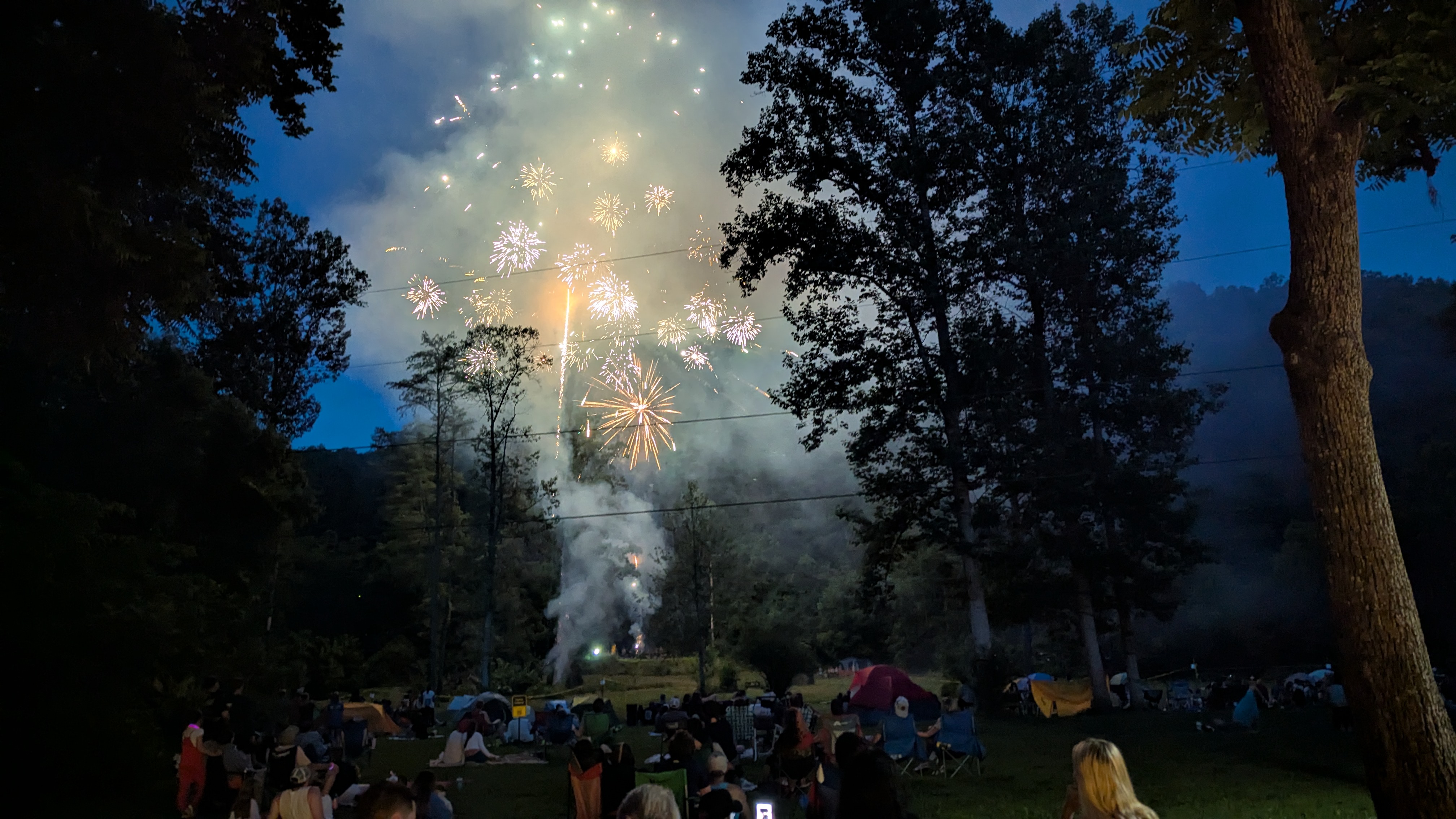
Travel as a whole was great in 2025. I had several amazing camping trips, including a first time visit to Red River Gorge for the 4th of July. The spot we camp had a fireworks show and massive bonfire which was a good time once we found that the fire was a planned ordeal. Seeing a massive fire quickly erupt in a mostly open field shortly after fireworks had me fearing the bystander effect before my very eyes. My friends and I were able to sprinkle in several smaller outdoor trips, like a few short weekend camping and a even day trip to go kayaking. It’s always a nice time to just get time outdoors for even just a little while.
Finally, though certainly not last chronologically, I went to New York City for the first time. I may have accidentally invited myself on this trip while with the friends planning it and am so glad those friends took me along. We had incredible food, spent some great time wandering the city and two of my best friends got engaged there – I was somehow entrusted to take the photos of the moment.
On that subject, I also got ordained to be the minister for those friends. They moved quick on the legal side of their marriage in order to take advantage of those benefits as soon as possible. With just a small wedding, it was an honor to have been part of it.
Mood Swings
I wish I could say all aspects of my life were going well with maybe a stumble here or there. This will be the hardest piece to write about, but not shying away from this discomfort is important. While it’s been several outbursts lately, I’ve had some serious mental health struggles throughout the entire year.
On multiple occasions I found myself in a deep pit of self loathing and self destruction. In a recent outburst, I broke a handful of things throughout my apartment. I feel stupid looking back on it of course, but in that moment feeling things break or flipping over a piece of furniture had a catharsis I don’t think I could experience otherwise.
I didn’t even remember one breakdown I had back in February until looking through my email thread. I’d been so focused on what I’d been struggling with lately that I’ve been blind to signs of issues throughout the entire year. Nothing to the extent of a full breakdown, but still enough (metaphorical) cuts and scrapes that I should have seen the damage that was building up.
Asking for help is something that I’ve struggled with in a range of things, not just mental health, but mundane things. I’m not sure if it’s from being raised with a self-reliant mindset, alongside extracurriculars like Boy Scouts or my time as a student athlete taught me that I needed to take care of myself. Of course organizations like the BSA also teach cooperation and community, but perhaps a part of me has thought that I only need to give those things and don’t need that help for myself. Or perhaps it’s some childhood trauma I haven’t been able to let go of in which I don’t want to be a burden on anyone. In all reality, this failure to ask for help likely stems from a mix of both.
All this to say, one of my 2026 theme’s elements will involve finally getting some professional help on this front, because whatever I’ve been trying on my own is certainly not working.
I don’t want to end this post on a downer, so I want to dive into something that got me through one of those low moments. In October, I found myself having a terrible breakdown wailing, my head in my hands. I don’t know if I ever cried that hard before. My mind went down this ever deeper and darker rabbit hole that led to me realizing how much I hated who I was in that moment, or maybe even more than just that moment. In that anger I believed things would be better if the world could be destroyed thought if I had the power to I would. It was a bitter and petty feeling I never want to relive.
It was through this feeling though, I remembered half of my FF9 tattoo, one of the game’s antagonists, Kuja. A character whose pettiness and despair leads to his attempt to destroy the world. That half of the tattoo is a cautionary tale, in the pits of despair, rage may be easy path out in the moment, but doesn’t offer a real solution. My tattoo contrasts this personification of rage with Vivi, a character who undergoes a similar arc, but a character who finds meaning in friends and self-actualization despite his existential crisis.
Even Kuja finds a moment of redemption towards the end of the game. In on of the final scenes of the game, a selfless act offers some penance for his misdeeds. Certainly not forgiveness for all his crimes, but even villains can sometimes choose to do something right.
I hope this time of year finds you well. The new year is a cultural time to seek change and recovery, but remember it’s just another day on the calendar. If at any time you find yourself needing change, January 1st is no different than March 19th which is no different than October 31st. The best time to make that change is now.
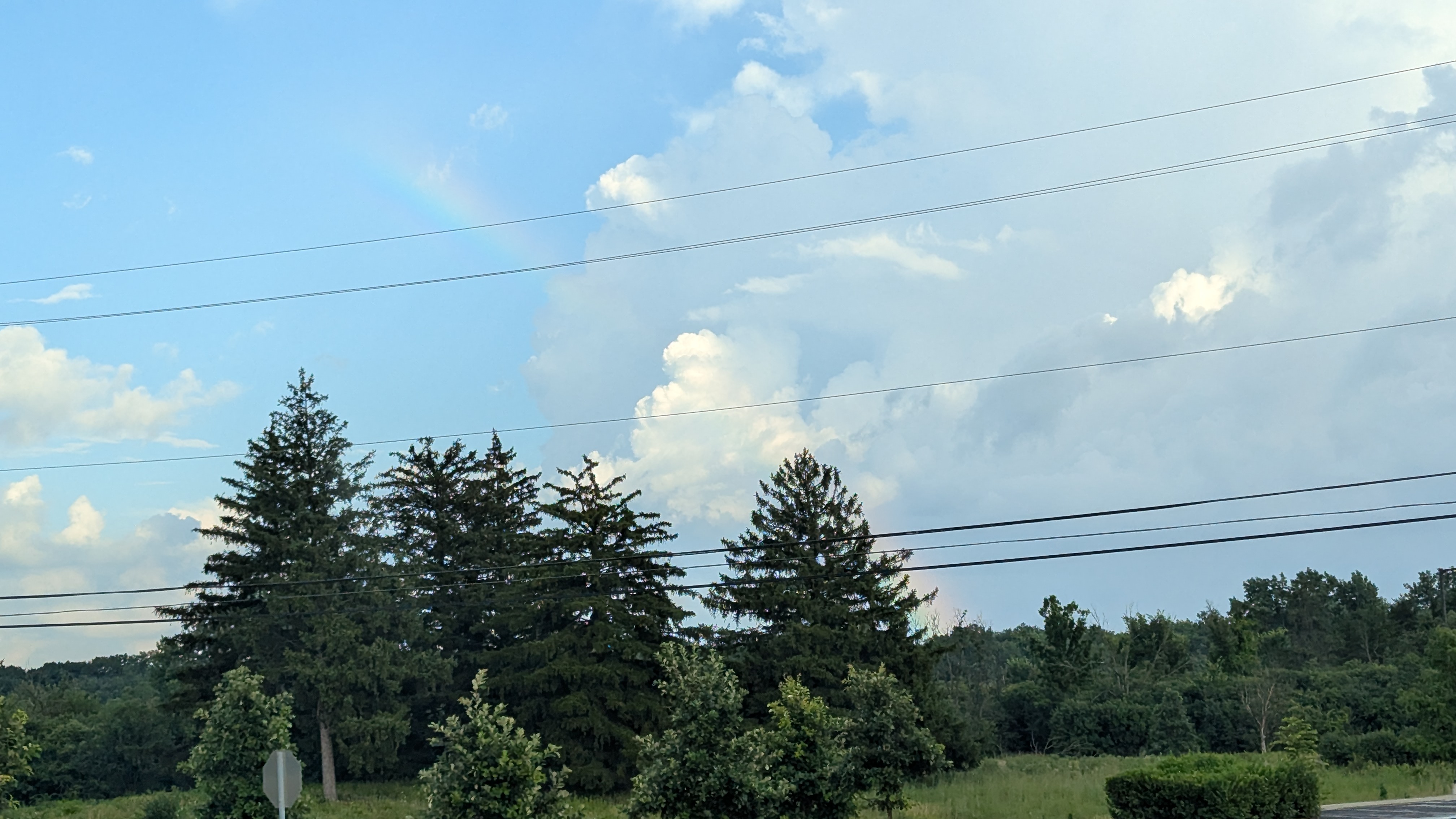
If a rainbow is not photographed, did it even happen?
Back in April, I wrote out a few questions. One of those was to understand the philosophical movement succeeding postmodernism, if there even is one. Over the last few weeks, I started digging into the answer to that question, and the desire to find that answer isn’t mine alone. A variety of writers and philosophers are working to define what comes next, or what is already here.
Pseudo-modernism
Starting with the oldest article on the subject I found, back in 2006, Alan Kirby wrote for Philosophy Now, “The Death of PostModernism.” In the article, Kirby explores the evolving culture movement away from what he describes as postmodernism’s “fetishizing” of the author or creator towards that of the recipient, user or consumer.
I agree with many of the points throughout the article. It’s clear that art and media have shifted into everchanging forms due to how consumers have become a part of them.
Where I disagree with Kirby is his belief that there is no interaction or exchange between the author and consumer. Maybe it was due to the state of media at the time, but today we can see this in the form of what is colloquially called “content.” Content isn’t just media, it’s creation for the intent of consumption and interaction of the creator and audience. Platforms like TikTok, YouTube, Instagram and more exist to host content, encourage engagement and leverage advertising within this engaged context.
Kirby also references what I consider the most interactive form of media, videogames. A movie can play without an audience to watch it, but a game needs interaction to progress its acts. Though I find his interpretation of these to be quite shallow. He discusses games as brief interactions and then they are obsolete. I understand some of his point, that specific interactions in pseudo-modern art are fleeting. The contents of an internet page can be altered. For a less technological example, a radio call in show can only truly occur once. That given call exists in a vacuum and cannot be recreated, even if the caller and host exchange the exact same words, their context is now repetition. Back to games, I think this misses the impact that the interactivity of games offers. I still think about and have conversations about the effect the Kingdom Hearts series has had on my worldview. I don’t think the games would have had the same level of impact as another media like a book or movie.
At lot has changed since 2006. There are nearly 20 years of technological and cultural changes between Kirby’s original article and now. Kirby often cites the emerging reality TV shows and an internet that is far from what it once was. His description how each internet user harkens back to a time before the internet became more or less a handful of websites almost all traffic go to. Describing each user taking their “own path” seems archaic now with the current internet landscape of social media and search engines all under the same handful of tech companies.
Algomodernism
The foundation of many of these thinkers is the evolution of the internet and especially now the emergence of generative AI and data algorithms. In what is the most recent post I read on the subject, at the beginning of this year Bradley Murray wrote a piece for his site Philosophies of Life on what he calls “algomodernism.”
The main idea I saw in Murray’s piece was the way postmodernism and algomodernism approach metanarratives and how common knowledge is viewed. A metanarrative is a grand unifying truth, story or reality. If postmodernism is a rejection of modernism’s metanarrative, algomodernism is a return to metanarrative. Murray defines algomoderism as “a paradigm in which we look to AI and related complex algorithms to generate narratives that define fundamental aspects of ourselves and the world.”
This is the ideology I most disagree with, at least at time of writing. Unless new evidence emerges regarding generative AI, I am very skeptical of this leading to a shared worldview or common truth. If anything, I see these tools as deeper entrenching people in echo chambers, just as algorithmically driven content has for the last couple decades.
Generative AI is known to make up facts and is designed to be highly agreeable, in order to maintain user engagement. This is a recipe for deeper fractioning of a common narrative.
Putting AI agents aside, Murray points to the pathways of the internet – to steal a term from Kirby – are now well trodden. How many of us Google a website as compared to going to the site directly or in some cases even remember the name. “Google” itself has become a verb to perform a search online. Beyond Google, how many websites beyond the major social media platforms are even used?
The niche corners of the internet are certainly still around, but more and more time is spent in the same places. However, even these sites are vastly different due to how much of their content is driven by individualized algorithms. Even among my closest friends, we can open the YouTube homepage to vastly different results. This is where my skepticism for this metanarrative is based. These technologies have only seemed to further atomize society, not unite us.
Postpostmodernism
The least creative of the naming schemes is certainly the least defined of the ideas I explored.
This video lecture by Julian de Medeiros is going to be my reference point for “postpostmodern.” I’m sure there are many ideas to what may be called postpostmodernism. While never explicitly defined in the video, my understanding is that this form of postpostmodern leverages contradictions to increase value, utility (in the economic sense) and happiness.
The first example used to explore the postpostmodern was the Banksy auction from a few years ago in which upon being sold the piece of art was shredded. This act of shredding was ultimately a piece of the overall form, perhaps linking back to Kirby’s ideas regarding the audience’s participation or exchange. What de Medeiros sees in this moment as postpostmodern is the disconnect of value from the piece of art itself and onto its destruction.
From here de Medeiros describes the postpostmodern as a “pseudo revolution.” Not a true alternative or rejection of postmodernism, but an extension of it. I find the example used to describe this pseudo revolution fascinating as it once again sees some semblance of Kirby’s ideas from 2006. Using the example of the BLM movement “social media blackout” in which black squares or screens were used to show solidarity, rejecting creation of content for major platforms, a form of content is still being made. This bridges into what I think is the most interesting point made in the lecture, the contentification of life. To quote de Medeiros directly, “unless it exists as content, it doesn’t exist.” A fitting phrase for our content raddled society.
Another factor of postpostmodernism is the ability to extract surplus (value, wealth, utility, entertainment, etc.) from seemingly contradictory factors. The example used in the lecture is a CEO who hires a dominatrix in the evenings. The executive is able to extract value from not just power and domination, but in a lack of power and submission.
The final piece I’ll touch on from this lecture is one I really connect with, the movement towards sincerity in art and media. For a long time, cynicism and irony have been the tone by which art was presented. Speaking for myself, I’ve grown tired of this attitude and find myself enjoying and gravitating towards works that are direct and wear its heart and emotion on its sleeve.
There was certainly a lot in this lecture, a lot of which I haven’t completely taken in, but I highly recommend giving it a watch. At roughly an hour, it’s a great primer on postmodernism and in what ways we are beginning to move beyond its tropes and ideas.
What do I think?
As I look at the world today, I think there are elements of all of the above for all of us, not as philosophers, but as everyday people to consider.
To start, the internet is a source of information, not truth. For every idea, there is surely an opposing viewpoint with some form of evidence to back it up. Said evidence may be completely fabricated or simply misrepresented, but surely there will be a basis on which a given perspective or belief is shared. This may ultimately lead to a post-truth world.
What is to be done if we cannot rely on truth? I think this is where principled action is required. I think there’s a reason that even right wing MAGA voters are being turned by the End Oligarchy tour throughout this year that Bernie Sanders, AOC and others have been touring around the country. People see these principled stances that these leaders have had for decades and those resonate. In those moments they forget about some talking head calling Sanders a communist or Socialist. The same goes for Zohran Mamdani’s mayoral campaign that confused Democratic leadership for the last year. Unlike Bernie, Zohran is a self-described socialist. Time will tell how successful his policies are for NYC, and I do hope they are successful. At the end of the day, a large number of New Yorkers are willing to bet on a Muslim socialist, an unexpected outcome in 21st century America.
If we have to reject specific truths, metanarratives will need to do the work towards creating better lives for everyone, even those we disagree with. Even once contended points of truth are slowly becoming an agreed upon metanarrative.
The stunning view from Amtrak’s Empire Builder line.
It’s been a long time since I’ve made a simple post about things going on in my life, and there’s no better way to frame it around the recent passing of Thanksgiving. Here’s a handful of things I’m grateful for, beyond the typical family, friends and health, all if which I am of course extremely thankful.
Archipelago and Fan Mods
I recently wrote on the amazing things fan communities have brought to a variety of games. Not just in challenge runs with an existing game, but overhauling it through mods.
Randomizers have been fun to run on my own, but adding in a multiplayer element with the archipelago system is a whole new level of enjoyment. Being able to play a wide range of games with my friends, all the while unlocking items and progress for each other is a blast. Hundreds of games are available in this system, and the list is ever growing as more and more modders are able to shake things up.
Randomizers are just one of hundreds if not thousands of ways mods have changed gaming. Adding new content, adjusting difficulty or outright changes to a games fundamental gameplay systems are all possible when modders have the tools and the willpower to put something together.
I was talking with my brother just the other day on how unique of a playthrough Skyrim, what is probably one of the most modded games of all time, can be with just a few mods to change things up.
A majority of Old School RuneScape (OSRS) players rely on the free tools in Runelite and the OSRS Wiki. Both of these are tools maintained by the community. The wiki, much like Wikipedia, is a crowd sourced encyclopedia and knowledge base of all things OSRS. Runelite is an alternative client to the main OSRS game. It allows a variety of plugins that lightly interact with or even expand the game, e.g. highlighting certain gameplay elements, playing different sound effects than normal or even enhance the multiplayer experience.
One of the most incredible things about many mods is that they are for the most part free. I do think modders are well within their right to ask for or expect some kind of compensation. What is nice as a consumer is that for the most part, so many of these creators are willing to do the work they do without expectation of financial gain.
The Windy City Rollers and the Derby Community
On the subject of putting in time for no expectation of getting paid, over the last few years I’ve been lucky to be able to volunteer to help The Windy City Rollers (WCR), Chicago’s flat track derby team. My friend brought me to a bout WCR had with New York’s Gotham Roller Derby a few years ago, and I’ve been hooked ever since. The movement and explosiveness of derby is a blast to watch.
As I attended more and more games, I began volunteering at first for simple roles like helping with the merch stand, but with time I’ve even gotten to assist more behind the scenes as a Non-Skating Official (NSO).
Helping primarily at scrimmages, I’ve been cutting my teeth on the tasks and duties and should soon be helping at my first actual game. I’m excited to be involved in the derby community and learn more about the sport, all the while meeting new people along the way.
Amtrak
Just before the first roller derby bout of this season, I had the pleasure of going on my first long train trip across the country. In order to visit some friends in Seattle, I took the Empire Builder line from Chicago to Seattle, and it was an absolute blast.
My departure trip was in coach, and while a little rough, there was a grittiness to the journey that I enjoyed. There wasn’t much to do, so I was able to get a ton of reading done which was really nice. I was able to catch up on a few books I’d been meaning to get around to but never made the time while at home.
While trains are quite a bit slower than something like a plane, there’s a freedom and flexibility you totally miss out on. Being able to walk to a different part of the train gives the feeling that you aren’t trapped in place until the trip is done. Being able to enter the observation car when I was tired of my seat was a relief. The cafe car below offered a decent range of food to stay satiated throughout the whole trip.
The downside of coach was difficulty in sleeping. I had an expectation of some kind of bedding for the night, but was quite surprised when there was nothing at all. This was definitely a layer of that grit. I figured there was nothing to do but get through everything. Otherwise, the other rough part was how long I was wearing the same clothes. Finally arriving in Seattle, I took a shower and realized I’d worn the same socks for three days. I did find there is a dressing room that I will certainly take advantage of should I take coach again in the future.
The return trip was a very different story, as I took a private sleeping car, the first class of trains. This experience was a luxury. Meals in the dining car were included, I had a full bed made for me by a member of the train staff and of course a fully private space for the 46 hour journey.
To start with the meals, I was surprised how good they were. Coach passengers can attend meals in the dining car, but they are $20, $25 and $45 for breakfast, lunch and dinner respectively. I had planned to try out the food, and decided to wait until my meals were covered before doing so. I’ve got to say they are really good. The food is all chef prepared meals, with the dinner being a full 3 course starter, main and dessert all of which were fantastic.
The private space was of course a luxury in of itself. After three days in coach and then three more days at my friends’ apartment, it was definitely nice to have even just a few cubic meters completely to myself. I did not get much reading done on the return trip, but I did play some games, watch some videos and even get some writing done.
Finally, both trips had some amazing views. While about half of the trip pulls through the western Midwest, from Illinois to North Dakota, partway into Montana the mountains emerge and the remote feeling of where the tracks lie provide incredible views.
Finding myself with less time to play games these days, I tend to hop into ones I can pick up and put down relatively easy. Roguelikes are a genre that scratch this quick itch. Although lately, I’ve been hooked on the randomizer mod for Kingdom Hearts 2 and noticed is that randomizer runs can work on this same design. Both roguelikes and randomizers involve playing through familiar areas with different builds and tools for a given challenge
Roguelikes
The roguelikes genre has seen a boom over the last few years, driven by Indies like Spelunky and Binding of Isaac in the early twenty-teens. Their origin goes back to the namesake, Rogue. A procedurally generated adventure game created in 1980, its core gameplay elements still used in the genre today.
The gameplay loop of a roguelike involves a single life or session in which failure results in a permanent loss of any progression made. Though some ‘roguelites” include an overall progression on top of the single run gameplay. Throughout this single life, players gain loot, levels or other power ups to take on harder challenges
Ravenswatch is a fairy tale inspired roguelike that can be played with up to a group of four. The game was a big hit with my group of friends, many of which are also fans of the Supergiant’s latest release Hades II and the poker roguelike Balatro. The on-the-fly nature of build crafting paired with solid moment to moment gameplay offers an excellent experience, and it’s even better with friends.
Handling Hardcore
What about games in which perma-death or a single run isn’t part of the core design? Could introducing the thrill of risk offer a new experience for longtime players.
MMOs typically rely on a general build up of levels and gear so that more challenging content can be explored. To lose progress is almost antithetical to the progression driven gameplay that a MMO thrives on.
Before the OSRS bug bit me, I was a long time on and off World of Warcraft player. I first started playing in middle school and it was my first real MMO experience. With years of playing on and off, it was with the release of the Hardcore game mode that from a few years ago that brought me back for what is now the last time.
Hardcore mode was the kind of shake up that WoW’s Classic player base needed to breath some like into the now more-or-less mastered game. Dying and losing it all after months of playing with hundreds of hours on the line gave each encounter real stakes. It could be an epic battle during a raid or as simple as not respecting fall damage. Death was always around the corner.
Hardcore modes are nothing new. Blizzard Entertainment’s own Diablo series had a hardcore mode as far back as the second entry. Permadeath was the fundamental way of playing early videogames both in the arcade and at home. More recently, Hollow Knight offered Steel Soul mode and Baldur’s Gate 3 included Honor Mode.
Even in MMOs, Old School Runescape introduced it’s hardcore Ironman mode back in 2016 as an addition to it’s other Ironman challenge modes. I think OSRS’s handling of perma-death modes is one I prefer. Once a hardcore Ironman dies, their current level, boss kills and other stats are locked into the high scores, but the character is still playable with all gear, levels, etc. but simply as a normal Ironman.
Mods and Self Made Challenges
Sometimes games don’t offer built in challenges like perma-death modes, but this hasn’t stopped gamers from making their own fun in unofficial ways.
Speed running has existed since as long as games have. Records and high scores are all targets for any kind of game. This approach to a game is almost like a roguelike or hardcore experience. Countless runs are cut short after a mistake cost too much time, and ending the run is the best course of action. Even in success, that progress is reset the next time the timer starts.
Beyond speed running, fans and players of a wide range of game have experimented with both challenge runs within games’ exiting rules and beyond them. The explosion of randomizer mods in the last decade is a subject I can possibly do a thorough deep dive on. I’ve recently had the joy of setting up the Kingdom Hearts 2 randomizer, and it is an absolute blast.
Randomizers are modifications to the game that take a game’s typical rewards and shuffles them throughout the entirety of the experience. For example, in The Legend of Zelda Ocarina of Time, the Fairy Bow is found in a specific chest in the Forest Temple, typically the fourth dungeon a player would enter on a normal playthrough. A randomizer might place the bow in a chest in the starting area of the game. Different games have a different range of settings and options, all of which take the original gameplay experience and shake it up enough that even veteran players may have a difficult time.
The Kingdom Hearts 2 randomizer has been a fun way to change up a play through from the typical start to finish. Having different abilities, items and options for taking on a given boss forces me to get better at understanding how all the elements of the game come together. This with only a few runs of randomizing the bosses themselves, which has it’s own challenges and comedy to the mix – who would have thought Barbosa from Pirates of the Caribbean could become the leader of the Organization!
Returning to the hardcore concept and the Zelda series, recent game mode added to The Legend of Zelda Majora’s Mask and Ocarina of Time randomizers brings the permadeath risk to the games. A new “gloom mode” which permanently removes Link’s hearts after every hit. This combines another set of community challenge runs of “no hit” or one-hit KO runs into the randomizer directly.
Any game offers permadeath by simply quitting a file or playthrough. For the brief period I streamed on Twitch, a number of my nights were spent playing Skyrim with permadeath for each character. The creator Joov has made a number of videos exploring different games with permadeath in mind.
Just as I finished my final draft on this post, I stumbled on this video by 360chrism in which over 500 players randomized 500 games’ items into one giant cooperative playthrough. Across these games, over 140 unique games were included. From Super Mario 64 to MS Paint. This is a simple showcase of how customizable randomizers have become.
I could continue on and on with different games and how permadeath adds to the experience, but my recent affixation on randomizers and roguelikes was a particular topic I wanted to reflect on.
With the idea of Swing I’ve been trying to drive towards goals, small and large. Regular habits and milestones keep momentum, and the big experiments, even those that fail, are attempts to really try something. As I found myself more and more enthralled by Old School Runescape, I got thinking how the way I was playing the game would be a pretty good way to think about my real life goals as well.
When OSRS Took Over
For a handful of posts, I’ve mentioned a recent dive into the world of Old School Runescape. This game, and most other live service or MMOs, has an everlasting treadmill of goal after goal. From experience and levels to gear and cosmetics, these games drive player engagement by providing something new to do with a reward on the other side.
Every game has a goal and usually a fail state, a winner and a loser – sometimes multiple of one or the other. Many games have a clear target for what a player’s goals are, but some leave them vague on purpose.
Runescape’s sandbox approach puts the player in control of their goals. After a brief tutorial on how the game’s basic systems work, the player is dropped into the world and sets out on whatever journey they have in mind. There are ways the game nudges the player, such as quests and even the activity advisor which both provide some direction, but none of these systems are required by the game. That’s how people have made niche goal-based accounts such as chunk locked, tileman, etc.
The first real goal I set for myself was to complete all the quests and earn the Quest Cape. Earlier this year, I accomplished that goal, and did so just before Varlamore The Final Dawn was released adding a few more quests. I did knock those out after the update was live, and it was fun tackling the new quests.
With this major goal completed, I found myself into the real grind of the game. Hundreds of hours leveling, thousands of boss kills for drops, and countless hours plotting and planning what to do next. I constantly found myself thinking about what to do next in game. OSRS was overwriting the actual goals I set for myself. Instead of post topics or projects to work on, I would plan out what skill to train or boss to grind. I would make excuses to play for just a little bit at any time. Having the app on my phone made it easy to do a small task here or there, even while on vacation with friends.
This mental takeover was interrupted by stumbling on this video, where a longtime player explained his reasons for quitting. It led me to reflect on how much I was giving the game, and while I don’t plan to quit for good, I don’t know when, or actually if, I will go back. I can see some new quests or a planned group event with some friends bring me back for a bit.
Transferring Game Goals to Life
As I started to peel away from the game, I began using my mindset while playing directed towards positive goals and tasks, and I’m not the only one. In the last few weeks, I’ve found at least two YouTube series of people using Runescape as a way to spark real life goals.
Touch Grass follows a player who goes by Sumo who is locking Runescape’s skill system behind a certain threshold of real life activity. For example, to raise combat stats he has to workout for an extended period, and while similar the Agility skill is locked behind rock climbing. I’m excited to see what he comes up with next.
A simpler, but still interesting approach, is Gym Locked, in which grinds are accompanied by some kind of exercise with major milestones like quests locked behind completing those initial tasks.
Both of these directly link game play with real life action, a step in the right direction, but I’m hoping for a way that doesn’t rely on continuing to play. I’m hoping to instead leverage the mindset of planned repetition, milestones and solid rewards to drive personal goals and projects.
A Fresh Outlook
Over the last few weeks, I’ve taken a step back from going deep on any projects, and trying small actions to see what sticks. With how deep I was wrapped up in OSRS, it became hard to find what I was really passionate about.
Most recently, I’ve fallen down the Linux rabbit hole (Arch btw) and having dipped my toes into really customizing the system. I have an old Lenovo Thinkpad, aka the standard Linux device, and decided to revitalize it with a fresh install of Linux. I set it up to dual boot with Windows years ago, but never used the Linux install. This time I went all in and completely deleted Windows form the machine.
I know there is a lot more to try out with Linux but am going to stick with this setup for a while to see what I like and dislike. The exposure to Linux tinkering, has got my really thinking about setting up a home server/homelab. Having some kind of personal server is something I’ve considered for years, but saw it as a far future project. Setting up something small to get started seems like a fun side project for tinkering. Before making any purchases, I’m really considering my use cases and specific tasks for what I actually want or need. Homelabbing can be a slippery slope in spending, so going to do my best to be very careful about what I purchase for any kind of project.
Sticking with tech, the I’ve gotten back into game development. For now, I’m working with Godot, an engine I’ve only started abandoned projects on, with an extremely simple incremental game, or more colloquially a “clicker game.” This type of game offers an easy base to build systems a top. I got the idea after watching this video where a developer and some friends turned Oregon Trail into this kind of game. Starting with the simple concept, there are a ton of mechanics all built on the simple action of clicking on a wagon. What I have thus far is certainly not reinventing the wheel, but after a long time away from making games, it’s nice to start with a super simple idea.
For each of these projects, I’m breaking down the bigger milestones to simple tasks. Admittedly, the piece I’m really missing from this is the satisfying reward. The dopamine rush of a level up or rare drop is hard to beat. While the satisfaction of tackling a challenge does offer some reward, I feel there needs to be a little something extra to get that real kick. In the past, I’ve tried BeeMinder or other punishment systems, but to me they haven’t really been successful in motivating me, just providing an extra layer of stress on top of the task at hand. If you have any ideas for reward systems, please share your thoughts in the comments.
Recently, I took on the challenge of fixing an issue I was having with my TV. Odd circles of light starting popping up throughout the screen, and with some quick research, it was due to some pieces of plastic that diffused the LED backlights falling out of place. A relatively simple fix, not unlike when I needed to fix my phone screen after it stopped working. Cracking open my devices and trying to uncover a simple fix has been a great experience for me, even when things don’t go according to plan.
The Joy of Repair
There is something extremely satisfying about taking apart something, learning how it works and fixing what was once wrong with it. I’ve taken a turn to digital devices recently, but I can’t think of how many simple items have been fixed with some glue or tape. If you think about it, that’s still the same practice. A place some friends and I rented years back had this annoying screw in the front door that kept causing issues. To fix it, I glued in a bunch of toothpicks to the hole the screw was loose. With the toothpicks for the screw’s threads had something to grip, and thus no more door frustrations.
Something I’ve learned about myself in this process is that I do enjoy tinkering and trying to fix things. Back when I owned a car, a 2007 Saturn Ion with over 170,000 miles, I enjoyed doing maintenance on it. From simple oil changes to changing tires and even replacing a hub and bearing – well actually two because I replaced the wrong one the first time.
It’s tough to say if I brought it in somewhere if they would have found the issue before the car totaled. I bought and drove that car with the intention that I would learn what I could on a relatively cheap car, and to that I say I learned a lot.
That is oddly one of the things I miss about having a car, is simple maintenance on it. A lot of people will tell me something to the effect of, “I would learn to do it, but it’s cheap and I don’t have the time to do it.” To me this always feels like a copout. It’s okay if you don’t want to learn, but once you do you learn that it takes like 3-5 minutes of actual work. I guess the time that a person drives to a shop, waits for the service, goes through checkout and then drives back isn’t a factor. I’ll say dropping the oil off and getting new oil and filters is an element to account for in the time, but I would say this can overlap with maybe one of the trips to the mechanic who will do your change for you. In my case, I literally only had to drop off my old oil once, and I frequented the neighborhood Advanced Auto Parts often enough that a specific oil drop off trip wasn’t needed.
Admittedly, the only time I really struggled with changing my oil was the very first time, and it was largely because the shop I once brought it to, tightened the filter housing way too tight. I had to buy a socket large enough to go around the housing’s bolt shaped screw and then hit the socket wrench with a mallet to loosen it enough to finally open. After that, a good hand tightened turn is all it needed.
A Lot to Learn
I wish all of my fixes went flawlessly. The TV fix mentioned in the introduction here didn’t go according to plan. Replacing the diffusors was easy. A dab of glue and repositioning is all it took, but in the process of taking apart the TV, I accidentally cracked the screen despite the fact I was following a video with the title “How to Fix White Spots Without Cracking your LCD Screen.” This is largely because I made several mistakes in the process, the video was actually extremely helpful and informative. If I had followed it more closely, I no doubt would have my 10 year old TV back in action.
Sometimes it takes a failure or mistake to learn how to do something right. The first time I replaced my phone screen, I made a couple mistakes. The biggest of which caused a nasty green line from the top to bottom of the screen – yes I broke the replacement for the first one I broke. This was caused by several pins inside the phone casing that were redirected when I opened the phone and poked the backing of the screen. After nearly a year of dealing with this broken screen, I finally replaced it. With my lessons learned, I did so successfully.
A few quick fire lessons from my experiences, that hopefully you can avoid after reading this!
“Put it back together” is not one step. I’ve found myself here a few too many times throughout my efforts. Taking it apart is a several step process, and then I think “just do that backwards.” Of course this fails to be as simple as I make it out to be, thus requiring back tracking because I missed a part or didn’t account for the caution needed before putting a certain piece back together – see my multiple broken screens for this.
Take pictures along the way not only to help with reassembly, but to document the process. This can save you a headache in the future when you begin the multiple step “put it back together” phase. You also have pictures to compare the progress, evaluate other possible fixes or just to share the experience.
Don’t use a bed as a work surface. You might, like past me, think “it’s soft so good for preventing damage to sensitive items.” In practice, it’s too soft and the small movements in the surface might lead to say a cracked screen – you won’t hear the end of this any time soon. You’ll want to use a firm surface such as a table with a soft later on top like felt or foam. In a pinch a towel or blanket might work okay, but these will get bunched up and things can be lost in folds when moved around. A solid piece of soft material works better since it avoids this.
When following a guide, watch or read it all the way through. That will ensure you have all the tools or materials needed, as well as prepare for any particular steps that might have some tricky needs. It can also explain why a given step that may have seemed unneeded earlier is accounted for. If you think “I don’t need to do that, I’m only doing X.” You may discover that step was needed because of a piece to get to X or to prevent Y from breaking – once again see my screen graveyard.
Finally, even with all care taken, every step followed, a fix may not work as expected or an accident can leave an item more broken than before. Have a backup or contingency just in case. In the event of a luxury like a TV, it might be as simple as foregoing it until a new one is available. If it’s something more necessary like a car, can public transit or a carpool for something like work cover you until a replacement is secured. I’ve been lucky that in the several breaks I’ve had, nothing was urgent to replace. Even my car hasn’t been replaced in the nearly 2 years since. Granted I’m luckily in a suburb with good transit options and have a plethora of friends and family willing to offer rides.
Learning is one of the best parts of the process. Finding a fix, a way to do it better and knowing that I can do it the next time I run into that situation makes even initial mistakes satisfying in the long run. So next time, somethings a little broke, maybe give fixing it a try, just remember to watch the pins!
Early this year I sought out to get back into the swing of writing again by writing a post every month. I’d managed to keep up so far, even if the content was far from my best work. When June 30th hit, I had no clue what I was going to write and needed to make a decision: draft up something quick to meet that goal, or take the failure and some time to write up something for real. With this post being well two weeks late, I chose the latter. I figured this would be the best time to evaluate how the Year of Swing is going and double down, course correct or even change direction completely. There are definitely areas I’m aiming to improve, but first, let’s cover the wins of the year.
The Wins
One of the biggest areas I’ve been excelling is time spent with friends and family. The year started off with a visit to Florida to spend time with my dad and younger brother, an annual trip at this point for my dad’s birthday. However, this year, my older brother joined me for the time down there. It was great to spend that time together, and I hope the next one goes even better. Maybe the Lightning will finally win a game my dad attends.
On a more recent trip, I went to New York City for the first time. It was a great experience and got to spend time with some friends of friends, getting to know them more. The food was amazing, and we only had a few days in the city, leaving many restaurants still on the to visit list. The Met was a great museum experience, and it was only upon perusing the gift shop I learned that The Great Wave of Kanagawa is kept there. Unfortunately, the iconic painting wasn’t on display when we were there. We consistently joked about needing to go back, and I certainly hope that joke becomes a reality relatively soon.
To wrap up the big trips of the year, my climbing friends and I took our yearly trek to the Red River Gorge. While I didn’t come face to face with Miranda Rayne again, we took on several new routes that were a ton of fun. No serious falls or anguish from me this time, just some good climbing and time with friends.
Throughout the year, I’ve been volunteering with the Chicago Roller Derby Team, the Windy City Rollers. Learning new roles and helping out the organization has been a blast. I’m meeting so many new people, gaining a deeper understanding of the game, and offering support to a largely LBGT+ group in these troublesome times for that group of people. I haven’t been to anything very recently, though the group is on break for the season until later this month. Afterwards, I’ll be getting back to helping out in any way I can.
In the theme post for the year, one of the objectives for the year was to send a monthly email to my brother to keep track of goals and what happened in the month. This was to be both a way to document the major and minor occurrences throughout the year, but also keep on track with projects and objectives. While I’ve regularly sent over ideas for the month ahead, I’ve often failed to hit everything I set out to do. This of course brings us to…
The Fails
Let’s start with the obvious one, missing my monthly post target. Before deciding to put this one off, I went for a walk and gave myself the line, I’ll lose this battle to win the war. Rather than write up a poorly thought up junk post, I would rather take the time to think through the point and structure of a post. Unfortunately, this does mean I’m behind even more for this month, but all I can say to that is the need to build up a better writing habit – a pillar of this year’s theme.
Another area I started off pretty well was running, but came to a halt in May. I can’t think of a particular reason, just a break in the habit, and next thing I knew a couple of weeks went by without a run. From there building back up became harder and harder. As the heat increased, so did the friction to get out and run.
For media backlog, I’ve been keeping up with a number of titles including making my way through all the Kingdom Hearts games, as there are a few entries I’ve never played. However, I haven’t been writing any reviews and have been lacking even on my internal notes system.
In general, I’ve been struggling to find the energy to make the time to do much of anything. Can blame this on a number of things, but biggest of late is greater demands from work slowly adding up. A major project has been in full swing starting in April, and it’s had me putting in a lot of extra hours. Starting to feel major burnout, I had a good conversation with my boss on trying to reduce that stress. It’s opened the door for opportunities to take some time off during the week, and it might be the only reason I’ve been able to get this post out.
The Plan
Finally, this is how I “win the war.” Taking a closer look at where I am and where I want to be, I’m taking a shift in mindset to claw away at simple wins. The point of Swing is to build momentum with small actionable steps that lead to the bigger goals. I’ve been failing to really use the idea of momentum to make things easier.
The first and foremost idea to implement are some degree of consequence for not sticking to my goals and habits. A few years ago, I tried using the accountability app BeeMinder. From that brief experiment, I felt a little too much stress from possibly losing money, but it’s a straight forward method to add some stakes. Prior to BeeMinder, there was a time that my friends and I got weekly breakfast together where each of us set a goal for the week. If that goal wasn’t met, that person would pick up the bill, an idea I took from Felicia Day’s memoir, You’re Never Weird on the Internet (almost).
This was my favorite approach for this consequence concept. While the underlying action was still monetary cost, the social dynamic made it feel more consequential. It wasn’t just throwing money into the void through some app, it was having to tell my friends that I failed that week. While I work to get this type of system back in place, I’ll use BeeMinder or similar app to hold myself in some way accountable. If I find an alternative, I’ll include it in a future post, but for now, I’ll stick with the devil I know.
As for what I’m shifting to build momentum, I’m going to try a new goal setting approach. For the next few months, I will be setting 5 to 7 action based goals for a week and target completing at least 3. For example, writing for at least 30 minutes for 3 days of the week or running 20 miles in the week. These are clearly defined and should all build up to an larger goal I’m working toward at the time.
On the writing front specifically, I hope to write a lot more, but not likely publish very much of it. Something I plan to start doing is identifying what it is about certain writers that I enjoy. Folks like Jared Bauer, Noah Gervais and Jacob Gellar are all writers I respect. I even bought Jacob Gellar’s book of annotated essays, and see this as a great opportunity to really analyze his work. I’d like to get more into essay writing, and learning from these writers and others is a way to improve my own skill.
After a rocky couple months, I’m also shifting health and fitness to the forefront again. I took a break from lifting for a few months, but plan to get back in with a more relaxed program than I was following before. As far as running goes, I want to keep up with light mileage to maintain some cardio. With the summer here, I’m thinking shifting to an early morning or late evening run should help. It’s been a while, but early runs were a regular practice in the past.
Just this week I’ve been itching to get back into the gym. With a few trips planned in May, June and July, I paused my membership to focus on travel. Now I’m hoping to slowly get things in gear. I’m heavier than I’d like to be and have been planning to cut weight for months now. Watching a Dr. Mike Israetel video recently, I see the last few months as an unintentional “diet break” that he suggests for long term weight loss success. Not going to pretend like I did “the right thing” but rather than get mixed up with my past decisions, it’s time to get back to a consistent diet and track my meals again.
With the above in mind, I hope to have a new post out soon to catch up on the year’s goal. It may not be before the end of the month, as I once again want to avoid putting out a post just to check a box. I’d like for these posts to offer something to the reader, even if it’s just advice on avoiding the mistakes of my past.
I certainly feel like a college student putting together an essay last minute to meet the deadline, but I set out to write a post once a month. This may even if it’s not my best work, I’ll get something in May. My goal for the month was initially to attend some local board and commission meetings. The month started with success, but I found myself a loophole that led to a slippery slope for missing the mark on future attendance.
Starting with Wins
I did attend a very good meeting at the beginning of the month. “Coffee with the Board” is an informal meeting in which members of the public raise any concerns, issues or ideas directly with the board. This was a great way to start thinking about things that I would like to see changed. Luckily, I’m pretty happy with a lot of the things my local community has. For example, there are two great gravel paths for walking, running and biking.
None of the specific items stuck with me after the meeting adjourned, but there is certainly a comradery and sense of community at the meeting. Other meetings brought me back to my Boy Scouts days, specifically Order of the Arrow meetings. Agendas and bureaucracy galore. Hearing the phrase “seeking approval of the agenda” sent me back a decade and a half ago.
There are constantly meetings of some sort happening. The village board meets every Monday and there are several different committee meetings that meet at least once a month. I’ve taken an interest in the Parks and Recreation Commission and the Traffic and Safety Commission. I’ve really only been listening in so far, but trying to ponder what kinds of items I could possibly bring to these, if any ever arise.
I was feeling some momentum from this initial success, but then reality caught up to me. Work got extra busy, several plans overlapped with meeting times and some days I just didn’t want to go. So I found my loophole, all of the meetings are recorded and posted online.
Back to an Old Vice
Being able to watch meetings on YouTube offered an easier option than walking across town to sit around and listen to things that didn’t really impact me much. While watching these at home, I could easily spend some time playing a game.
One of the big wrenches in basically all my plans was returning to Old School Runescape. The game definitely has a way of grabbing a hold of my attention and motivation. Setting small goals, getting them done and snowballing into major accomplishments. For example, I wanted to beat the late game quest, Song of the Elves. To do this I needed to increase my magic skill and gear to make the boss fight at the end easier. There’s a side activity called Mage Training Arena that offers both skill experience and gear. However, you need a resource called runes to cast spells. There are items that allow unlimited runes of certain kinds, and so I spent hours fighting Tempoross, a boss fought using the fishing skill, in order to get a tome of water for unlimited water runes. This is an extremely short list of chained goals compared to the many I have written out when I first started playing.
It has been fun getting back into the game though. I’ve gotten a number of big accomplishments done including three late game quests done, including the aforementioned Song of the Elves. This has unlocked a ton of content to do and bigger challenges to try out. All of the late game quests really force you to learn the mechanics of the game and play better, which is a satisfying feeling when it clicks. It’s easy to jump between the more engaging fights to second screen activities, like mining while I write this very post.
Outside of Runescape, I also started playing games with friends more often. A group of friends and I started playing a game called Ravenswatch. The game is a roguelike based on various fairy tale characters such as Little Red Riding Hood, Geppetto from Pinocchio and the Pied Piper. Hopping on for a couple runs with the boys is definitely a good way to spend an evening. It’s been a great opportunity to chat with friends I haven’t had the chance to catch up with for a while.
Fortunately, the month wasn’t spent completely at my computer. I was able to get out camping for Memorial Day, and on that trip I actually left my phone at home. It’s a weird feeling, as there was certainly an odd stress by not having it, despite not needing it throughout any point. On top of that, it was literally just a couple of days. I won’t say I came to some profound release from the shackles of the 21st century, as most of the weekend was spent just hanging around camp with friends. With or without a phone, it didn’t make much of a difference. Still, the time outside was definitely needed.
With summer here, I’m trying to get back into good habits. I plan to continue attending coffee with the board any time I am able, as well as keeping up with specific commission meetings, at least watching them online each month. With nice weather and plenty of plans on the calendar already, I’m doing what I can to stick to my goals and keep improving, even if some of those goals are accomplished in the digital world.
When life hands you Blue Screens, all you need is a restart.
In the last month or so, I’ve had moments where the doing the smallest thing was a challenge. After a long day of work, I watch a news story about some new terrible decision the Trump administration has made or another tragedy across the world. It can be easy to feel powerless and like there is no point. It is in these moments that I am working on getting my reps in to just do the damn thing. Time and time again I’ve been wiped out after a long day only to find the small push of energy to do something.
Starting with the Self
While I’ve distanced myself from modern Stoicism, one idea that I think is important is understanding what aspects of life are within and beyond my control. There are some days that the only control I feel I have is my own body and my immediate surroundings. Thus, it’s important to do what’s best for those things. Occasionally, even the simplest of tasks feels like too much, and I have to flip the “do the damn thing” switch to get myself functioning.
One of the best momentum makers I’ve found is to simply get some movement in the day. I’ve been getting back into running now that the weather is getting warmer, but even a short walk is all it takes sometimes. I tend to spend upwards of an hour after work winding down, but have gotten into the habit of still getting out and getting in quality exercise most days. Whether it’s a run, climb or a lifting session, something is usually on the agenda.
Hydration and diet are the next easy steps to sort out. With consistent lifting over the last few months and an overdue cut phase, I’m the heaviest I’ve been in a few years. Trying to lose weight isn’t the easiest, but the first step is to start in the kitchen. Having a few easy recipes ready to roll has helped me make slow and steady progress while still maintaining strength in the gym.
From beyond the body, one of the best practices I’ve been working on is to ensure that my day ends with a solid reset. This involves getting my apartment tidied, and clean, with various items back in their place. It helps to get the next day started on the right foot. Keeping things generally organized also allows me to easily begin whatever it is I plan on doing at the time, be it cooking, relaxing with a game or writing up some paragraphs.
It’s funny how many times I think about how terrible I feel in a given moment and realize it’s probably because I had a terrible night’s sleep, then drank several cups of coffee but no water, and the room around me is a mess.
Action Outward
It can be easy to feel overwhelmed and powerless, especially when it’s other people whose lives are affected by the various decisions and policies being pushed lately. It’s much easier to sit on the couch, watch a YouTube video that agrees with my politics and think “wow that’s really bad. Good thing I have good beliefs and disavow the bad thing.”
I don’t think I’ve ever expressed my politics online or really in person much, but with some pretty heinous stuff lately, I guess I just need to put it out there. Arresting people for thought crimes, bypassing due process to deport legal immigrants and even US citizens alike and obliterating the recent progress many LGBTQIA+ people have made are just a glimpse of the social mayhem the Trump Administration has caused. Hell, for those who elected him for fiscal policies, he’s far from excelling there. There is no plan for tariffs attacking every country. Sure, there could be some merit for a protectionist policy for specific industries or incentives to “bring jobs back,” but with no plan for building that domestic capability all these tariffs have done is cause havoc.
I’m not a political analyst, so I’m sure there are some gaps in what I’ve laid out above, but all this to say, I think things happening from a federal political level are not just bad, they’re terrible. Life would be easier to just shrug my shoulders and say there’s nothing to be done. While I can’t change policies made, there’s always something to be done.
Getting out and volunteering is a good way to point that angst outward and try to do some good. A few years ago, my friend got me hooked on roller derby, and I’ve been lucky to have the time to volunteer for various events for the Chicago Team, the Windy City Rollers. Each time the experience is a lot of fun, be it selling merch at games or timing penalties during scrimmages. Putting my energy into something productive is always better than feeling bad on the couch. Just this past week, I had to force myself to get out and make it to a scrimmage after wavering on it throughout the work day. Once on the train into the city, I was excited to help out. This time around, I even got to learn a new officiating role, so that was really cool!
In local politics, I’ve started following the campaign of Kat Abughazaleh. I’ve joined the campaign’s Discord for the campaign, I’m keeping an eye out for local volunteer opportunities or events to get involved. Sure, an election is still be over a year away, but getting out and doing something with the energy is always better than nothing.
I mentioned in my last post, understanding what my local politicians are doing is something I’m looking to pursue. After voting at the beginning of the month, I’ve been trying to find a good source for keeping up with meetings, but came to the conclusion the best option will be to actually go to meetings. The only way to do that, will be to do the damn thing. Keep an eye out next month for what I learn along the way.




 Trying Out Before Buying In