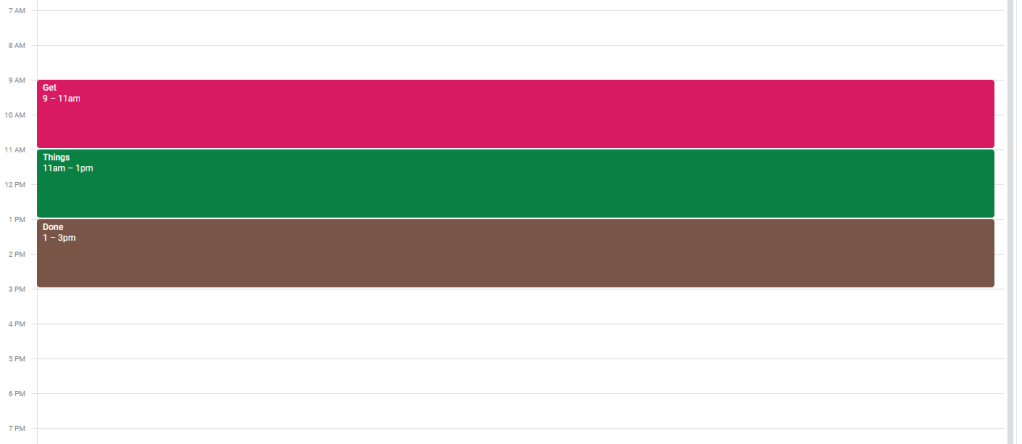
Got Things Done

The past few months has really opened up a new level of productivity thanks to systems like Ultimate Brain and Getting Things Done. Using these tools, I’ve been able to develop better approaches for tackling tasks and projects. Effort is still needed, but I feel I spend less time thinking about what I should be working on. Instead, I determine that tasks ahead and work through them piece by piece.

Managing Momentum

My focus as of late has been on developing the systems for the future while testing the waters with smaller projects. Working with the seond brain, PARA, and GTD systems has been an ongoing effort of learning and optimizing the resources I have.

While the systems themselves have been a project, in order to really test them, I’ve been working through a DnD adventure to publish online. A goal of this blog is to implement systems to help me complete projects. I’ve tried to use the weekly posts to hold myself accountable, but that has only been effective working in the trial format.

In utilizing these systems, I feel I’m getting a lot more done. I don’t know if that’s because I’m noticing progress through project and task entries, or if I’m actually increasing my productive output. Either way, the mental boost I’ve been feeling in productivity has certainly been beneficial.

I’ve laid out plans for actually completing a variety of projects. The key now is to keep the momentum from this trial. As it comes to an end, I am curious to see how well I stick to utilizing this system.

Templates Simplify

One significant boon to my progress in these areas is Thomas Frank’s Ultimate Brain system. I merely mentioned the template in prior posts, but it really is what has been the catalyst for my use of PARA and GTD.

He made major efforts to create a Notion template that pushed these two systems to their limits and exceeded them both. I’ve been following Thomas for several years now and have followed his productivity recommendations from time to time. It was only in the release of this template that I really felt like I was taking part in something novel.

Figuring out how to take the template he made as is and work it into my day to day has been a cornerstone of the last two months. Just this week, I’ve been working on a way to combine the ease of use of the to-do app I use, TickTick, with the depth of Ultimate Brain/GTD, but haven’t quite been able to get the seamless feel I was hoping for. We can add that to the project list.

Finding Ideas

Something I’ve been thinking a lot this week is where ideas for systems like these come, and I’m lucky to have accumulated a series of quality resources. One more than any other helps me get a quick understand of the most important ideas of books, that is Blinkist.

The service offers summaries of a large lbrary of nonfition books. I’ve been waiting on an actual copy of Getting Things Done from the library for weeks now, but after listening to the “blinks” I don’t know if I’ll actuall read the whole book. The coverage of ideas gets right to the meat of the text.

I’m reading through Tiago Forte’s brand new book on the Second Brain and while I’m enjoying it, there is a lot of text for marginal gains. A lot of what is in the book, I’ve already covered through posts and videos. There are certainly a new ideas, but I’m spending a lot more time reading through already tredded ground.

This brings me to what I’ll be doing next, as alas this is the last post for the GTD trial. In utilizing Blinkist, I came across the book, The Four Pillar Plan by AUTHOR. The ideas in the book weren’t anything new or groundbreaking, but I enjoyed the framing of the four critical areas:relaxation, diet, movement, and sleep. The lattermost of those has long been on my list of trials to “correct” and in coming across this lens, I’ll be spending time over the next month in touching up each of these areas, starting of course with sleep.

Operating on Objectives

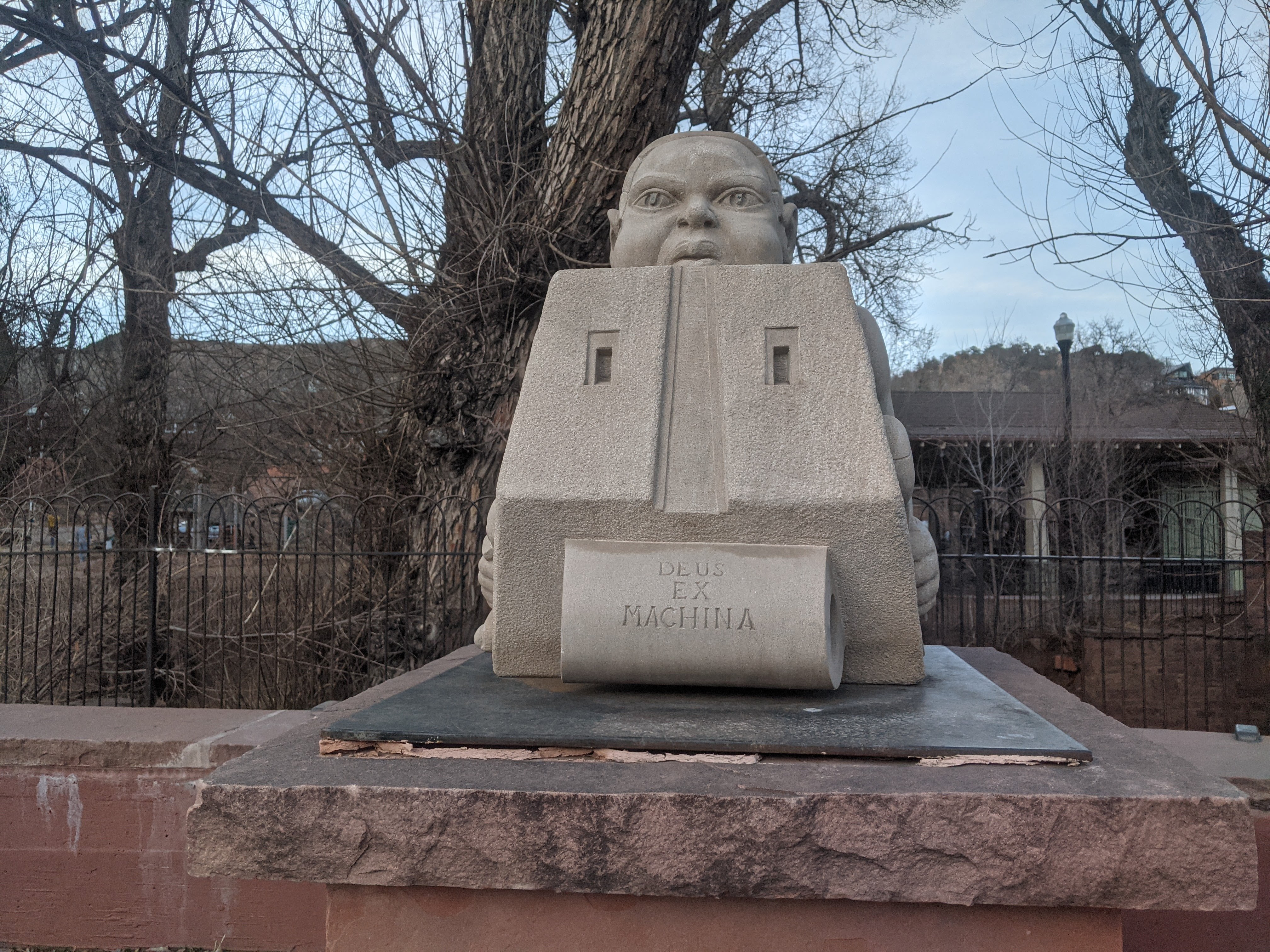
Who needs a god from the machine when I have Getting Things Done?

One of my biggest problems is gravitating to too many projects. I have far too many ideas that I save and ponder from time to time but fail to take direct action on. Whether it’s one of the many I’ve started as part of this blog or something new that caught my interest, I struggle to sit down with a just one idea at a time. What the Getting Things Done approach has helped with recently is offering a system that keeps projects in an objective orbit of the actual tasks to work on at a given time while also saving ideas of interest for a later date.

Back on Track

A couple of months ago, my automation project was off to a good start, but I knew there were improvements to be made. I long had a vague list of ideas to complete. It was only this week that I had the push to order the items to implement these improvements. Adding a sensor and some smart plugs to the mix has opened more options for technical automation.

The upgrades were tied to already automated items. Specifically, I’ve set up a more sophisticated light automation based the multi-sensor. The light turns on when the sensor detects low light, less that 5% luminescence, and motion after 7 AM. No need to trigger lights while I’m sleeping. Then, after 8 minutes of no motion or at 11:30 PM, the light turns off. I have methods for manually switching the light on and off when needed. The plugs were more of a minor improvement, upgrading my candle warmer from an old fashioned timer switch.

I still have an unused plug and a variety of options on the sensor that I’ve yet to tap into.

Moving away from hardware, an area I’m still improving is the knowledge capture system. A solid system to capture and organize items of interest is one of the main elements of the PARA system and second brain. As of now, most of what I interact with requires a lot of manual entry.

I have ways to save links, posts, and books, but not so much my highlights, notes, and takeaways. I have some ideas to explore. So for now, I’ll be placing this task into GTD and coming back when the time is right.

Another area of organization that’s long been causing me grief is the cable management of my desk. As a place I spend significant time, it’s unpleasant to have to look at a sprawling mess of cords and wires. In the process of ordering items for automation, I’ve also purchased a lot of desk organization accessories.

Now, my cables are tucked away neatly under the desk. This is after adding even more to the mix including a set of speakers and another monitor.

Ideas in Orbit

No matter how much I get done, there always seems to be more to do on the horizon. I seem to have collected a variety of hobbies and interests that exist in perpetual movement forward. Even those with a tangible deadline, like a game jam release or written DnD adventure, open the door to begin the next one.

In the past, I’ve mostly managed projects by picking a rough estimate date and hoping I maintain efforts to complete them in time. While some things strive in this time pressure environment, most of the creative tasks I work on need some time to breathe.

I think this is where the GTD style of task management helps considerably. By having a list of the current objective tasks I need for a given project easily accessible, I can focus on execution when I need to and keep creative thinking churning.

If I know I have to finish writing a blog post or complete a game level at the end of the week, brainstorming can happen in tandem with actual tasks I can work on right now. This allows momentum to build while not getting stuck on distractions that eventually need to be addressed with more information or a specific tool in hand.

GTD also helps keep the odds and ends that don’t seem urgent right now. It took me nearly a year to finally find and schedule a dentist appointment, even though I had it on my white board for months. I think it has something to do with how I use my whiteboard and how I use GTD.

My whiteboard is primarily used for quick notes that I need jot down for a brief moment or visualize. It’s been hit or miss for actually managing tasks. The GTD system I use in Notion, however, has so far been consistent in getting items off my to do list for good.

Getting Things Sick: An Off Week

Key recovery items.

To say everything went as planned this week would imply a cruel outlook for myself. After feeling incredibly sick in the middle of the day, calling off work, and spending nearly 20 hours in bed, it’s safe to say I didn’t quite get what I wanted to done in accordance to the original vision for the week. Instead I took the time I needed to recover, assessed my to do list and worked to get back on course.

A Good System Doesn’t Fail

In my adulthood, I’ve always had a hard time sticking to specific daily schedules like I would have in structured systems like college. I say college and not school before due to not really being able to construct days as freely.

In college, I had both specific classes as well as a team practice of a specific type for a given day of the week. For example, a Tuesday would be economics classes in the morning and afternoon with a medium run and weights for practice. Each Tuesday, I was able to frame my mind for those given scenarios. For some reason, in adulthood, I’ve just found it much more difficult to create that structure freely.

Still, I try to have a rough plan for how a week may go. I’ll jot down when a certain event is happening or when I think I’ll be able to tackle a given task. With the help of friends, I’ve been able to set up a pretty solid climbing routine on Mondays, Thursdays. and Saturdays, but even that has some flexibility.

Sometimes these items shift around slightly. I might get groceries a day later than planned or I push an item from the weekend to the next Monday after a long weekend. This flexibility hit critical mass after I hit the aforementioned sick days that wiped me out of commission for a day and a half. During that time I mostly laid in bed with my eyes closed and was sometimes asleep.

I didn’t stress about what I was supposed to be working on, because at that point the only thing I needed to do was help myself recover. Once I felt a bit better, I could look to my do next list, and begin work. And in that time, I’ve written this post and wrapped up the first pieces of what should be my first published DnD work.

For that I have to thank the Getting Things Done system I’ve been incorporating.

On Maintaining Lists

One element of GTD that I really enjoy is how easily the maintenance process fits right into one of my existing habits, the weekly review. I think it’s safe to say that the review is the most referenced habit of mine throughout my time writing. It seems to come up at least every other trial, if not more, but that’s because that brief period of time is so critical for not only looking back on the days past, but to also tidy up loose ends and prepare for the next week.

The GTD system insists on having a small maintenance period to organize all new tasks into one set of lists: do next, deferred, and delegated. Do next is the simplest, it’s whatever should be completed next, for example write this blog post. Deferred are those tasks that can or need to wait until a later time, for example write next week’s blog post. Delegated tasks are given to someone else, an area I don’t quite rely on currently. An example there is as simple as a roommate to do the dishes.

There are items that don’t even make it to these lists, and those are any that “take less than two minutes to complete.” If going through tasks reveals anything that can quickly be resolved, it’s best to just do it without worrying about where it falls into the system. Once it’s done, you can forget all about it.

Approach to Action

Keeping it simple.

Recently, I’ve done a bad job with managing my time. I have things I want to get done, but failing to make the time to do them makes time spent trying to rest stressful. In an attempt to battle this rising bad habit, I’m taking a crack at implementing the Ultimate Brain template by Thomas Frank and principles he used in it’s creation from David Allen’s best seller Getting Things Done.

Getting Things Done

To get started this month I wanted a better understanding of the the GTD system used in Ultimate Brain. Without time to read the whole book, I read through the main ideas via Blinkist. The quick read was a solid run down of system.

The system overall goes extremely well with the PARA system I mentioned last week, which is likely why Thomas Frank used both in his template. Both are focused on collecting the ideas and tasks that arise in a given day with time spent later to organize and address them. Each has an acronym with both “capture” and “organize” as items. PARA’s “CODE” (Capture, Organize, Distill, and Express) and GTD’s “CCORE” (Capture, Clarify, Organize, Reflect, and Engage) go well together.

The system is largely built around key lists of what needs to be done. There is a do next list, a deferred list for things that need to be done later, and a delegated list for those things that are passed to someone else. The Ultimate Brain process dashboard makes it easy to get tasks into these specific lists.

Something I really like about the system is the principle that if something takes less than two minutes, it should just be done immediately. Allowing something that small to get into the overall system offers more work to manage than simply covering the act on the spot.

So Why Deal with This System

Lately, I’ve been trying to build out concrete plans for projects and the lists in Getting Things Done are helping me do just that.

I’ve needed a little more structure than randomly throwing out deadlines without a real idea of the work that needs to be done. GTD encourages working towards the specific tasks that need to be done. Deadlines help to apply some pressure, like getting these posts out every Sunday, but relying only on them hasn’t been as fruitful as I would like.

For a while I’ve been working with daily to do lists built around deadlines to manage what I try to accomplish on a given day. The trouble I run into is the uncertainty of a given day. Days can go far better or far worse than I can plan for and having a list constrained to a specific day gets in the way of what I can actually get done. This is something I actually started with at my job with an email to managers, and while it helps when it comes to the structured time of work, I haven’t applied it as well to my free time.

Having all my tasks in the appropriate list saves me the time of having to think about what to get started when I have the time and energy to do so.

Envisioning the End

Something I’ve been thinking about since the end of the last trial is what I want to get out of this month of “getting things done.”

The biggest goal I have out of the coming weeks is to have a couple projects for the summer broken down into small enough bites with estimated due dates. I’ve already laid out one project, formalizing a Dungeons and Dragon’s one shot I wrote.

I have the high level strokes of other projects as of now, but still need to break them down into the smaller individual tasks. These include both a home automation expansion project, as well as a game jam later in July.

While all of the projects will persist beyond this month, following the GTD method should lay a solid foundation for the weeks beyond. I’m hoping going about projects in this way will help to make sticking to them and following through on delivering some degree of a completed product.