I wrote extensively in my short series on “spaceship you” the importance of separating spaces with intention. Over the last several months, I’ve struggled to get myself to work at the level I’d like. I think a large part of this has been a lacking structure in my new living space.
Changes in Environment
At the time of writing the spaceship you posts, I was living in a house with a few friends. At the beginning of our move, I was the only one working remotely full time, and so I was lucky to grab the largest bedroom consisting of the entire attic.
Since moving out of that space, I’ve lost the element of physical separation in living spaces. I spend a large amount of time in my bedroom, typically working my day job. Then, I tend to wind down watching videos in bed or sitting at the same desk further to play games. With so much time dedicated to other things in that space, it is challenging to focus on being productive.
Overall, my new living arrangements are great My roommate and I get along well. We spend a fair amount of time together, and have frequent plans with friends both online and off. However, I still wanted to find a space specifically for working on my own projects.
A Local Solution
Because I was failing to make this space at home, I decided to look outward. Luckily, the local library is close, just a few minutes walk. While certainly not as convenient as a solid workspace at home, given the limitations I have, I’m more than happy to get out for a few hours a week to really sit down and focus.
Lately, I’ve made an effort to go to the library at least once a week, though I want to get these numbers up. Once there, I find it easier to sit down and write, even if it’s just the outline or rough ideas I have for a post, as distractions are less intrusive. I know I’m there for a purpose and doing anything else feels wasteful.
This is far from the extreme changes of previous trials, but has a pretty clear cut benefit that I’m already seeing in action. My goal with this simple trial is to get the year started off in a better direction and rebuild habits that I’d lost in my move. One could say to build a foundation.
Two responses to the same idea. Image source: Reddit.
Of all the realms in philosophy, ideas relevant to the self and different worldviews have been the ones I resonate with the most. Across the many schools of philosophy, existentialism makes the most sense to me. I recently finished reading Albert Camus’s classic work The Myth of Sisyphus which discusses some foundations of existential thought. I’ve long been familiar with the ideas in the book, provided to me primarily through media.
Mister Peanut Butter and The Absurd Man
My introduction to Camus, and a lot of philosophy actually, was the YouTube channel Wisecrack. Exploring the philosophical influences in media is the primary subject of their videos. Frequent appearances are made by existential philosophers, most often through two cartoons about substance abusing leads, Rick and Morty and BoJack Horseman.
As a fan of both series, the videos by Wisecrack were the exposure to the deeper ideas within. As the shows progressed, I found myself wondering which worldviews I found myself engaging in and which I truly would want to hold.
Enter, the happy go lucky yellow labrador named Mister Peanutbutter of BoJack Horseman, the show not the horse-man. The character is overwhelmingly friendly and audacious, much like a real life excited pup. He comes off as annoying and irritating when first introduced to the audience, especially through the eyes of our point of view character, BoJack, who can’t stand him for his painfully optimistic and friendly attitude.
As we get to know the characters more and more, BoJack is revealed to be a worse and worse person and we’re challenged to think about those around him more. As Mister Peanut Butter is developed, we see his friendly face drop for what might be the only time in the show. Confronting BoJack for a shitty thing he did – keeping things as spoiler free as I can.
His optimism is challenged when a family emergency calls him back to his hometown, a place full of other yellow labs. His brother Captain Peanutbutter is introduced in the same in your face manner, tackling Diane, Mister’s wife. Yet, when alone with Diane he breaks into these brief lines of an existential crisis. It’s revealed he has a medical condition, and Mister takes on his same depressive attitude, waxing poetic at a raven-person atop some nearby power lines. After hearing back from his brother and his own escapades in the episode come to a conclusion, he saves a drunk and drowning BoJack and breaks bad news. After which he happily shouts “None of this matters!”
That joyful exclamation of the inherent meaninglessness of the shattering news given to BoJack has stuck with me to this day. I recall a number of times living in Texas with my cousin both looking at each other and quoting Mister Peanutbutter.
Revisiting the episode for this post it’s clearer that Mister Peanutbutter is simply celebrating his brother’s health, but when first watching, I found Mister Peanutbutter to walk away as Camus’s “absurd man.” The absurd man is one who accepts the meaninglessness of existence, but doesn’t let this crumble him. Instead he embraces it and even finds comfort in this. I still see Mister Peanutbutter mostly through this lense. He has his moments, but throughout the majority of the show, he is able to live happily without a worry for the bigger meaning of it all, as BoJack loses himself trying to find purpose.
When I was first watching through the series, I began to face my own existential crisis. Answers I’d long held onto like religion and identity were starting to fall away. As I started to have trouble dealing with these ideas, a cartoon dog shouted to me, “none of this matters!” It was in that phrase that I allowed myself to relax and embrace the absurd.
Philosophy and Media
I briefly touched on the importance of media analysis in my life about a year ago. It’s funny how a piece of entertainment can shape perspectives more than years of education. All types of media can offer a range of ideas from a cast of characters, setting, event, or all at once. Characters with opposing philosophies can work against each other or together exploring how these ideas interact. The setting itself offers philosophical exploration. Dystopian novels come to mind as the prospective endpoint of certain belief systems.
A friend of mine has told me she doesn’t understand how I can read and enjoy so much philosophy. I find it acts as the foundation of how I understand and interpret other works. Learning about philosophy and theory shapes how we understand all the things we read, play, watch, or engage in anyway.
Interpretation is largely guided by the ideas and perspectives we understand. It’s how people can read completely different meanings in the same text, for example the idea that Netflix’s recent Squid Games is anti-communist when the creator explicitly stated his intention for the show to be about capitalism. I personally don’t think there’s a “wrong” interpretation of a piece of media, just perhaps one either lacking or influenced by a particular belief system.
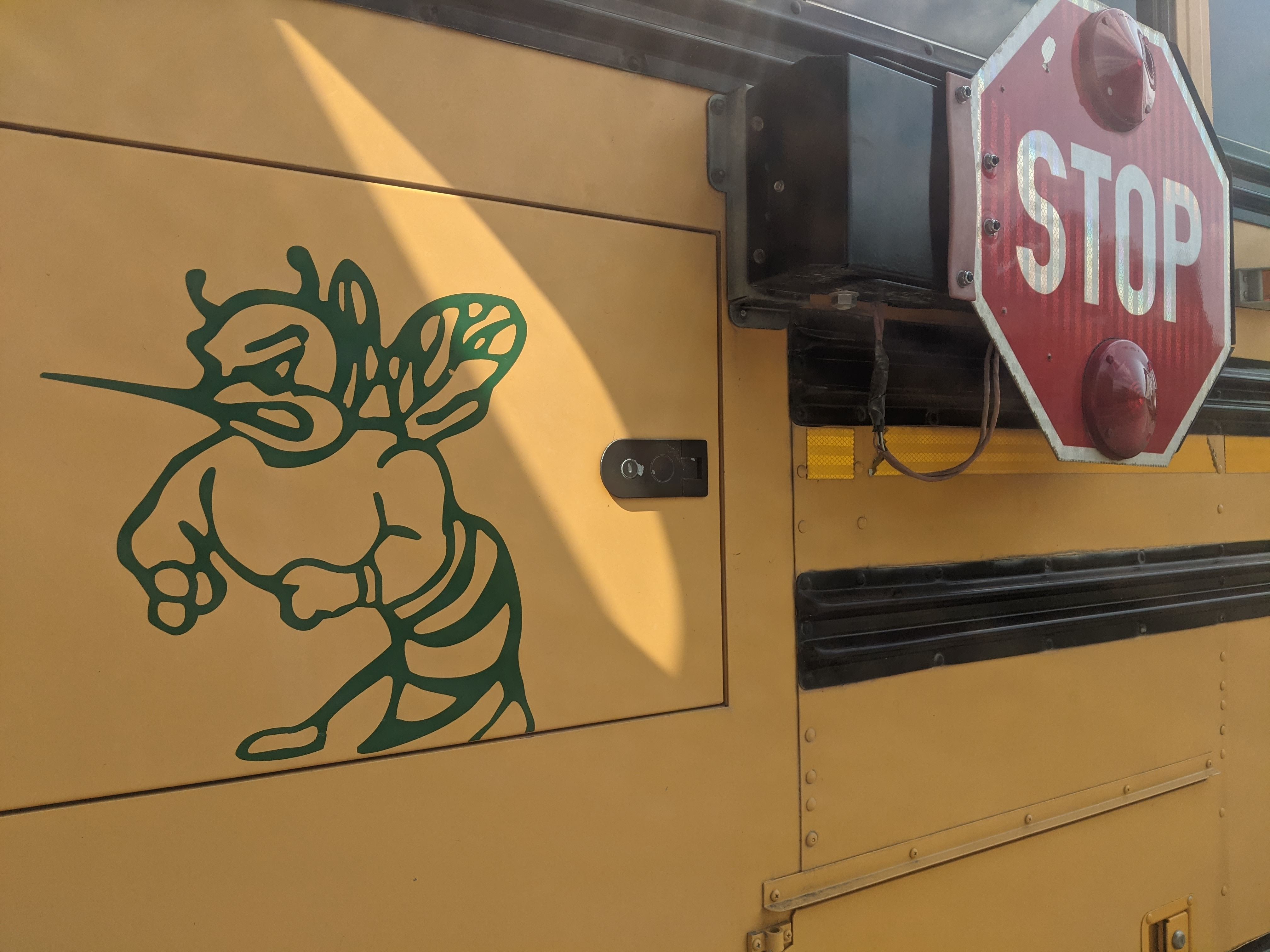
Looking at the year ahead with the enthusiasm of this flexing bee.
Last year, I briefly mentioned the concepts of themes in a trial on journaling, one borrowed from the YouTube channel CGP Grey. The gist is at times of inspiration, such as the start of a new year, a better model for goal setting is to start with a high level concept to give direction rather than specific resolutions. With the time of resolutions upon us, I want to take a stab at setting a theme for the year ahead. Over the last few months, I lost momentum with a ton of habits and practices and so I’m currently following the theme “Foundation.”
Themes Versus Resolutions
A few years ago, I started one of the few trials I still stick to consistently. A weekly review that focused on my progress in a few important categories. The idea was to pick a timeframe that was easy to look back at and give myself grades based on performance in those important areas. Rather than a specific resolution, picking areas that I want to focus on throughout the year fell somewhat into Grey’s concept of themes.
Themes serve as a guiding idea to determine how time should be spent. Themes should have three elements, broad, directional, and resonant. While specific goals can be associated with them, the theme itself should be a general concept that can adapt specific behavior as time passes, but still maintain the desired direction. To quote the video, “In picking a theme, go with something that has a nice broad name for the general direction you want to navigate your life.” As time passes, the intention of a given theme may change. The timeframe of a year leaves a lot of room for change, and Grey even suggests having themes for shorter periods like seasons, but in the spirit of the New Year, something always jumps out.
This broad idea serves as a compass to follow when making decisions. When a decision presents itself, the theme can serve as a deciding factor into which choice to make. It can also serve as a general litmus test for what choices I even regard as necessary.
To illustrate with an example, let’s look at “year of health” versus “I want to run three times a week the entire year.” A year is a long time and a lot can change. An injury can prevent consistent practice. Weather or outside conditions may make practice dangerous or unwise. It can even be as simple as running just doesn’t give the spark it once did. Anything getting in the way of that specific goal set months, weeks, or even days ago fails to stick and the feeling of failure sets in. With the theme of health however, running can just be one part of the year. The goal can be to focus on recovering from that injury or to find a new exercise routine that does bring the joy running once had. Maybe even as time passes, fitness was never the big problem, so the focus shifts to correcting a bad sleep schedule or diet. The theme is able to connect to a wider range of behavior that carry our runner to their desired outcome, a healthier life.
To reference the video again, the most important element is that the theme is resonant. Over the last few weeks, I came up with a number of ideas for what to pick as a theme for the year. After all the brainstorming, I kept coming back to the word foundation.
What Does Foundation Mean?
With my eyes on the year ahead, I want to focus on two different areas: my regular habits and really starting just one long term project.
There are a few projects I’ve envisioned getting started over the last few years, but none ever got the full effort they really deserved. Rather than the long, difficult challenge that I knew that should have been, I’d get started, not see progress, and then move onto something else. Instead, I want to focus on getting the basics in order. This will range from habitual practice to tangible progress. The former of those I feel is more critical.
Consistency is something I’ve frequently struggled with over the last few years, but I’ve done a terrible job in the last several months. Getting myself regularly working on a single thing for a sustained period has been difficult. I’ve shifted from jumping between projects to working on nothing at all. Finding the right cadence of practice is critical for making progress.
In terms of the actual progress made on this currently undecided project, it will largely be contingent on the nature of the project. I have a few ideas in mind including a video game, tabletop RPG modules, and a fantasy webcomic, but all of which exist as a vague gesture of an idea. Meditating on which one feels best for the theme will be a focus on the next few weeks.
One major habit I’ve fallen out of is writing. Even the last few weeks, after announcing my return, were chock full of procrastinating and jumping drafts to find an idea I felt I really wanted to share. However, I do have a plan to work on this already.
Trials for Foundations
One of the foundations I want to restore is the act of trials driving the content for my posts. I may still find time to take breaks from trials, similar to last year, to write on broader topics. However, this time around, I want to try something a bit different, to plan and announce a few of the trials I’ll be doing ahead of time.This isn’t an exhaustive list of, but some of the ideas I have as of now.
While the next few posts will be focused on elements of my personal philosophies, I’ll also be starting the first trial in a long time. It’s a simple one but re-establishes elements of another CGP Grey related series of posts, “Spaceship You.”
After moving in May of last year, I slowly started to lose elements of focus in the design of my living space. The bedroom I moved into is much smaller than before, though the collective space is used much more. The biggest issue I run into now is my work and play are at the same desk. Previously, I had two separate areas for work and play which made sitting down to write much easier. To get myself working consistently, I’ve found that getting out of the house completely is about the only solution. Thus, trips to the library have been very productive. I want to turn those trips into a more concrete part of my schedule.
In a completely different corner of my interests, I also plan to finally pick up an idea I’ve had for many years, learning to play the harmonica. An interest grew a few years ago to play music again, and the simplicity and portability of the instrument stood out. By simplicity, I mean more in the sense of it’s overall design, not necessarily the practice of playing. Only time will tell how complex or simple that is.


 Trying Out Before Buying In