Dungeons and Dragons and Empathy

The region map from an old campaign where my players burnt down one of the world’s major cities after helping to incite a riot.

One of my favorite past times in my adult life has been playing Dungeons and Dragons. As someone who was long into nerdy hobbies, I was excited to find friends in college who wanted to play. The many years of playing has provided me years of entertainment, improved my writing, and most importantly made me a more empathetic person.

Time with Friends

My first experience with DnD started in college. I don’t remember how it came up, but knowing those times it was probably while out on a run with the team. A group of three of us all decided we were going to start playing and it began. My friend Drew started as dungeon master making this interesting story that pulled in elements of our characters and I was hooked.

As time went on, we added new players, but soon began a cycle that plagued our college experience. New semesters led to different schedules shaking up the group regularly. Too long of a gap between play sessions would often led to starting from scratch, or a busy schedule led to players and DMs having to drop entirely.

With college coming to its eventual end, we were able to continue over the years, often online with rare exceptions for games in person. Whether it was a brief campaign run or just a one-shot, a full experience to be started and finished in one session, we were able to play from time to time.

Writing and World Building

Throughout the years, I’ve held both roles as player and dungeon master, the latter which the most frequent role. I enjoy both, but there’s something I love about creating the world and scenarios the players will face.

As a DM, I love the initial stages of world building. I get to define the rules of a made up world. What are the geography, history, and politics of the area? How do those interact with magic and fantasy? What roles do regular people play in this world?

I remember when I was starting, I tried to figure out how to make a good region or world map, and I found a tutorial that started with the tectonic plates of the planet below to form the land. From there you could figure out where mountains, rivers, and lakes would form. Then, what kind of terrain would develop in those areas. Each point built on the last until you could make decisions on what areas would cities develop, resources that would be fought over, and so much more. It’s absolutely one of my favorite parts of starting a new game.

Making a world is definitely part of the process, but there needs to be interesting people inhabiting it for a good game. Coming up with a player character is a great experience. It allows you to live out an imaginary set of goals, dreams, and flaws. A unique spin on this as a DM is to create countless non-player characters (NPCs) who are the people the players will interact with in the world. This process is what I think role playing games can really help make people better by playing them.

Developing Empathy

We’re often told to put ourselves in someone else’s shoes when dealing with decisions or opinions we disagree with, but I don’t think many people can really do this. A lack of empathy, even for those who may be seen as the villains of our world, is an assured way to live in a worse one.

Though DnD I’d like to believe I’ve developed a much greater abililty to empathize with others. I may still disagree with someone due to differences of experience, beliefs, or philosophical frameworks, but with empathy I can understand what those differences are.

Whether they are a sleazy merchant, a stoic guard, or an evil villain, I have to think about the decisions that these ranging people would make.

This doesn’t just go for making decisions as NPCs. Reacting to decisions my players make that seem out of left field are often cleared up in seconds when I think through why the players may decide on one thing or another. It can be frustrating to perpare certain ideas or stories to have them ignored or flipped upside down. In the case of the former, it just means that the idea wasn’t appealing enough to the characters to take risks. In the case of the latter, it’s often caused by a lack of perspective from the players and their characters.

In a recent session, I was looking forward to a trial after they’d been framed. I don’t recall the exact inspiration, but I thought it would be fun for them to have to search for clues about what really happened and present a case at court. After a lot of prep, once confronted by a guard, they fled the town! I was a bit frustrated that all my prep was out the window, but immediately had to laugh that I had so much pinned on them following the law, something none of the characters cared about in the first place.

DnD has provided me with years of entertainment, amazing moments with my friends, and a free education in empathy. I am so happy that this game, that was once a label of vicious mockery, has found itself in what I suppose is mainstream acceptance. As I hear more friends and family are interested in playing, I have hopes for a world of more interesting and empathetic people.
Thoughts of Late

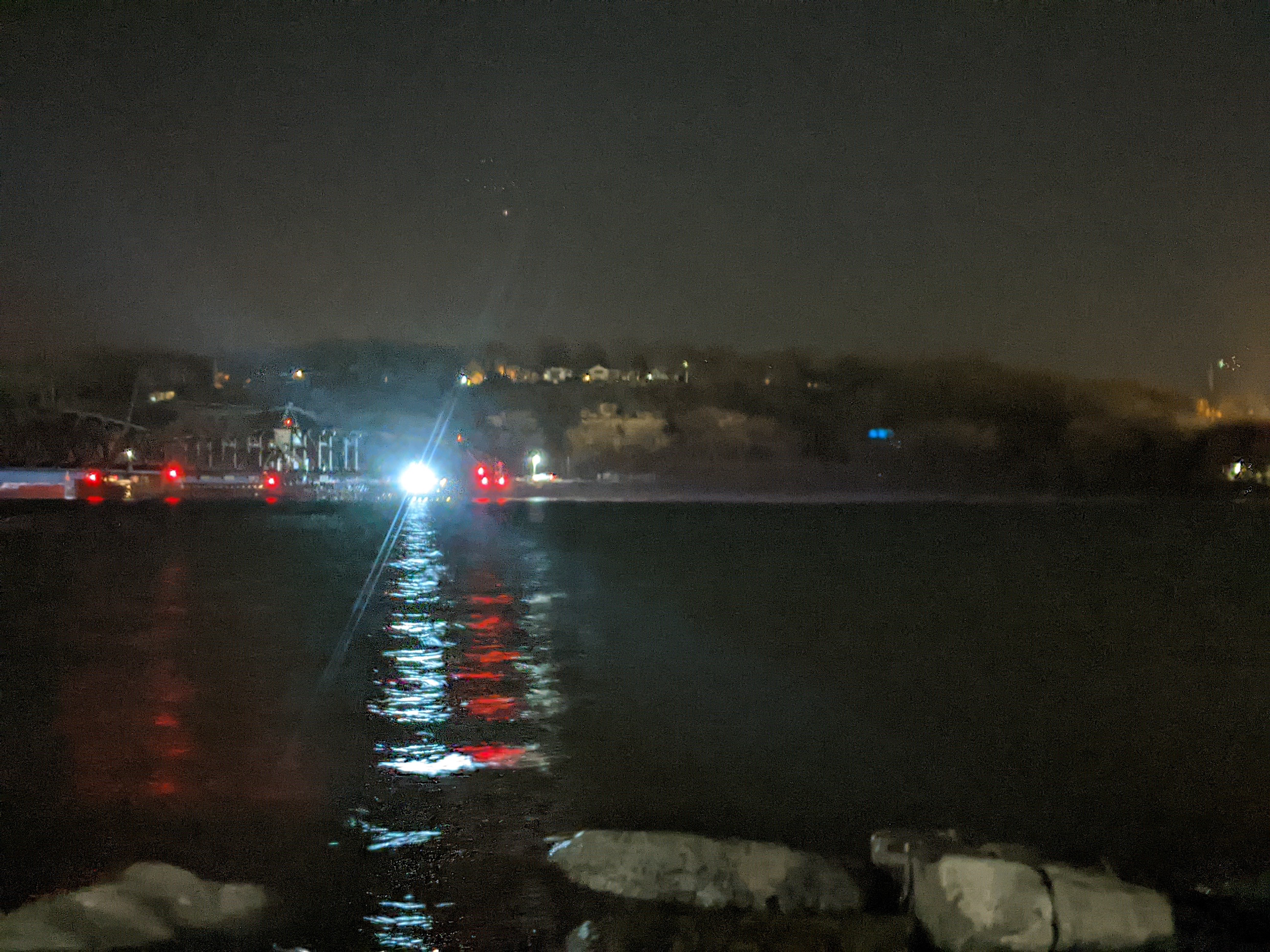
An old spot where I used to stop and think.

The last couple of weeks, I let the days slip by without finishing a post. Part of this was an indecision of what I wanted to write on, while another part revolved around a dwindling desire to write. Lately, I’ve been thinking a lot more than doing. The last post I put out discussed my plan to shift away from the trials and experiments this blog has been built on and focus on cultivating the ideas tested over the years.

Trial Hiatus

For the time being, I‘ll be putting new trials on an indefinite hiatus. Over the coming weeks, I’ll be figuring out where I want to focus my time and energy. In the time between now and trials resuming, I’ll be writing posts on a variety of topics.

I’ve had a number of rough outlines and ideas for posts about a mishmash of topics from productivity to media analysis and philosophy. I’m not sure what I’ll end up publishing over time, but giving myself this opportunity to explore more areas is definitely exciting.

One of the biggest benefits I foresee is the ability to write publishable posts more than once a week. With the trial structure, I often had little to prepare until I began reflecting on my experience that week. Removing the time constraint, I can prepare as many posts as I have ideas for. I’ll also be able to batch write more posts during times of creative surplus and take any needed time off during creative droughts, assuming I have enough posts in the backlog of course.

In a way, this is almost a trial of different styles of writing, but perhaps that line of thought is the result of running my life in experiments for too long.

Focusing on the Next Level

Over the years, I’ve tested out a variety of practices from habits to hobbies to lifestyles. While some trials resulted in failures or disinterest, I’m more disappointed in those I was excited about or planned to follow up on, but once the trial period was over, the next thing took up that time and attention.

It didn’t take long before the previous thing that was exciting lost its allure. A new trial meant I needed to write several posts on this new thing. I recall hearing something along the lines of “if you can put focused energy into anything for a year or two, you could quickly make it into the top five or ten percent of performers.” I’d like to take the energy I’ve been spreading out from one pet project to another and put it all behind one idea for however long that takes.

I’ve been brainstorming a lot about what kinds of things I want to work on for the foreseeable future, but I am still working that out. I’ve come to some conclusions on the aspects that would make up the ideal project, though I’m sure at the end of things, I’ll still have some tough choices left.

One of the major aspects I’d like in a project to begin is something finite. I want to be able to complete something and share it. Not worrying about picking it up once again. I think that’s why I didn’t enjoy streaming that much.

In a way, this blog sits in a strange gray area in that aspect. In theory, I will keep writing posts, but the trials gave me finite points to work off of. I am interested to see if this new direction, even if temporary, makes writing more or less interesting.

Habits and Hobbies

This week, I’m glad to say my habits have been much more consistent. I wasn’t exactly sure what to write about this week, but while thinking about perspectives, an idea formed.

High and Low Perspective

While journaling, I thought about the need to shift between a high level view and low level from time to time. As the page ended I mused, don’t get lost in the weeds or the clouds.

Right now, I feel I should be focusing on the former but have been tied up in the latter. I think that I’d like to start carving out a clearer direction of what I want to work on versus the specific actions. The habits I’ve been focused on have been keeping me busy day-to-day, but I’ve been finding it hard to stay motivated with anything long-term.

Getting too caught up in specific actions has left me neglecting the big picture. So, I’m going to take a step back this week and look over what I’ve been doing the last few years, what I enjoyed, and what turned out to be a passing interest.

Passive and Active Hobbies

This line of thought brought me to the truck load of hobbies I try to keep up with a few times throughout the year. As someone who starts to tumble down just about every rabbithole I pass, I’m now thinking about what interests I want to deeply invest my time in. To start, I’ve begun a list of all the hobbies I can think of that seem remotely interesting, and then pick a few to dedicate more time to.

This blog was designed to learn and experiment, but I’ve been finding that harder to do. After about four years of writing, I think I am starting to come to an end of excitement for experiments and want to start building stronger foundations for the things that have stuck.

I’m not sure if this idea has been explored at all by some productivity or lifestyle guru, but I’ve been thinking about hobbies falling into two camps: active and passive. The active hobbies are those that I take the initiative in learning and participating. The type of thing I can stay up late thinking about or working on – a true passion.

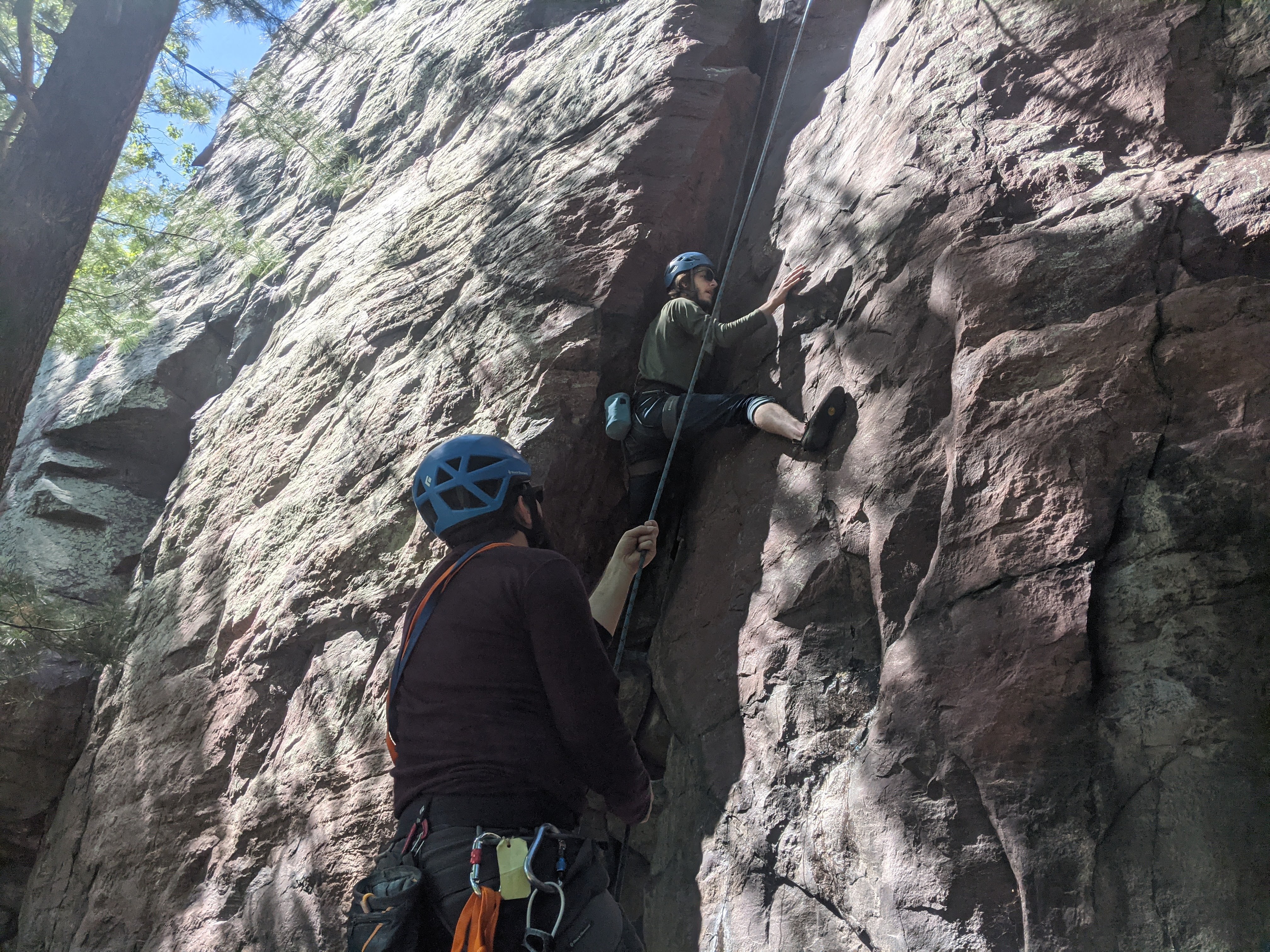
The passive hobbies, on the other hand, are those I let others take the lead. Not something I am deeply familiar with or passionate about but can engage with and enjoy. For example, I started climbing recently with a handful of friends. While I’ve been enjoying it, it’s not something I see myself pursuing on my own or care to learn about beyond the regular meet up.

In reviewing the direction I want to go, I’m considering what interests I can label passive, so I can put more time and attention on the active.